
The Dutch Role Behind the Popular Panjat Pinang Competition in Indonesia
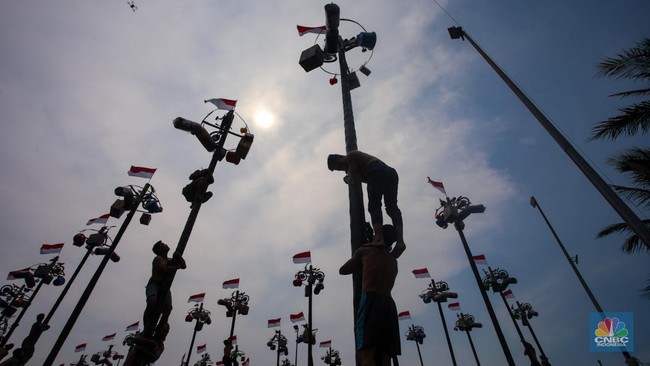
Behind the lively cheers and laughter of the public during every celebration of the Republic of Indonesia’s Independence Day, there is one unique tradition that never fails to capture attention: the panjat pinang competition. The tall, straight areca palm trunk, smeared with lubricant such as oil or grease, presents a physical challenge as well as popular entertainment rich in meaning. However, behind the excitement of seizing prizes at the top of the pole, this tradition holds a long historical record and a profound philosophy of life for the Indonesian nation.
Panjat pinang is known as one of the games that developed during the Dutch colonial period. In various historical records and accounts of the colonial era, this game is often associated with public celebrations or entertainment at that time. The slippery areca trunk was climbed to compete for various prizes placed at the top.
After Indonesia gained independence, the tradition became increasingly attached to Independence Day celebrations. Panjat pinang became part of the 17 August competitions held in various regions, from residential neighbourhoods to village and city levels.
Over time, the meaning of panjat pinang has also changed. If in the past this game had an entertainment context during the colonial period, today panjat pinang is more often seen as a symbol of independence celebrations and community togetherness.
Panjat pinang contains a number of values relevant to community life. First, mutual cooperation: participants cannot possibly reach the top by relying solely on individual ability. They must work together, form footholds, maintain balance, and help one another in order to achieve a common goal. Second, unity: differences in ability and position are not barriers to working together. Each person has a different role, but all are directed towards the same goal. Third, struggle and perseverance: the slippery areca trunk forces participants to try many times. They may fall, but they get back up and try again until they succeed. This illustrates a struggle that requires persistence and courage. Fourth, success requires a process: the prizes at the top cannot be obtained easily. There is effort, strategy, cooperation, and patience that must be undertaken before achieving results.
Panjat pinang is ultimately not just about who reaches the top fastest. Within it lies a simple illustration of how a great goal can be achieved through cooperation. This spirit is in line with the value of gotong royong that has long been part of Indonesian social life. Therefore, every panjat pinang event can serve as a reminder that independence and national development also require unity, hard work, and concern for others.
Amid changing times, the panjat pinang tradition endures because it is able to provide entertainment as well as a social message. The laughter and cheers of the community around the arena become part of the festive atmosphere, while the struggle of participants on the areca trunk reflects the spirit of continuing to strive towards a goal. Panjat pinang is thus not merely a traditional game. It has become a symbol of independence celebrations that teaches that success is more easily achieved when people help one another, unite, and do not give up easily.
Source: jawawa.id (https://jawawa.id/newsitem/the-dutch-role-behind-the-popular-panjat-pinang-competition-in-indonesia-1786949487)
Originally published by CNBC Indonesia (https://www.cnbcindonesia.com/lifestyle/20260817091438-33-759932/ada-peran-belanda-di-balik-lomba-panjat-pinang-yang-populer-di-ri), translated from Indonesian