
The Drop in FFB Prices Amid Rising CPO Prices is Highly Unnatural
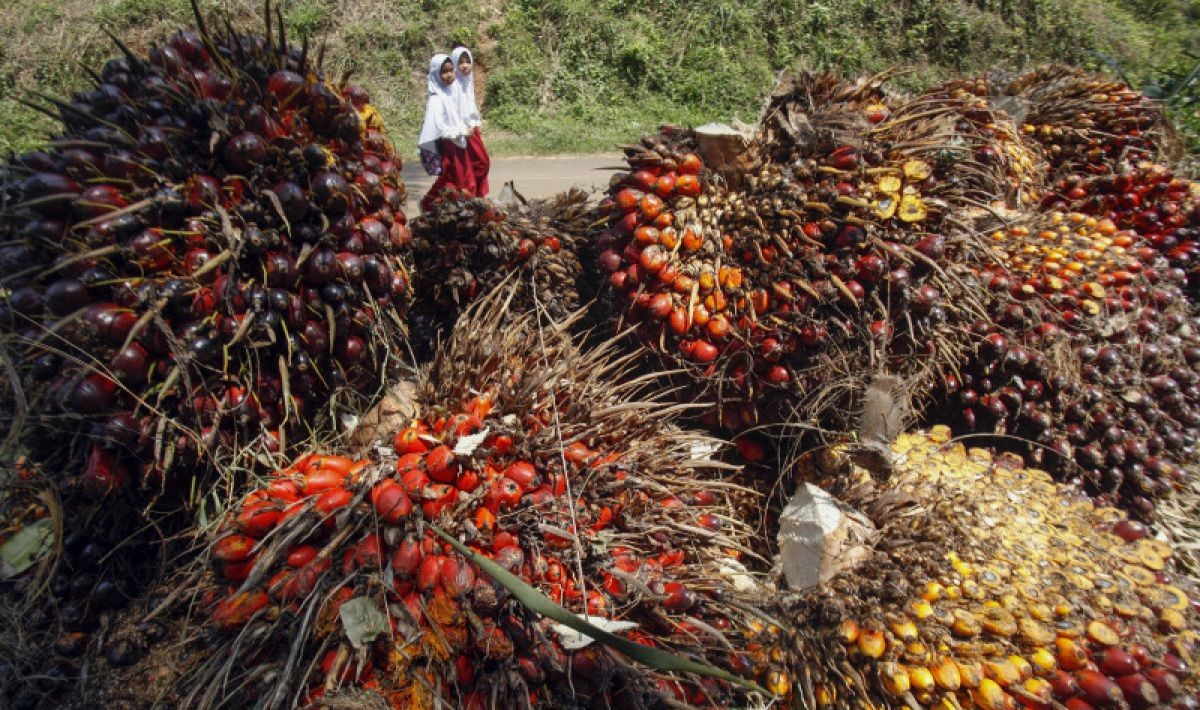
The decline in palm oil Fresh Fruit Bunch (FFB) prices amidst a global upward trend in Crude Palm Oil (CPO) prices is deemed not to be entirely driven by fundamental market factors. Eliza Mardian, an economist from the Centre of Reform on Economics (CoRE) Indonesia, suggests that uncertainty resulting from the planned implementation of a single-door export policy is a primary factor influencing market behaviour.
According to Eliza, the announcement of the single-door export policy through PT Danantara Sumberdaya Indonesia (DSI) for several strategic commodities, including CPO, coal, and ferroalloy, has triggered a negative response from business players. “The main trigger for the plummeting FFB prices, despite rising global CPO prices, is the market’s reaction to the single-door export policy. While the policy’s objectives are positive—namely reducing under-invoicing, preventing transfer pricing, securing export foreign exchange, and increasing state revenue—its implementation creates significant uncertainty for businesses,” Eliza stated on Tuesday.
She explained that this uncertainty pertains to new export procedures, the entities controlling exports, potential additional costs, payment schedules, and the risk of disrupted corporate cash flows. Consequently, palm oil mills and exporters are adopting a more cautious stance, reducing aggressive purchasing or suppressing FFB purchase prices as a risk mitigation measure. “This is more of a market psychological factor. It could even be viewed as a form of market response or protest against the policy,” she added.
Beyond policy factors, Eliza highlighted the oligopsonistic market structure at the farmer level, where many sellers face only a few dominant buyers. In such a structure, farmers’ bargaining positions are relatively weak. This concentration, combined with high entry barriers due to capital requirements and licensing, potentially encourages practices that suppress FFB prices to expand corporate margins.
Eliza noted that companies possess various instruments to influence the prices received by farmers, ranging from the CPO price formulas used for FFB pricing to quality assessment systems and deductions for weight loss during transport. As a result, independent smallholders are the most vulnerable compared to plasma or partner farmers who benefit from price formulas and cooperation contracts. “If FFB prices fall while CPO prices rise, it fundamentally contradicts the established formula. Such a situation is unnatural,” she asserted.
While the price drop may not necessarily reflect collusion, the impact on millions of farming households is significant. A decrease of several hundred to over a thousand rupiah per kilogram can erode farming margins, especially as the costs of fertiliser, pesticides, labour, and transport continue to rise. This could lead to reduced spending on education and healthcare, increased debt burdens, and even the risk of losing land through collateral or forced sales.
Furthermore, the decline could hinder plantation replanting efforts due to a lack of working capital, potentially leading to stagnant or declining productivity. The impact may also extend to regional economies dependent on the palm sector, as reduced purchasing power among farmers risks contracting local trade, transport services, and micro-businesses.
In response, the Minister of Agriculture, Andi Amran Sulaiman, has taken steps to oversee the recovery of FFB prices, receiving positive feedback from farmers. Meanwhile, the National Police Food Task Force, Brigjen Pol Ade Safri Simanjuntak, has raised suspicions regarding potential cartel activities related to the recent price drops. The government is now tightening supervision of FFB prices to ensure farmers receive fair prices amidst changing market conditions and exchange rates.