
The 'Downgrade' Phenomenon is Growing: Time to Build Financial Resilience
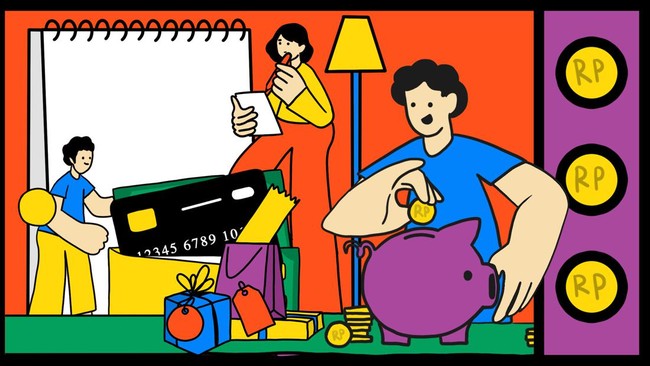
A small but significant change has recently been capturing attention on social media. People are sharing stories about selling belongings, reducing lifestyles, or intentionally choosing lower-tier options. This is not necessarily due to an inability to afford them, but rather a growing realisation that not everything one can afford is necessary to maintain.
Cars that once felt ideal are being swapped for simpler models. The latest smartphones are no longer a necessity. Premium brands are being compared with more affordable alternatives. Even certain expenses previously considered ‘standard’ are now being re-evaluated: is it truly worth it?
Interestingly, these stories are no longer shared with a sense of shame. Instead, they emerge with sentiments such as, ‘After downgrading, life feels much lighter.’
This phenomenon was highly prevalent during the Covid-19 pandemic. Now, the conversation is resurfacing more broadly through the #InThisEconomy narrative: when people begin to speak openly about how economic conditions affect daily decisions—from careers and savings to instalments and lifestyle. Indonesian media has also recently used the term ‘in this economy’ to describe the pressure on household spending.
So, what is actually happening? It does not mean everyone has suddenly become unable to purchase expensive goods. Rather, what has changed is how people calculate the value of an expenditure. Data from NielsenIQ and World Data Lab in 2026 shows this shift globally.
As many as 58% of consumers stated they do not care much whether a product is a national brand or a private label; they focus more on buying what is actually needed. Furthermore, 67% of Gen Z believe private labels can be just as good as national brands. Approximately one-third of consumers facing budget constraints also choose to switch to cheaper products or buy during promotions.
This means consumers are no longer simply asking, ‘Which brand?’ The question has shifted to: ‘With this amount of money, what am I actually getting?’ In economics, this behaviour is known as ‘down-trading’: replacing more expensive products or services with more affordable alternatives that still fulfil the primary function.
Theoretically, this relates to the substitution effect. When the price of one option feels increasingly expensive compared to its alternatives, consumers seek substitutes. However, there is another equally important effect: the income effect.
When the prices of various necessities rise while incomes do not increase proportionally, real purchasing power is pressured. Ultimately, people must re-evaluate: what to maintain, what to reduce, and what has merely been a habit.
The condition of the middle class makes this narrative particularly relevant. BPS (Statistics Indonesia) noted in 2024 that the middle class and those moving towards the middle class comprise 66.35% of the Indonesian population and contribute 81.49% of total societal consumption.
However, this group is also highly sensitive to changes in the cost of living because much of their expenditure sits between basic needs and the need to maintain quality of life. Therefore, downgrading does not always mean an individual’s economic condition is worsening.
Sometimes, it is actually a sign that their financial strategy is improving. Imagine someone reducing vehicle instalments, choosing a phone that still meets work requirements, or cancelling rarely used subscriptions. If the remaining money is then directed into emergency funds or savings, what is actually happening is not merely a reduction in consumption.
It is a reallocation of money from current consumption towards future financial resilience. This is what makes downgrading interesting when linked to financial health. Financial health is not about how expensive the items one can buy are.
The OJK (Financial Services Authority) itself has begun promoting a broader approach to financial health: how the public manages income and expenditure, faces shocks, prepares emergency funds, uses credit appropriately, and plans for the future.
From that perspective, downgrading can be a healthy decision—though not automatically so. If someone chooses cheaper goods but the savings are simply spent on other shopping, not much has changed.
Conversely, if downgrading makes debt more manageable, loosens cash flow, increases emergency funds, and expands the room for saving or investing, the decision actually strengthens financial health. Therefore, the key is not just to look at ‘whether it went down,’ but ‘where did the money go?’
This is where Islamic financial concepts feel very relevant. Islam does not teach that one must always choose cheap goods, nor does it forbid enjoying quality. What is emphasised is how wealth is used proportionally and does not turn into wastefulness. Surah Al-A’raf [7]: 31 reminds us: ‘Eat and drink, but do not be excessive.’ Meanwhile, Surah Al-Furqan [25]: 67 describes those who spend their wealth neither excessively nor stingily.
The message is simple, yet very close to today’s downgrading issue: it is not about how cheaply we buy, but how wisely we use our wealth. Even from the perspective of Maqashid al-Shariah, the preservation of wealth (hifzh al-mal) is not merely about having as much money as possible. Wealth must be protected, managed, and directed to provide benefit.