
The Dollar Era in Africa Begins to End, China's Yuan Becomes the New King
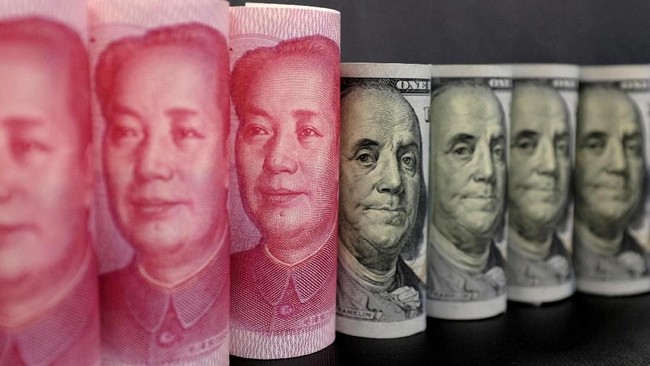
A number of African countries are beginning to reduce their dependence on the US dollar. China’s yuan and local currencies are now increasingly used for payments and debt management.
According to The Economist, the change is clearly visible in one African country, namely Zambia.
For more than decades, the US dollar has been used in various transactions in the country, from buying cars to business contracts.
The extensive use of the dollar means that the US central bank’s (The Federal Reserve/The Fed) interest rate decisions also influence the prices of daily necessities and rental costs in Zambia. When the country failed to pay its debts in 2020, the strengthening of the dollar at that time further exacerbated pressure on its economy.
Zambia is now trying to reduce that dependence.
In October 2025, Zambia became the first country in Africa to receive mining royalty payments and taxes in yuan.
The policy smooths financial transactions with China, which is recorded as the largest buyer of copper in Zambia as well as the country’s largest creditor. The use of yuan also helps Zambia reduce its need for dollars.
Since December 2025, the Bank of Zambia has also required domestic transactions to use the local currency, the kwacha. Those who violate the rule can be subject to sanctions, ranging from fines, imprisonment of up to two years, or both.
Zambia’s policy has shown changes that are beginning to take place in various African countries. The dollar still dominates because around 70% of government external debt on the continent uses the US currency. The dollar is also still widely used in cross-border transactions.
However, African countries are gradually beginning to look for other options.
Yuan Increasingly Used
The yuan is one of the currencies that has received a windfall from the change. Egypt, Nigeria, and South Africa have agreed on currency swap cooperation with China amid increasing trade paid in yuan.
Kenya has even converted part of its debt that previously used the greenback into yuan. The move could potentially save interest costs of up to US$215 million per year, or nearly a fifth of Kenya’s debt payments to China in 2025.
Currently, around two-thirds of Kenya’s total debt to China is in yuan. Ethiopia and Mozambique are also discussing similar steps.
A number of banks have begun preparing facilities that support transactions in the Chinese currency. In September 2025, Standard Bank became the first bank in Africa to process transactions through China’s Cross-Border Interbank Payment System.
Standard Bank is the largest bank in Africa by assets and part of its shares are owned by the Industrial and Commercial Bank of China, one of the Chinese government-owned banks. The system allows companies to make direct payments in yuan.
Absa, one of the largest banks in South Africa, and Ecobank, which operates in more than 30 African countries, are also preparing direct payment services in yuan.
The number of cross-border transactions using yuan is still far smaller than the dollar. However, the volume increased more than fourfold from 2020 to 2024, based on the latest available official data.
Africa Also Pushes Local Currencies
African governments do not want to simply replace dependence on one foreign currency with another foreign currency. Therefore, they are also trying to increase the use of their respective currencies, both for domestic transactions and trade between African countries.
In 2022, the African Export-Import Bank together with the African Union launched the Pan-African Payment and Settlement System. The platform allows banks to settle trade transactions between African countries using local currencies.
More than 160 commercial banks and 22 central banks have joined the system. In the long term, the use of local currencies is estimated to save banking and currency exchange costs for businesses by up to around US$5 billion per year.
Reducing the Dollar Is Not Without Cost
The shift away from the dollar still brings challenges for African companies that have long used the currency.
Jibran Qureishi from Standard Bank said the adjustment process can create significant costs for businesses. In Zambia, the obligation to use the kwacha means companies must change contracts that were previously written in dollars or renegotiate agreements with suppliers.
A number of companies also have to bear losses from old contracts. Exporters who earn revenue in dollars now have to exchange currency more often to meet domestic transaction obligations in kwacha. These costs can be passed on to customers through price increases.
The construction and agriculture sectors also face similar challenges because they still import fuel and equipment. Previously, companies could use dollars received from domestic activities to pay for imports. Now, they must exchange kwacha into dollars and bear additional transaction costs repeatedly.
Nevertheless, the strengthening of the kwacha provides benefits for importing companies. After recording strong performance throughout 2025, the kwacha strengthened again by around 15% against the dollar in 2026. The strengthening makes the cost of purchasing goods from abroad cheaper when calculated in kwacha.
Demand for the kwacha also increased after the Zambian government raised the foreign investor ownership limit in annual government bond issuance from 5% to 23%. Investors then bought many government bonds denominated in kwacha.
The policy not only encourages the use of the local currency, but also helps the Zambian government obtain funding to pay or extend its debts.
The dollar still has enormous influence in the global financial system and remains the main currency in Africa. However, developments in Zambia and a number of other countries show that the yuan and local currencies are beginning to gain a larger role.
Yuan Share in Global Foreign Exchange Reserves Rises
The increasing use of the yuan in Africa comes as the share of the Chinese currency in global foreign exchange reserves is also rising.
Based on the latest International Monetary Fund (IMF) report in the Currency Composition of Official Foreign Exchange Reserves (COFER), the yuan’s share increased to 1.99% in the first quarter of 2026, from 1.95% in the fourth quarter of 2025.
The increase is still slight. The yuan’s share is also still far smaller than the US dollar at 57.13% and the euro at 20.03%. In fact, the dollar’s share also increased from 56.42% in the previous quarter.
Nevertheless, the increase shows that the yuan is slowly gaining a place in global foreign exchange reserve management. The Chinese currency is also increasingly used in cross-border trade, commodity payments, and debt management as several African countries have begun to do.
Source: jawawa.id (https://jawawa.id/newsitem/the-dollar-era-in-africa-begins-to-end-chinas-yuan-becomes-the-new-king-1786337464)
Originally published by CNBC Indonesia (https://www.cnbcindonesia.com/research/20260807102255-128-757350/era-dolar-di-afrika-mulai-tamat-yuan-china-jadi-raja-baru), translated from Indonesian