
The Disappearance of Minister Otto Iskandar Dinata: A Political Mystery
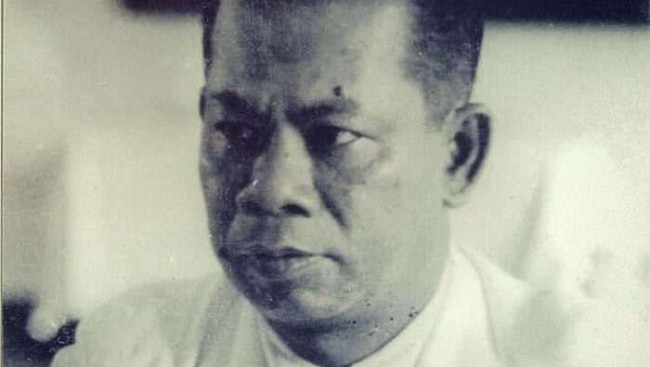
A tragic fate befell one of the ministers during the early days of the Republic of Indonesia. Otto Iskandar Dinata, commonly known as Otista, who served as State Minister following the Proclamation of Independence, was kidnapped by an armed group and vanished without a trace. The abduction is suspected to have been part of a foreign propaganda operation aimed at fracturing Indonesian unity.
In the book ‘Oto Iskandar di Nata: The Untold Stories’ (2017), author Iip D. Yahya reveals that the kidnapping was triggered by issues spread by agents of the Netherlands Indies Civil Administration (NICA). ‘Otto was accused of being a Dutch spy,’ the book states. The allegation was allegedly deliberately circulated to eliminate a figure deemed capable of strengthening national unity.
Prior to becoming a minister, Otto was known as a prominent national movement figure. According to the biography ‘Si Jalak Harupat’, he had been active in the Boedi Oetomo organisation since the 1920s. Leading up to independence, Otto also served as a member of the Investigating Committee for Preparatory Work for Indonesian Independence (BPUPKI) and the Preparatory Committee for Indonesian Independence (PPKI).
After Indonesia declared independence on 17 August 1945, President Soekarno appointed Otto as State Minister. At that time, the government faced significant challenges as the security situation remained unstable and the nation lacked a fully organised armed force. Otto was tasked with assisting in the formation of a national military force. However, the process was fraught with difficulty, as various armed groups consisting of former PETA members, Heiho, and ex-KNIL soldiers had differing interests and loyalties, leading to internal conflict.
The tension reached its peak on 19 December 1945. Otto was kidnapped by an armed group known as the Laskar Hitam in Tangerang and taken to the Mauk Beach area. His whereabouts have remained unknown ever since. Iip D. Yahya also notes that another accusation circulated among the Laskar Hitam, claiming Otto had seized funds amounting to one million Dutch guilders. This accusation was used to reinforce the narrative that Otto sided with the Dutch, even though the money was actually war booty from the Japanese, which was still denominated in the Dutch guilder currency.
To this day, the fate of Otto Iskandar Dinata remains a mystery. He is presumed to have been murdered and his body disposed of at sea, but no evidence has ever been found to confirm this. Due to the lack of certainty regarding his whereabouts, the government later designated 20 December 1945 as the date of his death. Seven years after the kidnapping, the government held a symbolic funeral in Bandung. The coffin buried did not contain his body, but rather sand and seawater as a symbol of respect for a national hero who disappeared without a trace. The symbolic grave is now located at the Pasir Pahlawan Monument.
Source: jawawa.id (https://jawawa.id/newsitem/the-disappearance-of-minister-otto-iskandar-dinata-a-political-mystery-1784458264)
Originally published by CNBC Indonesia (https://www.cnbcindonesia.com/news/20260719150538-4-751966/menteri-ri-diculik-hilang-tanpa-jejak-diduga-ada-peran-asing), translated from Indonesian