
The Dirham of the People of the Cave
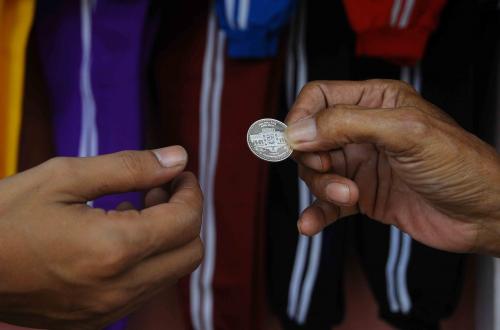
Human history is often determined by the “measure of value” it employs. Money, though seemingly simple, is in fact the lifeblood of justice and the pillar of history. Without a fair standard of value, civilisation will be lame; without authentic historical records, faith will be doubted.
The Qur’an provides us with a great lesson through the story of Ashabul Kahfi. These faithful youths not only preserved the steadfastness of their faith in the cave but also left a mark on civilisation through the silver dirham. The Qur’an mentions:
“And thus We awakened them that they might question one another. Said one of them, ‘How long have you remained [here]?’ … So send one of you with this silver coin of yours to the city…” (QS Al-Kahfi: 19).
Behind the mention of this “dirham” or silver coin lies a profound indication. The dirham is not merely a medium of exchange but a measure of justice, a witness to history, and a symbol of human equality.
The Dirham as a Means to Reveal the Miracle
The story of Ashabul Kahfi demonstrates an astonishing logic: God deliberately saved their faith through the cave, but their history through the dirham. Why not something else? If they had brought wheat, it would surely have rotted. If they had brought leather, it would have been destroyed by time. If they had brought paper money, it would certainly have become fragile and perished. But because they brought a silver dirham, the object remained intact.
When the youth went to the market to buy food, the merchant immediately realised: “This is ancient money, the stamp is no longer valid. From what era is this?” It was from then that the secret was revealed: this youth had lived hundreds of years ago. Their miracle of long sleep became known not merely through stories, but through real evidence in the form of silver money. Here, God teaches that great history can be proven through a fair and timeless economic medium.
The first lesson from the dirham of Ashabul Kahfi is about the justice of money.
First, intrinsic value.
The dirham (silver) and dinar (gold) possess inherent value from their metals. They do not depend on the “promise” of rulers or banks. Their justice lies in equality: everyone knows that 1 dirham = 1 dirham, anywhere, anytime.
Second, fake value (fiat money).
The value of paper money is based solely on “trust” in the issuing state. Inflation, monetary crises, and interest rate manipulations are evidence of the fragility of this system. Its value can be “shifted” by one nation that feels like a superpower.
The lesson of Ashabul Kahfi seems to say: “If great history can be preserved through the dirham, then social justice can only be preserved through money that truly has value.”
Justice in Trade
The Qur’an often warns against reducing weights and measures (QS Al-Muthaffifin:1–3). This principle also applies to money, because money is the “measure of value” in trade.
With gold and silver: trade is fair because the medium of exchange cannot be “manipulated”. Whereas with paper money: trade can be imbalanced, because the value of money can be weakened by deliberate inflation.
Developing countries export raw materials at cheap prices, while importing finished goods at expensive prices. This imbalance worsens because their exchange rates are continuously suppressed, whereas gold and silver have a universal value that is the same throughout the world.
The dirham of Ashabul Kahfi conveys a message: trade is only fair if its medium of exchange is fair.
Equality in Nationhood and Statehood
One of the deepest wisdoms of the dirham is about equality among nations. In the gold-silver system, no nation can arbitrarily print money and impose its value on other nations. All nations are equal before precious metals: real work is required to obtain gold and silver. There is no “paper printing machine” that can make one nation feel like a superpower.
Compare with the present:
The US dollar has become the world’s dominant currency. America can “print” paper (or digital dollars) without limits, then dominate global trade. This is the root of global inequality, where other nations are forced to submit to the standards created by one country.
Ashabul Kahfi provides us with a mirror of civilisation: with the dirham, no nation feels superior to another.
In addition to its economic function, the dirham also serves as a historical archive. The stamp or engraving on the dirham records the name of the king, the year, and symbols of power. When discovered centuries later, the dirham becomes tangible evidence of who once ruled.
In the case of Ashabul Kahfi, it was the dirham that unveiled the miracle of the long sleep. This means the dirham is a historical object that withstands the test of time, something impossible with paper or digital money.
Ecotheological Message
From a spiritual perspective, this story reinforces three layers of wisdom:
Faith: the cave saved the creed of the faithful youths.
History: the dirham saved the evidence of the miracle so that subsequent generations would know.
Social-economic justice: precious metals saved trade from injustice.
God shows that His greatness is not only in the supernatural aspect (sleeping for hundreds of years) but also in the concrete aspect (preserving the dirham as historical evidence).
If drawn to our era, this story is a highly relevant critique:
Fiat money traps the world in eternal debt. Developing countries are always oppressed by dominant currency-issuing nations. Recurring economic crises occur because of an unnatural money standard.
Compare with the gold-silver system:
Minimal inflation, because precious metals are limited. International trade is fairer, because the value of the medium of exchange is equal. History is more authentic, because the money is durable and can serve as evidence across generations.
The story of Ashabul Kahfi is often heard in the context of faith and steadfastness of heart. But God deliberately inserted the detail of the “silver dirham” so that we might learn more.