
The Dimensions of Hijrah That Must Be Realised
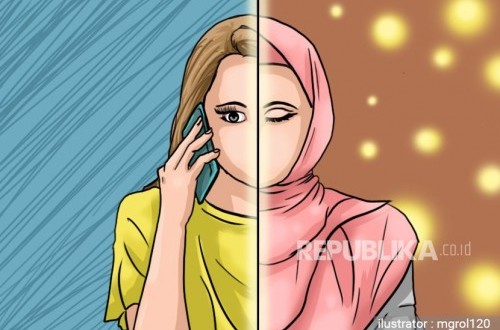
As we approach the commemoration of the Islamic New Year, transitioning from 1447 H to 1448 H, a vital question arises: have we truly changed, or have we merely changed our calendars and social media statuses?
Hijrah is an inevitability. Without Hijrah, it is impossible for anyone to achieve their goals. Hijrah is not merely the historical migration from Makkah to Madinah; it is the act of moving and transforming from one situation to a better one, while remaining reliant on Allah SWT. Unfortunately, many view Hijrah as nothing more than changing one’s attire or social media biography. Yet, the Prophet Muhammad SAW migrated to build a civilisation. If we celebrate without changing, then Muharram remains nothing more than an empty ceremony. Therefore, as the New Year approaches, we must realise Hijrah across four dimensions of life.
First, the personal dimension: stop falling into the same mistakes. Every believer must be better than the previous year. The Qur’an does not praise ‘large amounts of good deeds’, but rather ‘the best deeds’ (ahsanu amala). It is about quality, not quantity. It is inappropriate for a believer to repeatedly fall into the same traps of sin, laziness, or debt. One-third of the Qur’an contains stories of past nations so that we may learn from history rather than repeat it.
Second, the social dimension: our wealth contains the rights of others. A true believer does not live solely for themselves; they possess empathy, sympathy, and care. Personal Hijrah without social Hijrah is selfish. This is the secret behind the mandate of Zakat. Within our bank accounts and our salaries, there is a portion designated for the poor, orphans, and the needy.
Third, the missionary (dakwah) dimension: the silence of a believer is a disaster. It is not enough for a believer to say, ‘I have prayed, I have paid Zakat, I have performed Hajj, and my duty is done.’ A true believer must actively invite others—inviting family to the mosque, encouraging friends to leave usury (riba), and urging society to uphold righteousness. The passivity of a believer does not only weaken their own faith but also allows the ‘bacteria’ of wrongdoing to spread. If scholars remain silent, corrupt politicians will speak. If teachers remain silent, creators of immoral content will be heard. If we all remain silent, who will voice the truth?
Fourth, the political dimension: enter and occupy institutions rather than merely criticising them from the outside. We need social institutions to facilitate missionary work: mosques, schools, cooperatives, political parties, and state agencies. It is insufficient to shout ‘the system is broken’ from the roadside. A believer must enter and fill these institutions with Islamic values. Social, economic, political, and cultural spheres must all be occupied by people of faith; otherwise, these vacancies will be filled by those who are indifferent to what is lawful and unlawful. Remember that the Prophet Muhammad SAW did not only build a mosque, but also established markets (the economy), the Constitution of Madinah, and a system of governance. That is political Hijrah.
Thus, as the year changes, if our hearts do not change, we are merely changing numbers, not our destiny. Allah SWT does not demand that we immediately become like Umar bin Khattab; He only demands that we move. Move from laziness to productivity, from stinginess to care, from silence to advocacy, and from criticism to real action. Hijrah is not an annual event; Hijrah is a decision made every day after Subuh. May Allah SWT guide us to fulfil our mission as humans: to worship and to serve as stewards of the universe.