
The Dilemma of PT DSI's Policy: Between Protecting Public Wealth and Economic Justice
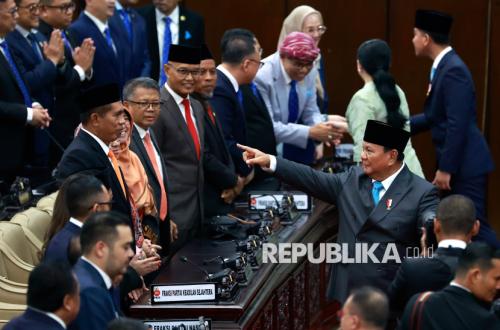
In a speech delivered to the House of Representatives (DPR RI) on 20 May 2026, President Prabowo Subianto highlighted the significant scale of national economic leakages. Accumulations of fraudulent practices, including under-invoicing, under-counting, and transfer pricing between 1991 and 2024, have resulted in an estimated loss of USD 908 billion (approximately IDR 15,400 trillion) to foreign entities. Based on UN Comtrade data, this figure represents 64 per cent of the current national GDP—a massive loss that, from the perspective of Islamic jurisprudence (fiqh muamalah), contradicts the principle of equitable wealth distribution.
In response, the government has taken a bold step by establishing PT Danantara Sumberly Indonesia (DSI) on 19 May 2026. The state-owned entity is designed to manage the export of three key commodities—Crude Palm Oil (CPO), coal, and ferroalloy—through a single-door system. Simultaneously, Export Proceeds (DHE) regulations have been tightened, requiring funds to be deposited in state-owned banks (Himbara) for a minimum of 12 months.
Analysed through the lens of Maqashid Syariah (the objectives of Islamic law), this centralised trade policy sits at a crucial crossroads between the protection of public assets (Hifzh al-Mal) and the enforcement of economic justice (Adl al-Iqtishadi).
Efforts to Protect Public Wealth Through State Intervention
In Islamic legal tradition, one of the primary pillars of Maqashid Syariah is Hifzh al-Mal (the protection of wealth). This applies not only to the private sphere but also to the macro scale, specifically the protection of collective public assets (al-mal al-’am). The exploitation of strategic natural resources, as mandated by Article 32, Clause 3 of the 1945 Constitution, is essentially a trust that must be managed for the prosperity of the many.
Price manipulation via shell companies in tax havens such as Singapore or Hong Kong constitutes clear economic harm (mafsadah). This modus operandi obscures real transaction values to evade tax and export duty obligations. According to Finance Minister Purbaya Yudhi Sadewa, these leakages are worsening because conventional oversight instruments within the Directorate General of Customs and Excise are often vulnerable to corruption.
Substantively, under Islamic law, when conventional oversight fails, the ruler (waliyyul amri) has the legitimacy to intervene in the market (tas’ir or taqyiid al-mubah) for the public interest (maslahah ammah). The formation of PT DSI as a single exporter realises the legal maxim: ‘The policy of the leader towards his subjects must be based on public interest.’ By recording, reporting, and consolidating export data transparently, the state seeks to recover an estimated USD 150 billion in annual potential revenue to be returned to the public through development and low-interest credit liquidity via state-owned Islamic and conventional banks.
The Test of Economic Justice and Potential New Harms
However, every benefit carries a potential downside. Academics, business associations (Apindo), and farmers’ organisations (POPSI) have raised alarms regarding Adl al-Iqtishadi (economic justice). Justice in Islam requires that no party in the trading ecosystem be oppressed, whether it be honest corporations or small-scale farmers.
Apindo Expert Council member Danang Girindra Wardana likened this sudden regulation to ‘killing a fly with a cannon.’ In an attempt to penalise a few rogue entrepreneurs, the government may be creating new bureaucratic redundancies that could erode the profit margins of all compliant industry players. In Islamic economics, adding layers of transactions or intermediaries that provide no real value-added but incur costs can approach unjust economic burdens.
The most concerning social impact is occurring in the upstream sector. Following the policy announcement, the price of Fresh Fruit Bunches (TBS) for smallholder farmers in various production centres has plummeted by between IDR 800 and IDR 1,500 per kilogram. As market access narrows due to the single-door system, purchasing competition weakens. Historically, if exporters’ margins are squeezed by intermediary costs, the burden is passed down. For approximately 2.4 million independent palm oil farmers, this price drop is a severe blow to their daily livelihoods. This is the true test of economic justice: the noble intention of saving state funds must not come at the expense of the livelihoods of the poor.
Furthermore, centralised trade risks reducing the transparency and traceability of Indonesian palm oil in the eyes of the international community, particularly under the scrutiny of the EU Deforestation Regulation (EUDR). If global markets perceive this state monopoly as an unaccountable trade distortion, Indonesia’s bargaining position at the WTO could weaken, ultimately harming the macroeconomy.
Balancing Benefit and Harm: The Need for Fine-Tuning
In the principles of Ushul Fiqh, it is stated: ‘Preventing harm must take precedence over acquiring benefits.’ If the formation of PT DSI intends to achieve the benefit of tax optimisation, but in practice results in the destruction of smallholders’ livelihoods and a decline in the Indonesia Stock Exchange (IHSG) or Indonesia’s credit rating by Standard & Poor’s, then the policy instrument must be reviewed (fine-tuned). The government has indicated openness to adjustments during the three-month transition period (June–August 2026) towards a hybrid implementation phase.