
The Dilemma of Indonesia's Overflowing Rice Reserves
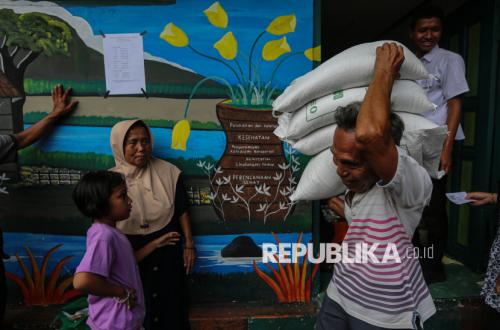
Indonesia’s Government Rice Reserve (CBP) has seen a highly significant increase, breaking the record for the highest level in the nation’s history. As of mid-July 2026, the CBP stock managed by Perum Bulog reached 5.4 million tons, a drastic surge compared to previous years where levels typically hovered around 2.6 million tons. The main drivers behind this significant spike include the optimisation of domestic procurement, with Bulog successfully absorbing 3.2 million tons of grain/rice from local farmers by the end of the first half of 2026. This first-half procurement figure alone exceeded the total absorption for the entirety of 2025, which was only 3.1 million tons. According to a report from the Ministry of National Development Planning (Bappenas), the physical realisation of this commodity reached 129 percent of the semester target, which was initially set at 4 million tons. The increase in procurement was spurred by compliance with the president’s instruction regarding the Government Purchase Price (HPP) for grain, maintained at a minimum of Rp 6,500 per kg at the producer level, encouraging farmers to sell their harvests to the government. According to the National Food Agency (Bapanas), this stockpile serves as Indonesia’s primary shield to mitigate food price volatility caused by the threat of a prolonged dry season and the residual effects of El Niño. Furthermore, the abundant supply has effectively cut the inflation chain, with the number of regions experiencing rice price increases above the Highest Retail Price (HET) decreasing massively from week to week.
Despite the record-breaking volume of the CBP, the government faces a paradox where full warehouses do not immediately translate to drastically lower consumer prices in traditional markets. Evaluations by Bappenas, economic observers, and Bapanas highlight several crucial challenges. Data from the Central Statistics Agency (BPS) shows that retail rice prices in traditional markets still tend to creep up or remain high in several regions, even though Bulog’s warehouses are overflowing. High upstream production costs, such as fertiliser prices and labour, as well as logistics distribution costs, make it difficult for prices to fall to low levels. Furthermore, with volumes exceeding 5.2 million tons, the risk of physical quality deterioration, such as infestation or yellowing, increases sharply if storage is prolonged, demanding a dynamic stock turnover strategy to prevent expiry. The government also faces the challenge of targeting accuracy for its 10 kg rice food aid programme to ensure the massive supply effectively cuts poverty and regional inflation. Logistical distribution to remote, deficit areas remains a hurdle. The government must also maintain a delicate equilibrium between absorbing rice at fair prices for farmers and ensuring affordable prices for urban consumers. With domestic consumption fully met and functional self-sufficiency achieved, an emerging option is to channel the excess stock to international markets through exports to prevent commodity pile-ups.
Bulog has declared its readiness to handle the record 5.4 million tons of CBP. Under the leadership of President Director Lt. Gen. (Ret.) Ahmad Rizal Ramdhani, the agency is operating modern infrastructure and tightening operational oversight to secure the massive stock. Bulog’s total warehouse capacity across Indonesia stands at 6.36 million tons, leaving approximately 1.18 million tons of available space. The government is supporting this by constructing 100 new warehouse complexes across 92 regencies/cities and integrating them with village cooperative storage facilities. To prevent quality degradation, Bulog is implementing strict supervision and a First In, First Out rotation system, with the House of Representatives Commission IV noting that the average rice storage period is only about four months before distribution. Procurement is focused on freshly milled, high-quality rice to extend shelf life. To maintain dynamic stock turnover, Bulog is accelerating distribution through three main programmes: channelling around 2 million tons to traditional and modern retail markets to stabilise consumer prices, distributing 10 kg rice packages to vulnerable groups, and sending massive supplies from surplus regions to deficit areas like Papua, where stocks are being increased from 17,000 tons to a target of 50,000 tons. Financially, Bulog is supported by budget flexibility and Presidential Instruction No. 4 of 2026, which guarantees a competitive grain purchase price of Rp 6,500 per kg, allowing the agency to successfully absorb 3.2 million tons of the total target this semester.