
The Dilemma of Amateur Radio Repeaters in the Instant Era
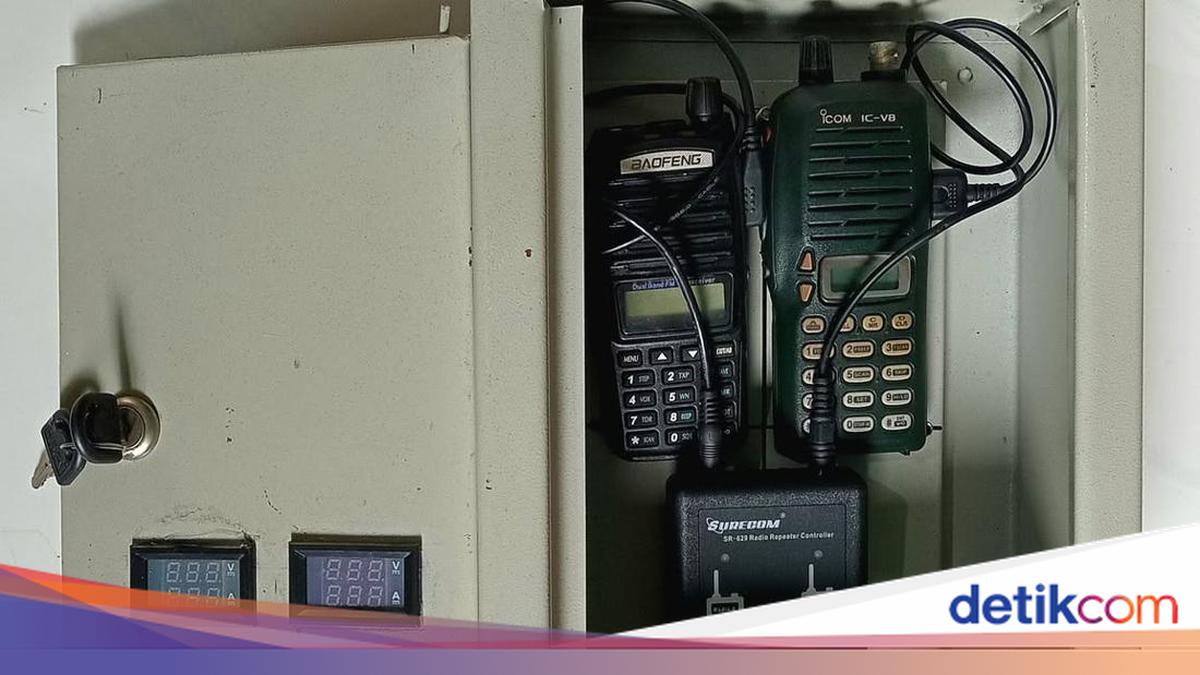
Perched atop a hill 1,000 metres above sea level, a concrete shelter stands firm against wind and lightning. Inside, stacks of silver-plated cavity duplexers, backup power supplies, and a pair of radio transmitters and receivers run incessantly. Every 15 minutes, the faint sound of an automated Morse code tone broadcasts the station’s callsign—an amateur VHF/UHF radio repeater built with significant technical precision and substantial shared funding from members.
However, the speaker has fallen silent. There is no incoming modulation, no warm greetings between members. Its mechanical relay remains silent more often than it clicks open the squelch.
As an organiser overseeing this infrastructure and observing the evolution of telecommunications closely, this sight presents a bitter irony: community radio infrastructure, designed to break geographical barriers for terrestrial communication, now stands grandly without listeners.
Real Investment Behind a Frequency Point
To the layperson—and even some newly licensed members—a repeater’s broadcast is often perceived as a facility that appears automatically. In reality, establishing and maintaining a repeater station is a combination of heavy financial commitment and physical endurance.
Building a reliable standard analog repeater requires an initial investment of tens of millions of rupiah, covering:
Procurement of high-durability (continuous duty) transmitter modules.
High-isolation cavity duplexers to prevent the transmitter from desensitising the receiver on the same mast.
Omnidirectional antennas with low takeoff angles.
Multi-layered lightning protection systems (surge arrestors and low-resistance grounding meshes).
The true challenge lies in routine maintenance. Land rental at hilltop peaks, monthly electricity bills, periodic replacement of backup battery banks due to extreme weather cycles, and the mobilisation of volunteer technicians through slippery terrain during storms—all are sustained by organisational funds and the personal pockets of a few dedicated officials.
Why is the Frequency Growing Quiet?
The leap in 4G/5G cellular technology, the proliferation of instant messaging groups (WhatsApp, Telegram), and internet-based Push-to-Talk (PTT) applications like Zello are gradually altering interaction behaviours:
Instant, barrier-free pathways: Smartphones offer the ease of sharing text, clear voice without atmospheric noise, and high-resolution video directly from indoors without the need for coaxial cables or climbing roofs.
Regulatory and frequency etiquette fatigue: Radio communication requires technical discipline: maintaining spacing (over), waiting for the repeater tail to drop, stating station identities, and adhering to open public space ethics. For a generation accustomed to closed, asynchronous chat rooms, this format is often deemed cumbersome.
A broken chain of regeneration: Portable radio equipment (HT) from East Asia is now very affordable on marketplaces, making licences easy to obtain. However, ownership of equipment does not automatically foster an understanding of the essence of Radio Frequency (RF) engineering or the importance of testing propagation ranges organically.
The Fatal Danger to Infrastructure: Why the Public Still Needs Repeaters
The silence on amateur radio repeater frequencies is not merely a matter of declining casual ‘ragchewing’; it is a hidden threat to civil emergency preparedness.
Commercial cellular networks are built on centralised infrastructure that relies entirely on constant power supplies and terrestrial fibre optic networks. When large-scale natural disasters occur—such as tectonic earthquakes, flash floods, or landslides—commercial BTS towers often fail due to mass power outages and data traffic congestion.
At that critical juncture, amateur radio repeater stations become the final bastion:
They operate autonomously (off-grid) using solar power or independent batteries.
They provide instantaneous point-to-multipoint connections without requiring intermediary servers.
They enable the coordination of evacuation efforts, medical volunteers, and logistics information when cellular signals are non-existent.
A repeater that is rarely used or maintained during quiet periods is a repeater at risk of failing when a disaster strikes. Empty frequencies make organisers vulnerable to losing the motivation to maintain critical field components.
Looking Ahead: Reviving the Pulse of the Frequency
To face this paradox, amateur radio enthusiasts must not merely reminisce or demand members return to 1980s-style communication. New technological bridges must be built:
Digital and Internet Integration: Adopting digital voice technologies (such as DMR, Yaesu System Fusion, and D-Star) and connecting local repeater nodes to global networks (Radio over IP/RoIP gateways) to attract young talent interested in network engineering.
Emergency Data Functions: Repurposing VHF frequencies for packet data traffic, such as APRS (Automatic Packet Reporting System), which is highly useful for mapping the positions of emergency volunteers without cellular GPS assistance.
Regular Simulation Exercises: Transforming repeaters from mere casual chat channels into media for periodic crisis management simulations, coordinated with local Regional Disaster Management Agencies (BPBD).
The repeater station on the hilltop is not merely an old metal monument. It is the community’s communication insurance. Maintaining and revitalising it is not just about a hobby; it is about safeguarding the nation’s readiness for when modern civilisation suddenly goes dark.
Source: jawawa.id (https://jawawa.id/newsitem/the-dilemma-of-amateur-radio-repeaters-in-the-instant-era-1789117322)
Originally published by detikcom (https://news.detik.com/kolom/d-8658469/dilema-repeater-amatir-radio-di-era-serba-instan), translated from Indonesian