
The Death Penalty and the Unfinished Question of Humanity
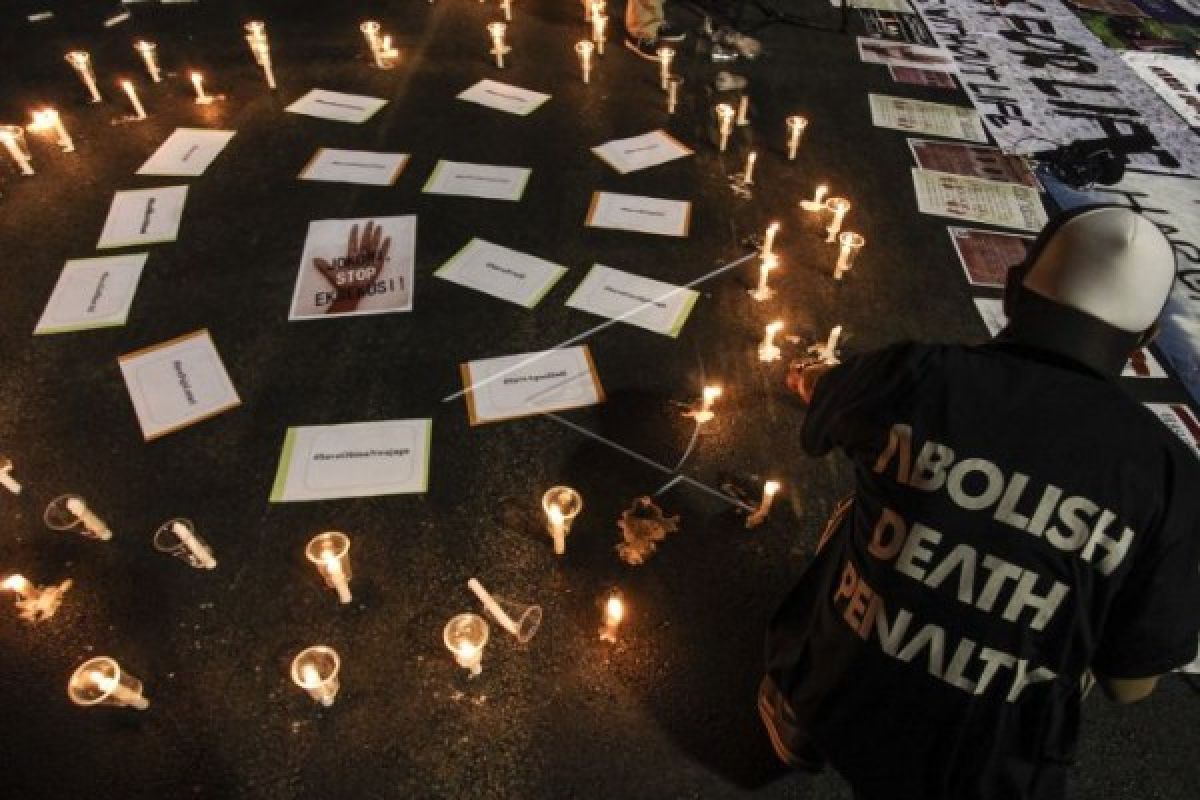
Maintaining the death penalty is not merely a question of the severity of punishment, but also of the extent to which the state is willing to acknowledge the limits of its power.
Jakarta (ANTARA) – Every 10 October, the world marks the World Day Against the Death Penalty.
The occasion is not only a call to abolish one form of punishment, but also an opportunity to reconsider how the state treats human life when it comes into conflict with the law.
Behind every death sentence lie questions of justice, human dignity and the limits of state authority—none of them straightforward.
In Indonesia, the debate is far from over. Criminal law reform through the new Criminal Code has changed the regulation of capital punishment, including by classifying it as a special punishment with a probationary period.
But changes to the law have not resolved the issue. Courts continue to impose death sentences, while hundreds of people remain on death row in uncertainty that can last for years, or even decades.
The death penalty is therefore not simply a question of whether the state may take someone’s life. It also concerns how justice is administered, how prisoners’ rights are upheld and how far the state is willing to make humanity the foundation of its sentencing policy.
Amid the drive for legal reform, progress should be measured not only by changes to legislation, but also by the state’s commitment to ensuring that justice retains its human face.
The death penalty in Indonesia
The figures show that the issue of capital punishment in Indonesia is far from resolved. According to the Correctional Database System, cited by the Indonesian Legal Aid Foundation (YLBHI) and the Death Penalty Abolition Network (JATI), as at 6 October 2026 there were 683 people sentenced to death, up from 562 in 2024 and 607 in 2025.
Meanwhile, Amnesty International Indonesia recorded at least 68 death sentences handed down by courts during 2025, most of them in narcotics cases. The figures show that although Indonesia has carried out no executions since 2016, courts continue to impose death sentences.
Behind these figures is another significant problem: lengthy periods on death row and uncertainty about prisoners’ fate. Data from the Institute for Criminal Justice Reform (ICJR) as at 31 December 2025, cited by YLBHI and JATI, show that 133 people sentenced to death had been waiting for more than ten years; about 56 had waited for more than 15 years, and 25 for more than 20 years.
The longest wait has reached 27 years. Such delays are not merely an administrative matter for the prison system; they also involve psychological suffering and human dignity, which must be respected regardless of the crime for which someone was sentenced.
The new Criminal Code, which came into force on 2 January 2026, introduced an important change by classifying the death penalty as a special punishment accompanied by a ten-year probationary period. However, this reform needs to be followed by practical steps, including a clear mechanism for commutation or substitution of the sentence.
Legal reform should not stop at revising statutory provisions. It must also ensure that there is a way to review sentences and reduce the suffering caused by prolonged waiting. The state’s seriousness in reforming its death penalty policy will also be reflected in its ability to balance justice and humanity.
Restoring humanity
Source: jawawa.id (https://jawawa.id/newsitem/the-death-penalty-and-the-unfinished-question-of-humanity-1791795238)
Originally published by Antara (Indonesian) (https://www.antaranews.com/berita/5781810/hukuman-mati-dan-persoalan-kemanusiaan-yang-belum-usai), translated from Indonesian