
The 'Death' of Paper Money Becomes More Visible, LPEM UI Research Provides Evidence
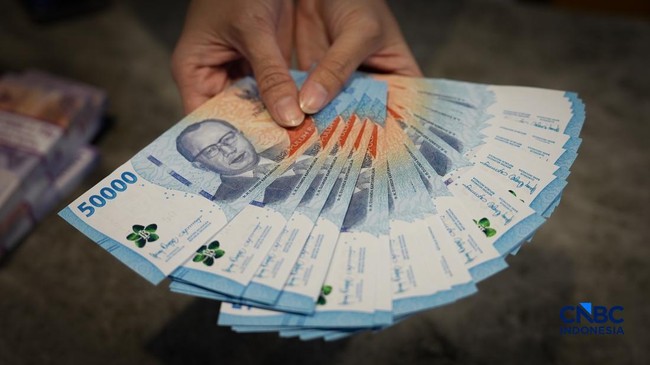
Jakarta, CNBC Indonesia - Rapid technological advancements are prompting many people to switch to modern systems, including in their daily transactions. With all-digital payment systems, many citizens are becoming increasingly reluctant to carry cash.
The Institute for Economic and Social Research at the Faculty of Economics and Business, University of Indonesia (LPEM FEB UI), has released a research report stating that the proportion of cash in circulation across various countries continues to shrink amid massive advances in payment system technology, especially in developing nations.
In Indonesia, the volume of electronic money transactions has soared sharply over the past decade. In 2023, Bank Indonesia (BI) reported that e-money dominated more than 70% of retail transactions, surpassing debit and credit cards.
“There is a significant impact, where every 1% increase in electronic money transactions correlates with a 1.7% decline in demand for cash,” stated the LPEM FEB UI research, compiled by Jahen F. Rizki and colleagues, as quoted on Tuesday (23/6/2026).
LPEM FEB UI noted that the influence of declining cash usage is much stronger in provinces that are more urbanised and digitally advanced, particularly in Java. This is because digital infrastructure in Java is very dense, with extensive agent networks, merchant terminals, stable internet, and better cellular connectivity. Conversely, weaker infrastructure outside Java means dependence on cash remains high.
“The obligation to use electronic payments on toll roads and public transport is mostly concentrated in Java, successfully shaping consistent daily digital transaction habits,” the research explained.
Furthermore, network externalities accelerate the replacement of cash, as the more consumers and shops switch to the digital ecosystem, the greater the convenience becomes. “The low adoption rate outside Java is due to limited usage,” the research clarified.
The impact of payment digitalisation is also quite visible across different banknote denominations, with Rp2,000 to Rp20,000 notes experiencing the sharpest decline in usage, as they are directly replaced by electronic money for daily transactions. “The impact on large-denomination banknotes is weaker because people tend to keep them for precautionary savings or use them for large, informal transactions,” the research further explained.
Meanwhile, coins are not significantly affected, as they remain a mainstay for very small-value transactions and providing change. From a behavioural perspective, this phenomenon proves that electronic money has successfully displaced cash for daily shopping, but has yet to significantly penetrate micro-value transactions.
The LPEM research provides strategic recommendations for the future of Indonesia’s increasingly cashless economy. For Bank Indonesia (BI), it is necessary to incorporate digital payment trends into the framework for projecting cash distribution. Since electronic money reduces cash demand and accelerates money velocity, this adjustment is crucial for more effective management of the money supply and price stability.
For the government, it is necessary to encourage more targeted interventions to make digitalisation more inclusive. This can be achieved by expanding QRIS acceptance among small traders, lowering transaction costs for small-value payments, and integrating digital platforms into social assistance programmes and wage payments.
Source: jawawa.id (https://jawawa.id/newsitem/the-death-of-paper-money-becomes-more-visible-lpem-ui-research-provides-evidence-1782264018)
Originally published by CNBC Indonesia (https://www.cnbcindonesia.com/market/20260623204904-17-745170/kiamat-uang-kertas-kian-terlihat-riset-lpem-ui-beri-buktinya), translated from Indonesian