
The Darkening Face of Indonesia’s Democracy
The Darkening Face of Indonesia’s Democracy
Pro-democracy activists concerned over centralized leadership style resistant to criticism
More than two decades after Indonesia’s Reformasi movement ushered in democratic governance, there are mounting indications that this era may be entering a more precarious phase. The warning signs are varied but increasingly difficult to ignore: reports of intimidation and terror directed at activists, legislative initiatives widely seen as constraining press freedom, and, perhaps most strikingly, the reactivation of military command structures at the regional level.
For many observers, these developments evoke the territorial military influence that defined Indonesia’s authoritarian past, raising urgent questions about whether the country is gradually retreating from the democratic gains achieved since 1998.
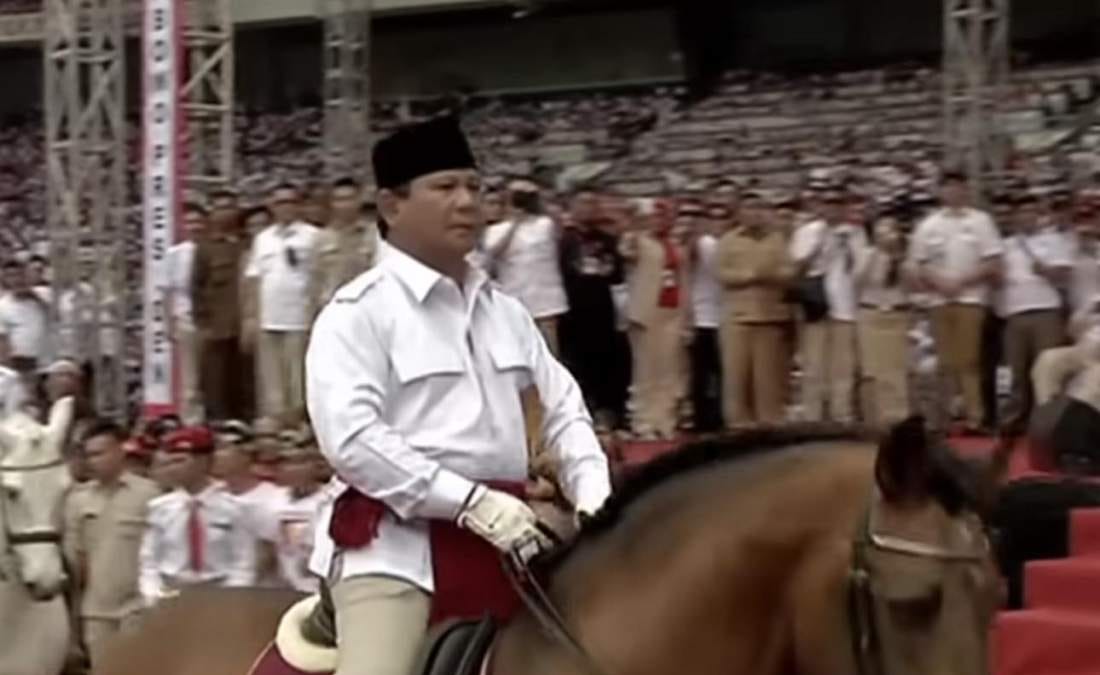
At the center of this evolving debate stands President Prabowo Subianto. Critics have increasingly turned their attention to his governing style, which, according to Yanuar Nugroho in an article published by Kompas Newspaper, appears to rely more heavily on personal loyalty than on deliberative processes grounded in institutional reasoning. Such an approach stands in contrast to the technocratic logic that emphasizes cross-institutional coordination, data-driven decision-making, and systemic accountability.
Pro-democracy activists argue that Prabowo’s leadership has, over time, shown a growing inclination toward military-style approaches that risk undermining democratic norms and civilian protections. This tendency, they say, is exacerbated by a centralized leadership style that is resistant to criticism and often dismissive of social realities on the ground.
The Return of Territorial Command
One of the most contentious developments has been the reactivation of the Territorial Staff Chief (Kaster) position within the Indonesian military which had been abolished in 2001 by former President Abdurrahman Wahid as part of sweeping military reforms. Khairul Fahmi, a co-founder of the Institute for Security and Strategic Studies (ISESS), noted that during the New Order era, territorial commands served as tactical instruments for maintaining political stability. Security functions that should have been the domain of the police were instead carried out by the military as part of its dual function (dwifungsi) in both defense and civilian affairs. This trajectory became more pronounced in March 2025, when the government and Parliament passed amendments to the Indonesian Armed Forces Law, allowing military officers to occupy a wider range of civilian government positions.
“The military today carries a kind of historical burden of proof,” Fahmi said. “It must demonstrate transparently that the reactivation of the Kaster position is not a return to the old patterns of dual function.”
Since last year, Prabowo has overseen the establishment of six new regional military commands and the activation of 100 of a planned 514 territorial development battalions across Indonesia. Additional expansions include 14 naval and three air force regional commands, and one air operations command. The administration has also formed six special forces command groups, 20 territorial development brigades, and several new units within rapid deployment and marine corps structures.
Terror Against Activists
The debate over military expansion has taken on a more urgent tone in the wake of a series of attacks targeting activists and public figures critical of the government. Among the most alarming incidents occurred on the night of March 12, 2026, in Menteng, Jakarta. Two men on a motorcycle threw acid at Andrie Yunus, a 27-year-old deputy coordinator of the Commission for the Disappeared and Victims of Violence (KontraS), as he was returning home after recording a podcast interview.
Yunus suffered burns covering 24 percent of his face, chest, and hands, and faces the possibility of losing the cornea in his right eye. The video of the attack, widely circulated on the internet and social media, sparked public outrage and calls for a thorough investigation.
On March 18, military police arrested four soldiers—a captain, two lieutenants, and a sergeant—assigned to the Strategic Intelligence Agency (BAIS), in connection with the acid attack on Yunus. However, details regarding their motives, individual roles, and the full chronology of events have yet to be disclosed.
Yunus had been a vocal critic of the military, particularly in light of proposed legal changes expanding its role in civilian affairs. He also contributed to a report examining alleged involvement of BAIS personnel in arson attacks during economic protests in 2025.
Following the arrests, the head of BAIS, Lt. Gen. Yudi Abrimantyo, announced his resignation, citing accountability. Activists, however, argue that this step falls short and have called for the suspects to be tried in civilian courts, pointing to a long history of impunity for military personnel accused of human rights violations. Complicating matters further, police have suggested that more than four individuals may have been involved in the attack. Authorities identified two alleged perpetrators with initials BHC and MAK, whose identities differ from those named by the military, raising concerns that not all those responsible have been brought to justice.
Government officials have sought to frame the incident as the actions of individuals rather than a reflection of institutional conduct. Yet some analysts remain skeptical. Muhamad Haripin, a defense and security researcher at the National Research and Innovation Agency (BRIN), questioned whether the suspects could have acted independently. “The military operates under a strict hierarchical command system,” he said. “Personnel at all levels are bound by orders and institutional norms.”
During Prabowo’s presidency, similar acts of intimidation have been reported against other outspoken figures. These include the delivery