
The Dark Side Behind the Story of an Office Boy Earning Minimum Wage with Debts in the Hundreds of Millions
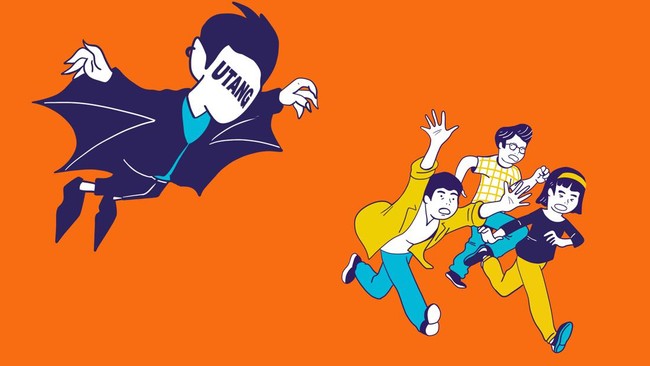
The true story of an office boy named “ID” (a pseudonym) is compelling to examine from legal, social, and public policy perspectives. Imagine earning just the regional minimum wage (UMR), not owning a home, still living with others, and having two very young children, yet gaining access to loans worth hundreds of millions of rupiah through various online loan applications and digital credit facilities.
This phenomenon raises major questions for the author. Why can the financial system approve loans for individuals with severely limited repayment capacity? Where does the state’s responsibility lie? Are loan companies merely chasing profits? Does society truly understand the risks of digital debt? What are the long-term impacts on Indonesia’s social structure? Will more problems arise?
According to the author, cases like this are not merely about individuals being extravagant or unwise, but reflect structural issues in Indonesia’s digital financial ecosystem.
Legal Perspective: Legal but Not Necessarily Fair
Legally, digital lending companies operate under the supervision of the Financial Services Authority (OJK) and comply with fintech lending regulations. However, in practice, several problems emerge:
- Weak Prudence Principles
In traditional banking, principles of repayment capacity, risk analysis, asset verification, and financial track record are well-known. But in digital lending, assessments often rely solely on mobile phone data access, transaction history, contacts, app behaviour, and algorithmic scoring. As a result, someone with low income, no assets, and no collateral can still obtain multiple loan limits simultaneously.
- Inter-Platform Gaps
One individual can borrow from multiple apps at once due to imperfect data integration, the national credit scoring system not being fully synchronised, and aggressive competition between platforms. It may be legally permissible, but ethically and in terms of consumer protection, it is problematic.
- Potential Predatory Lending
Some practices border on predatory lending, such as high interest rates, hidden fees, short tenors, consumerist promotions, and easy disbursements without adequate education. In consumer protection law theory, such relationships are considered imbalanced because laypeople have far less knowledge than financial technology companies.
Social Perspective: Debt as a Way to Survive
We can view “ID”’s case in the context of Indonesia’s socio-economic pressures on the lower class. Many minimum-wage workers face rising living costs, children’s education expenses, healthcare needs, digital lifestyle pressures, and minimal savings. Loans are no longer used for productive businesses but to cover daily needs, rent, school fees, and even to pay off one debt with another.
Normalisation of Digital Debt
Online loans have become part of modern consumer culture due to enticing advertisements portraying them as solutions to all problems, coupled with very low literacy among middle- and lower-class society. Paylater is seen as normal, instant credit as a solution; society loses sensitivity to compound interest risks. Debt shifts from an emergency tool to a financial lifestyle.
Most tragically, this impacts not only the borrower but also their partner, children, family, and social environment. When payments fail, household conflicts rise, mental health suffers, work productivity drops, and children risk a decline in quality of life. In the long term, this can create a digital poverty cycle.
Where is the Government’s Role?
This is the most crucial point in legal-social studies. Financial literacy remains low. The state has not maximised efforts in educating about loan interest, high-interest debt risks, family financial management, and understanding digital contracts. Meanwhile, many people do not understand APR/effective interest, do not read app terms, and do not calculate monthly repayment capacity.
Regulations Often Lag Behind Technology
Fintech technology develops far faster than regulations. The government often acts only after failed payment victims increase, debt collection intimidation goes viral, or social crises occur.
Algorithm Oversight Remains Very Weak
A very important question here is: Should the state allow algorithms to determine the financial fate of the poor? Ultimately, companies chase user growth, investors seek profits, while social risks are borne by society.
Loan Companies’ Responsibilities
Ethically, lending companies cannot hide behind users’ digital consent. They should also have social responsibility to conduct realistic credit assessments, limit over-lending, ensure risk education, and avoid exploiting vulnerable groups.
If someone earning UMR without assets can accumulate hundreds of millions in debt, it raises the question: Is the system helping society or fostering debt dependency?
Future Impacts
If this phenomenon continues, several major impacts may emerge:
- Household Debt Crisis
Where people live on monthly salaries plus new loans to pay old ones, ultimately creating a fragile illusory economy.
- Young Generation Growing Under Financial Pressure
Children from debt-burdened families risk limited education, family stress, economic instability, and poverty reproduction.
- Digital Inequality
Technology