
The Cries of Residents Behind the Illegal Waste Disposal Site
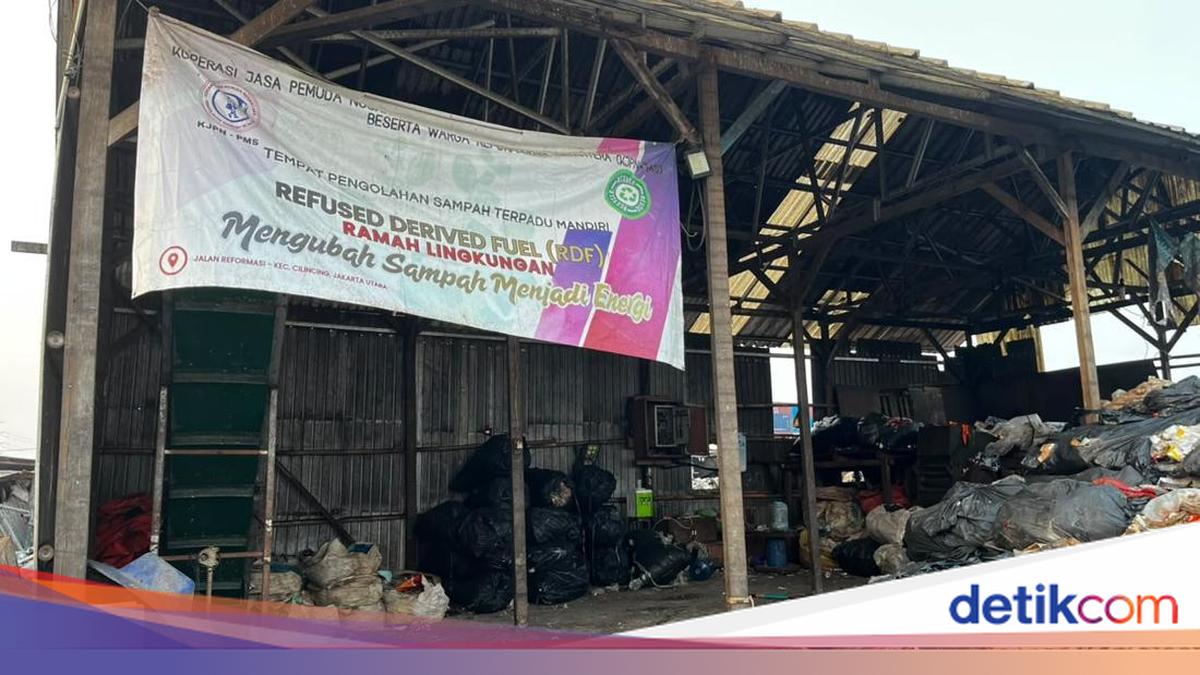
For more than two decades, residents of Kampung Reformasi in Cilincing, North Jakarta, have been forced to live alongside mountains of rubbish. Although most residents were initially disturbed by the pungent smell and the water used for latrines turning yellowish-brown, some now depend heavily on the illegal waste disposal site.
“Residents eat from here, children go to school from here, we eat from here,” said Nur, a resident of Kampung Reformasi, to detikX on Friday, 14 August 2026.
Nur is well aware that not all residents of Kampung Reformasi benefit from the illegal waste disposal site, and some remain disturbed by it. However, for Nur and her family, the site is the only place where she can earn a living as a sorter of economically valuable waste, such as recyclable plastic and cardboard.
That is why Nur and some other residents feel deeply unsettled by the Jakarta provincial government’s plan to clear the illegal waste disposal area. She hopes the Jakarta administration will take a wiser view of the issue.
“Because if this illegal site is gone, we become useless,” Nur said.
Sarwenda, another resident met by detikX, said Kampung Reformasi was previously just a stretch of fish ponds divided by the Rawa Malang canal. Most residents used the ponds to farm fish such as milkfish, tilapia, and freshwater prawns.
Around 2002, the Jakarta Sanitation Agency—now the Environmental Agency—came and asked them to switch jobs to become waste sorters. According to Wenda, the Jakarta administration planned to turn the ponds into an alternative waste disposal site after access to the Bantargebang Integrated Waste Treatment Facility in Bekasi was closed by surrounding communities.
“Everyone came here. You initially worked the ponds. Now you are being shifted to earn your living from here,” a Jakarta Sanitation Agency officer said at the time, as recounted by Wenda.
Residents were then taught to sort waste that had economic value from waste that did not. The valuable waste was sold to various collectors. Wenda said being a waste sorter turned out to be far more profitable than fish farming.
“Now, as a waste sorter, you can earn Rp 500,000 to Rp 700,000 a week. With fish, you have to wait for the harvest first—it could be six months before you get any money,” Wenda said.
Since then, the lives of Kampung Reformasi residents have become increasingly dependent on waste from Jakarta residents dumped at the site. Their children could go to school and families could eat from the proceeds of sorted waste sold to collectors.
That is why, when the Jakarta administration officially stopped waste dumping at the Cilincing site, Kampung Reformasi residents worked together to find companies willing to dispose of waste in their area. Wenda said the Jakarta administration at the time offered no solution to residents who lost their livelihoods after Kampung Reformasi’s status as an alternative waste disposal site was ended.
“Only the subdistrict head encouraged us to change professions. We would be taught cooking, sewing, welding. We residents here rejected that. That is not a solution,” Wenda said.
According to Wenda, such training takes a long time. Moreover, residents of Kampung Reformasi do not know where to look for work after completing the training. Meanwhile, she said, the matter of feeding one’s family cannot be postponed for even a day.
For that reason, Kampung Reformasi residents chose to continue working as waste sorters by using waste illegally dumped by a number of companies at the Cilincing site. Wenda said residents do not restrict anyone from dumping waste at the Cilincing site, as long as the waste has economic value. Residents also do not ask for any money from companies that dump waste there.
For years, Kampung Reformasi residents have continued to manage waste at the Cilincing site on a self-help basis. Some of the money from that management has been set aside to build a free school, buy trucks to transport sorted waste, and build a refuse-derived fuel facility.
“Yes, it came from residents’ contributions. We collected up to hundreds of millions of rupiah and used it to build the RDF facility. Residents manage it themselves,” Wenda said.
The RDF facility at the site was only built in 2024 because of demand for plastic waste from PT Indocement Tunggal Prakasa Tbk. Wenda said the shredded plastic is useful as additional fuel for cement production.
From the cooperation with Indocement, residents earn around Rp 15 million to Rp 20 million per month. The proceeds are distributed to residents working at the RDF facility, with the rest kept as cooperative savings.
Ciptandhi Hans Hamid, also known as Dehans, the acting head of Cilincing subdistrict, said the area is called Kampung Reformasi because it is located on Jalan Reformasi. Some people call it the Nagrak or Rawa Malang waste disposal site. The location remains within Cilincing subdistrict.
Although several waste processing companies have been proven to dump waste illegally at the site, the illegal waste disposal site cannot yet be closed. This is because the site is not on land owned by the Jakarta administration.
“The problem is that the land is privately or commercially owned. It is not government land. If it were government land, perhaps we could take action, whether closure or, to put it bluntly, eviction—we would relocate them. If it were government land,” Dehans told detikX.
Dehans said his office and the provincial government are still looking for solutions to sustain residents’ livelihoods.