
The Cowboy Lost the War
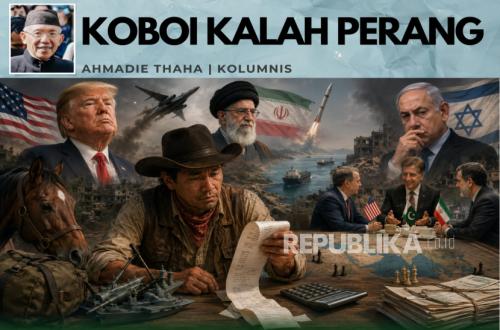
The New York Times editorial this week sounded like a judge’s gavel in a courtroom: ‘President Trump Lost This War’. That sentence was not written by an anti-American activist on a street corner. It emerged from the newsroom of the most influential newspaper in the United States. Its editorial board concluded that Donald Trump failed to obtain almost all the goods he promised the American people before the war began. Yet his campaign showcase was once so lavish. There was ‘unconditional surrender’. There was ‘total victory’. There was ‘zero uranium enrichment’. There was also a massive discount in the form of regime change in Tehran. Trump’s language often resembles a store’s clearance banner: everything looks easy, quick, and profitable. Just swipe a card, problem solved. But war, it turns out, is not a marketplace. The goods displayed in the window are not necessarily available in the warehouse. Now, if a peace deal is signed in Geneva, the world witnesses an irony that even satirical writers might be ashamed to fabricate. After four months of war, billions of dollars in military costs, tens of thousands of missiles, and apocalyptic threats, America is returning to the negotiating table with a menu similar to the 2015 nuclear deal. That is the agreement once crafted by Barack Obama but later discarded by Trump like someone throwing away an umbrella because they felt the sun would shine forever. It turns out political weather enjoys a joke. So who won? The question is akin to asking who the victor is when two neighbours fight with machetes and then end up meeting at the same community health centre. One lost teeth. The other lost an ear. Both went home carrying a prescription. Iran, to a certain extent, gained what it did not possess at the start of this year: bargaining power. The regime predicted to collapse is still standing. Its nuclear programme has not truly been buried. The Strait of Hormuz proved to be not merely a shipping lane, but the oxygen valve of the global economy. Iran is like a small coffee shop owner who turns out to control the electricity switch for an entire village. When the lights went out, everyone suddenly realised they had been underestimating the position of the cashier’s desk. But do not be tempted to parade Iran as the champion. The land of poets still carries wounds. Its military infrastructure is in shambles. Its economy is tattered. Its young generation remains burdened by political repression. Winning in diplomacy does not automatically make people’s lives cheaper. History is full of countries that won wars but lost the battle against the price of rice. America itself does not return empty-handed. The Strait of Hormuz is reopened. Energy prices may ease. Trump can sell the story that Iran was successfully forced to negotiate. However, the most expensive lost item cannot be bought in any shop: prestige. The world saw the superpower like a heavyweight boxer entering the ring with spotlights, thundering music, and sponsor advertisements everywhere. His opponent was a middleweight boxer. The audience thought the match would be over in two rounds. But round after round passed. Breathing became laboured. The coach began to panic. Until finally the referee stopped the fight via a points decision. The boxer was not knocked out. But the audience went home whispering, ‘They said Mike Tyson. How did it end up as chicken Tyson?’