
The Cost of Rupiah Stability
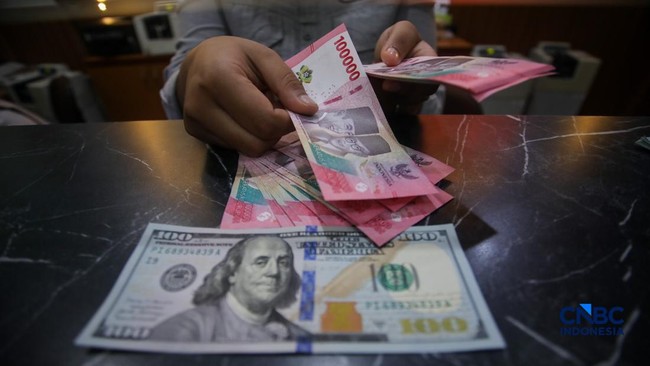
When the Rupiah weakens, the impact does not stop at figures in the foreign exchange market. The cost of raw materials for companies can increase, investment costs become more expensive, and these effects can ultimately reach consumers.
As of 8 September 2026, Bank Indonesia’s JISDOR rate was recorded at Rp17,618 per US dollar. The BI-Rate rose gradually from 4.75 per cent in April to 5.75 per cent in mid-June and was maintained at that level until August. This policy was undertaken to maintain exchange rate stability amidst global volatility, while simultaneously keeping inflation under control and supporting economic growth.
Rupiah depreciation is more than just a change in numbers in the foreign exchange market. When the Rupiah weakens, every dollar required to purchase goods from abroad becomes more expensive. The first types of businesses affected are those using imported raw materials, components, energy, and capital goods. To obtain the same goods, companies must spend more Rupiah.
This pressure is visible in import and producer prices. The Import Price Index in the second quarter of 2026 rose by 25.45 per cent year-on-year. The Producer Price Index also increased by 5.62 per cent year-on-year, with the manufacturing industry seeing an increase of 4.94 per cent.
While the rise in import prices is not solely caused by Rupiah depreciation, as global commodity prices also play a role, the data shows that cost pressures have emerged on the production side before being fully passed on to consumers.
When production costs rise, companies face difficult choices. Some costs can be passed on to consumers through price hikes, while others can be absorbed through margin reductions, efficiency measures, supplier changes, or production adjustments. If pressure persists, companies face not only pricing issues but also declining profits and increased business uncertainty.
The impact then extends to investment decisions. Companies importing machinery or components must recalculate project costs when the Ruplag weakens. Previously viable investments may no longer be feasible. Companies also face uncertainty regarding production costs once a project is underway. Prolonged depreciation can make the business world more cautious about expanding production capacity.
The risk is even greater for companies with foreign currency obligations. While the value of US dollar debt does not change, the amount of Rupiah required to pay principal and interest increases as the Rupiah weakens. For companies whose revenue is primarily in Rupiah and who have limited hedging, depreciation can worsen financial conditions and reduce room for expansion.
Pressure from the business sector can then spread to the wider economy through credit and investment. As depreciation increases inflation risks, the central bank’s room to ease monetary policy becomes more limited.
Higher interest rates can help dampen pressure on the exchange rate, but at the same time, they increase financing costs for businesses and households. More expensive credit can ultimately reduce incentives to invest and limit consumption that relies on financing.
However, the transmission of depreciation to consumers does not happen automatically. Inflation in August 2026 was recorded at 3.19 per cent, with core inflation at 2.92 per cent. Both remain within the 2026 inflation target of 2.5 per cent with a deviation of ±1 per cent.
This condition indicates that cost pressures on the import and producer sides have not yet been fully passed on to consumers. There is a lag between the rise in import costs, producer prices, and consumer prices. As long as companies are still able to absorb rising costs, the impact is not yet fully visible in inflation.
Therefore, Rupiah stability remains vital. A more stable exchange rate helps companies forecast import costs, plan investments, and manage foreign currency obligations. Stability also helps Bank Indonesia manage inflation expectations.
However, efforts to maintain Rupiah stability also have consequences for the economy. Higher interest rates can help curb pressure on the exchange rate but make loans more expensive for companies and households. Conversely, allowing depreciation to proceed without proper management can increase pressure on prices, corporate financial health, and purchasing power.
In the long term, resilience to depreciation is largely determined by economic structure. Industries with competitive domestic suppliers will be better able to absorb exchange rate fluctuations compared to industries heavily dependent on imported raw materials and components. High productivity also provides companies with greater room to absorb cost increases without immediately raising prices.
Consequently, Indonesia needs to increase productivity, strengthen domestic supplier industries, expand access to hedging, and make supply chains more efficient. The goal is not to reduce imports indiscriminately; imports of capital goods and raw materials remain necessary to expand production capacity. What needs to be reduced is the dependency on imports that causes exchange rate changes to rapidly drive up production costs.
Rupiah depreciation is ultimately not just a matter of exchange rates. Its impact moves from import prices to production costs, from production costs to corporate financial health, and then to investment, credit, and growth. Therefore, facing Rupiah weakness requires more than just maintaining short-term monetary stability. Indonesia also needs to build a more productive economy that is more capable of absorbing shocks from exchange rate fluctuations.
Source: jawawa.id (https://jawawa.id/newsitem/the-cost-of-rupiah-stability-1789966575)
Originally published by CNBC Indonesia (https://www.cnbcindonesia.com/opini/20260921104346-14-769476/harga-dari-stabilitas-rupiah), translated from Indonesian