
The Convergence of Islamic Economics and Pancasila Economics
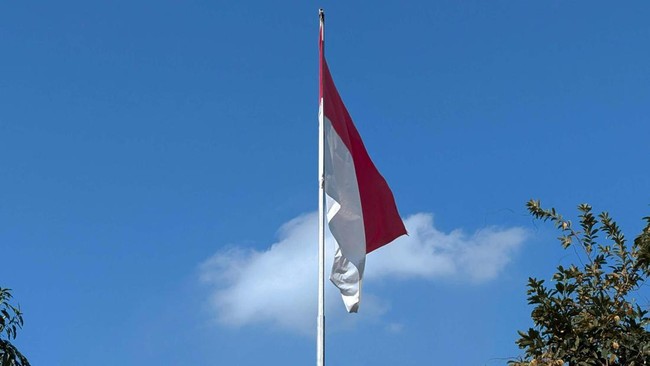
The birth of Pancasila on 1 June is not merely a historical commemoration of Soekarno’s 1945 speech, but also a reflective moment to reaffirm the nation’s developmental direction, including in the economic sphere. In that speech, Pancasila was formulated as the state foundation and a life philosophy encompassing political, social, and economic dimensions. However, to this day, Pancasila values have yet to be fully realised in economic life.
In truth, there is a frequently overlooked point of convergence: Islamic economics and Pancasila are not opposing poles. Instead, they share similar foundational values, namely justice (’adl), brotherhood (ukhuwah), partnership (syirkah), and collective prosperity (falah). In Indonesia’s pluralistic context, this convergence is vital to addressing challenges such as economic inequality, poverty, and market dominance that often ignores moral aspects.
Pancasila, particularly the fifth principle, ‘Social Justice for all the People of Indonesia’, mandates that economic growth must not be enjoyed by only a small group. This spirit aligns with the primary objective of Islamic economics (maqash_shid shariah), which is to create public interest and prevent harm through fair wealth distribution, the protection of vulnerable groups, and the prohibition of economic exploitation.
Article 33 of the 1945 Constitution can even be described as an ideological bridge between Pancasila and Islamic economics. The phrase ‘the economy shall be organised as a common endeavour based on the principle of the family system’ closely resembles the concepts of syirkah (partnership), ta’awun (mutual assistance), and distributive justice in Islamic economics. Various studies show that Islamic economic principles possess philosophical compatibility with Indonesia’s national economic system, particularly regarding the spirit of justice and social responsibility.
Islamic economics is not built solely on the logic of capital accumulation. The system rejects practices of riba (usury), gharar (excessive uncertainty), and maysir (excessive speculation) because they are deemed to create injustice. Conversely, Islamic economics encourages productive activities based on the real sector. This is where its relevance lies with the ideals of Pancasula economics, which positions humans as subjects of development rather than mere market instruments.
Indonesia’s current issue is not merely low economic growth, but the quality of that growth itself. Inequality remains a serious challenge. Economic growth is often concentrated among groups with access to capital and technology, while many MSMEs, particularly micro-enterprises, struggle to obtain financing and market access. Although they dominate in terms of labour and business units, their contribution to the national economy remains relatively low.
Similarly, the development of Islamic economics shows a gap between the growth of the Sharia financial sector and the strengthening of the real sector. The development of Sharia banking has not been fully followed by the industrialisation of the halal sector, especially within MSMEs. Although total national Sharia financial assets have exceeded Rp3,131 trillion (OJK, 2026), this ecosystem is considered not yet optimally orchestrated, as the halal industry and Sharia financial institutions tend to operate independently without strong interconnection.
This is where Pancasila economics and Islamic economics find simultaneous relevance. Both reject the concentration of wealth in specific groups and position the state as a crucial actor in ensuring market balance. The state must not merely be an observer but must be present through regulation, financing, social protection, and the strengthening of cooperatives and MSMEs.
In practice, the concepts of Islamic economics and Pancasila converge in cooperatives and Islamic social finance (ZISWAF). Both share strong alignment and benefits (maslahah) because they are built on the same basic values: justice (’adl), mutual assistance (ta’awun), and collective prosperity (falah). Cooperatives serve as democratic and inclusive economic vehicles, while social finance ensures equitable wealth distribution.
Furthermore, Islamic economics and Pancasila share a common view on business ethics. In a liberal economic system, profit is often the primary goal. In contrast, Islamic economics treats profit as an instrument to achieve public welfare. This same principle is reflected in Pancasila, which places morality and humanity as the foundation of national economic life. If these principles are implemented effectively, moral hazard in the economy can be minimised.
Another point of convergence is seen in the development of the halal industry. The government aims for millions of certified halal products as part of strengthening the national economy and increasing global competitiveness. The development of the halal industry is not only related to the needs of Muslims but also concerns product quality, safety standards, and export opportunities. In this context, the halal industry can serve as an instrument for inclusive national economic development that benefits all society, regardless of religion.
Furthermore, Islamic economics offers a development paradigm that pursues not only growth but also sustainability. The principle of balance (tawazun) in Islam teaches that economic development must consider social and environmental aspects. This value is highly relevant to the challenges of climate change and the ecological crisis currently facing the world.