
The Constitutional Economic System and the Problems Facing the President
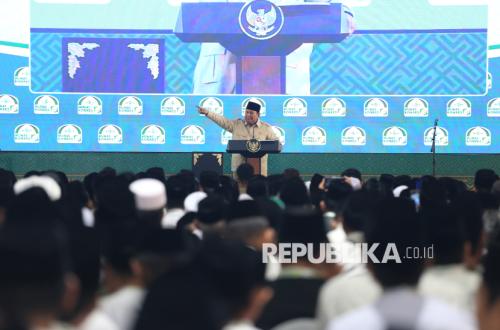
President Prabowo Subianto’s address at the closing of the National Conference and Grand Conference of the Nahdlatul Ulama Executive Board (PBNU) in Bangkalan, Madura, East Java, warrants careful reflection. On that occasion, President Prabowo urged us to understand what has actually been happening in Indonesia. The Head of State concluded that the nation’s economy can grow by five per cent per year. Over a seven-year period, therefore, growth amounts to 35 per cent, according to the President. Thus, by his calculation, the nation’s wealth should have increased by 35 per cent compared to seven years ago. However, President Prabowo posed a question: why has this economic growth not been enjoyed evenly by all levels of society? In fact, some members of the middle class who had previously escaped poverty have fallen back down. This indicates, according to Prabowo, that there is a problem in the national economic system, where the benefits of economic growth remain concentrated within certain groups. Therefore, the Head of State stressed, this must be rectified immediately so that the results of national development can be felt more equitably. According to him, if the economy grows but the number of poor people increases and the middle class shrinks, it means our economic system is wrong. In my view, President Prabowo is correct if he views this from the perspective of the economic system mandated by the constitution, as stated in Article 33 of the 1945 Constitution: ‘The land, the waters and the natural riches contained therein shall be controlled by the State and exploited to the greatest benefit of the people.’ In practice, the economic system operating in this country thus far, as stated by Nasdem Chairman Surya Paloh, is a liberal capitalist economic system.