
The Congress of Muslims and the Future of the Nation's Civilisation
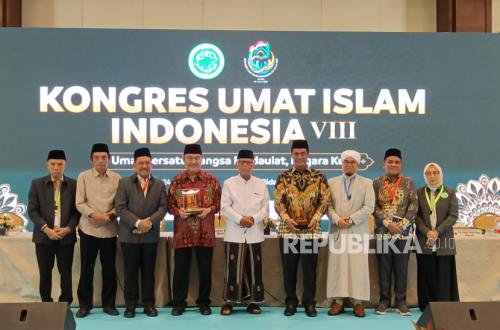
The 8th Indonesian Muslim Congress (KUII VIII) has concluded, yet the fundamental question it raised remains: where is this nation’s civilisation headed? This question grows increasingly urgent as the country faces overlapping challenges. Domestically, we grapple with inequality, corruption, a weakening of public trust, and social polarisation, alongside concerns over law enforcement. Externally, the world is confronted with geopolitical uncertainty, economic rivalry, technological disruption, climate change, and the rise of artificial intelligence, which is advancing faster than society’s ethical preparedness.
These internal and external pressures do not exist in isolation; they compound one another and can further burden national life if not met with clarity of thought, moral strength, and collective consciousness. It is within this context that the congress adopted the theme ‘United Ummah, Sovereign Nation, Strong State’. This should not be viewed as a ceremonial slogan but as a national chain of logic: the unity of the people serves as social capital, national sovereignty as the direction of struggle, and a strong state as the common goal.
Beyond the formal agenda, a more fundamental issue lies at the heart of the nation’s challenges: the moral character of the nation and the ethics of statecraft. A nation is not built solely on territory, population, state institutions, or economic growth. It is also formed by the willingness of its citizens to live together, maintain trust, and uphold values believed to be for the common good. As Ernest Renan posited in his 1882 lecture ‘Qu’est-ce qu’une nation?’, a nation is a moral community united by shared memories, aspirations, and responsibilities.
Therefore, a nation’s strength cannot be measured merely by its gross domestic product, infrastructure advancements, or technological sophistication. It is equally determined by the moral quality of its society and its leaders. This is the significance of moral force—a driving power sourced from honesty, integrity, the courage to speak truth, and the willingness to place the public interest above personal or group interests. Such strength is not always visible within formal power structures, yet history shows that great change often begins with the moral courage to reject injustice and safeguard values when short-term interests seek to dominate public space.
Amid the fragmentation of political interests and the growing influence of economic power over the political process, the moral voice becomes increasingly vital. Ulama, intellectuals, public figures, the media, universities, and civil society organisations bear the responsibility to ensure that the national interest is not drowned out by transient agendas. Honest and responsible criticism is not a threat to the state; on the contrary, it is part of the moral mechanism that keeps power aligned with the purpose of the state.
Source: jawawa.id (https://jawawa.id/newsitem/the-congress-of-muslims-and-the-future-of-the-nations-civilisation-1785412370)
Originally published by Republika (https://analisis.republika.co.id/berita/tizh8z366/kongres-umat-dan-masa-depan-peradaban-bangsa), translated from Indonesian