
The Condition of China During the Life of Prophet Muhammad, Now a Global Giant
Long before China was recognised as a global economic giant, the nation held an important position in the collective memory of the Muslim community. One popular expression among Muslims even links the name of China to Prophet Muhammad’s advice to seek knowledge even as far as that land.
The phrase “seek knowledge even unto China” has spread widely within Islamic tradition. However, hadith scholars debate the authenticity of this narration; some experts consider it weak, and it cannot be definitively confirmed as a saying of Prophet Muhammad. Nevertheless, the sentence retains a symbolic message regarding the view of China as a centre of advanced knowledge and civilisation during that era.
“The phrase indicates that China already possessed a great reputation in the Arab countries at that time,” wrote Yang Fuchang in the journal China-Arab Relations in the 60 Years’ Evolution (2018).
China and the Rise of the Tang Dynasty
During the lifetime of Prophet Muhammad (570–632 AD), various world centres of civilisation were developing simultaneously. In East Asia, China entered one of its most significant historical periods through the emergence of the Tang Dynasty, which ruled from 618 to 907 AD.
The Tang Dynasty was established on 18 June 618 under the leadership of Li Yuan, later known as Emperor Gaozu. The founding of this dynasty coincided with the period of Prophet Muhammad’s life, when he was approximately 48 years old.
Under the rule of Li Yuan, China began to rebuild political and economic stability following a period of upheaval. The unification of territories and the strengthening of trade activities became the foundation for the empire’s development.
Numerous historical records of the Tang Dynasty describe this period as one of the golden ages of Chinese civilisation. International trade flourished, major cities became hubs for cultural exchange, and relations with various regions in Asia intensified.
Silk, Ceramics, and Global Trade Routes
China’s economic progress during the Tang era was inseparable from the trade of various high-value commodities. Silk, fabric, ceramics, paper, and other goods were part of the products traded across various regions.
These commercial activities took place via two main routes: land and sea. The Silk Road connected China to Central Asia and the Middle East, while maritime routes linked Chinese ports to international trade networks.
This exchange was not merely about moving goods from one region to another. Knowledge, technology, culture, and ideas also spread through the interactions of traders and people from various civilisations.
It is in this context that China began to have an indirect relationship with the Arab world. Makkah, the residence of Prophet Muhammad, was known as one of the important trading hubs in the Arabian Peninsula.
Makkah, a Meeting Point of Civilisations
Historian Karen Armstrong, in her book Muhammad: A Prophet for Our Time (2001), describes Makkah as part of a trade network connecting the Eastern Mediterranean with various centres of civilisation, including China.
Makkah’s position as a trading city meant that the Arab people had access to information regarding regions far beyond the Arabian Peninsula. China was known as a land possessing wealth, trade products, and impressive civilisation traditions.
The vast geographical distance did not prevent the formation of knowledge regarding China. Through trade routes, news of the nation could reach Arab societies even before the Western world widely knew of the Americas and Australia.
The Early Story of Islamic-China Relations
Relations between the Islamic world and China also developed through traditional stories regarding the arrival of the Prophet’s companions in that land.
One name most frequently associated with the early history of Islam in China is Sa’ad bin Abi Waqqas. In Chinese Muslim tradition, he is said to have travelled to China to introduce the teachings of Islam.
However, this story remains a subject of debate among historians. There is no strong historical evidence that Sa’ad bin Abi Waqqas actually travelled to China during the period mentioned in various traditional accounts.
Nevertheless, the arrival of Muslim traders and envoys to China during the Tang Dynasty has a stronger historical basis. These relations developed through land and sea trade networks, particularly in port cities such as Guangzhou. This early contact subsequently became part of the long journey in the formation of the Muslim community in China.
From a Centre of Civilisation to a Global Economic Power
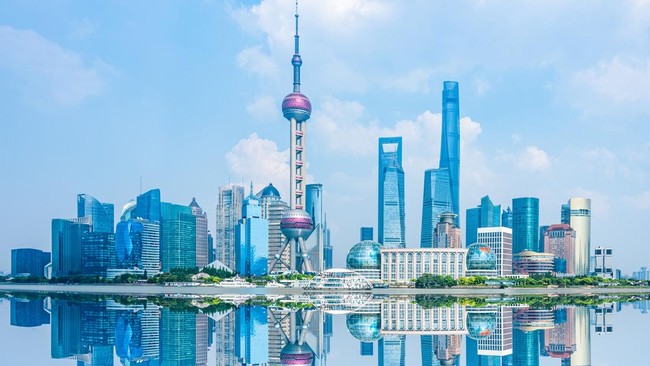
Hundreds of years after the glory of the Tang Dynasty, China has once again occupied a strategic position in world affairs. The difference now is that this influence is built not only through the trade of silk or ceramics, but also through modern industry, technology, investment, and economic power.
In recent decades, China has developed into one of the world’s largest manufacturing hubs. Its industrial products reach various countries, while its companies and investments play a vital role in global supply chains.
The nation has also expanded its influence in the sectors of technology, energy, infrastructure, and strategic industries. This development has established China as a major actor in international economic and geopolitical dynamics.
China’s historical journey demonstrates a continuity between the past and the present. The nation, once known for its reputation in knowledge and trade, now appears as a global power with widespread influence.
Source: jawawa.id (https://jawawa.id/newsitem/the-condition-of-china-during-the-life-of-prophet-muhammad-now-a-global-giant-1789818782)
Originally published by CNBC Indonesia (https://www.cnbcindonesia.com/news/20260919160810-4-769222/begini-kondisi-china-di-masa-hidup-nabi-muhammad-kini-raksasa-dunia), translated from Indonesian