
The Complexity of the Masela Gas Project: Building a 180-Km Pipeline 1,000 Metres Under the Sea
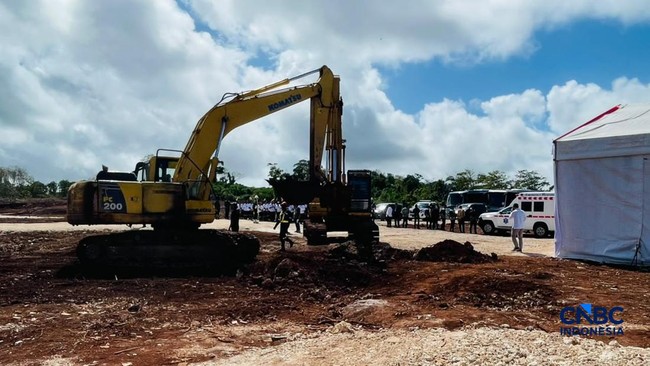
The ‘giant’ Abadi gas project in the Masela Block, located in the Tanimbar Islands, Maluku, has finally commenced construction. This new chapter for the project, which carries an investment value of US$20.9 billion or approximately Rp360 trillion, was marked by a groundbreaking ceremony led by Indonesian President Prabowo Subianto on Thursday (16/7/2026). The Masela LNG development is one of Indonesia’s National Strategic Projects in the energy sector.
President Prabowo stated that the project’s construction was not easy and required synergy between ministries and agencies. He expressed appreciation to the investors, primarily Japan’s Inpex Corporation, which holds a 65% participating interest. ‘We appreciate our friends from Japan, Inpex, and we also thank our brothers from Malaysia, Petronas, who are also involved here,’ he said. Prabowo emphasised that the project must be mutually beneficial and instructed that it be executed as quickly as possible.
Minister of Energy and Mineral Resources Bahlil Lahadalia admitted that realising the project, which was first planned in 1998, was not simple. The primary reason for the 28-year delay was a lengthy debate over whether the LNG facility should be built onshore or offshore. ‘In 2015-2016 it should have started, but there was a debate about whether to do it onshore or offshore,’ Bahlil explained. The government ultimately decided on an onshore development, which requires the construction of a 180-kilometre pipeline at a depth of 1,000 metres below sea level. Bahlil described this as a heavy challenge requiring strong motivation and cooperation from all parties, including local community and religious leaders.
The project involves multiple stakeholders, including the Ministry of Agrarian Affairs for land certification and the Ministry of Environment and Forestry for land status changes. Bahlil highlighted the complexity of land acquisition, noting that while the area is designated as forest, local communities have farmed the land for generations. He proposed a policy of providing compensation, or ‘profit sharing’, to these communities to ensure their welfare, pending the President’s approval.
With the groundbreaking, physical work will begin immediately, starting with the development of one well and four subsequent wells, alongside the construction of port facilities, jetties, and EPC works. The project is expected to produce 9.5 million tonnes of LNG per year, equivalent to 1,200 mmscfd, and 35,000 barrels of condensate per day, significantly boosting national lifting. A minimum of 60% of the output is earmarked for domestic needs, to be absorbed by state-owned enterprises such as PT Pupuk Indonesia, PT PLN, and PT Perusahaan Gas Negara (PGAS), as well as private companies, to drive regional economic value creation. The project is projected to provide significant economic and fiscal benefits, including increased state revenue and the creation of approximately 12,000 direct jobs.
Source: jawawa.id (https://jawawa.id/newsitem/the-complexity-of-the-masela-gas-project-building-a-180-km-pipeline-1-000-metres-under-the-sea-1784253080)
Originally published by CNBC Indonesia (https://www.cnbcindonesia.com/news/20260717074325-4-751485/rumitnya-proyek-gas-masela-bangun-pipa-180-km-1000-m-di-bawah-laut), translated from Indonesian