
The Complexity of Managing Rice Stocks Exceeding 5 Million Tonnes
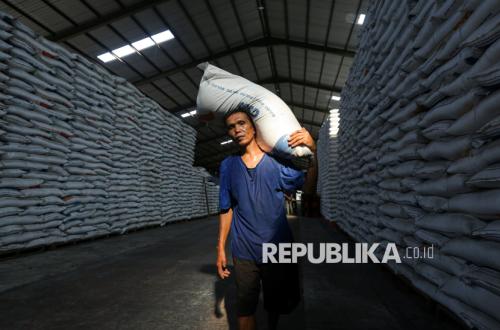
Managing rice reserves exceeding 5 million tonnes is no simple task. The volume is immense, and mismanagement could lead to plummeting prices for farmers or rice spoilage in warehouses. There are several logical strategies for the government to consider.
Primarily, reserves should be divided into three layers rather than stockpiling everything for emergencies. Functions should be separated into: Operational Reserves of 1–1.5 million tonnes for daily price stabilisation and market operations; Emergency Reserves of approximately 1–2 million tonnes for disasters, crop failures, or extreme volatility, to be used only in special circumstances; and Buffer Stocks of around 2–3 million tonnes, which can be used flexibly for exports, food assistance, or gradual release if stocks are held too long.
Furthermore, stock rotation must utilise a First-In, First-Out (FIFO) system. Rice cannot be stored for years without shrinkage. With 5 million tonnes, the risk of spoilage is high; therefore, strict FIFO implementation is essential, with a target rotation period of 6–8 months. Bulog must actively sell to the market, implement the SPHP programme, provide food assistance, or export before quality declines. Regular warehouse audits and the use of temperature and humidity sensors are mandatory to keep shrinkage below 5 per cent.
These stocks should be used for price stabilisation rather than being hoarded. A 5-million-tonne stock represents approximately 18 per cent of the national annual requirement, providing significant power to control prices. If paddy prices drop during harvest season, Bulog can absorb supply more aggressively. If consumer rice prices rise, market operations and SPHP should be intensified. The key is a gradual and measured release, rather than an abrupt 500,000-tonne dump that could shock the market.
Additionally, limited export channels should be opened. The 5-million-tonne stock is well above the safe level for Government Rice Reserves (CBP). The Food and Agriculture Organization (FAO) recommends a reserve of 17–18 per cent, a level we have significantly exceeded. Exporting 500,000 to 1 million tonnes to deficit countries such as Malaysia, the Philippines, or African nations could be a solution, provided domestic prices remain stable and export quality is met. This would generate foreign exchange, reduce warehouse congestion, and benefit farmers while strengthening Indonesia’s position in the global rice market.
Diversification of distribution should also be pursued. Beyond food assistance, these stocks could support the Free Nutritious Meal (MBG) programme. Raw materials could be sold to industries such as rice flour, vermicelli, and pastry factories at special prices. B2B supply cooperation with the TNI/Polri, civil servants, or corporations, as well as international food diplomacy during food crises, should also be explored.
Conversely, there are significant risks if these 5 million tonnes are poorly managed. First, shrinkage and spoilage: rice held for one year can shrink by 10–15 per cent, meaning 5 million tonnes could result in a loss of 500,000 tonnes, equivalent to an estimated loss of Rp 6 trillion. Second, it becomes a burden on the State Budget (APBN), with storage costs estimated at Rp 800/kg/year, totalling approximately Rp 4 trillion annually just for warehousing. Third, market distortion: an unregulated release of stock could devastragate paddy prices for farmers during harvest.
In essence, 5 million tonnes is a double-edged sword. It can be the most powerful stabilisation instrument in history or a time bomb if left to accumulate in warehouses. The keys are rapid rotation, real-time data, and the courage to export. Given that the current stock is a record high and the safe level for CBP is only 2.5–3 million tonnes, the most sensible scenario is to secure 2.5 million tonnes as core CBP, while rotating 1.5–2 million tonnes over the next six months through SPHP. This includes supplying 50,000–80,000 tonnes per month for the MBG programme and gradually exporting 500,000 to 1 million tonnes through 2026, focusing on medium-quality rice to the Philippines, Malaysia, and Timor-Leste, while ensuring domestic prices remain stable.