
The Commercialisation of Power and the Demolition of Luxury Housing in Cibinong Prison
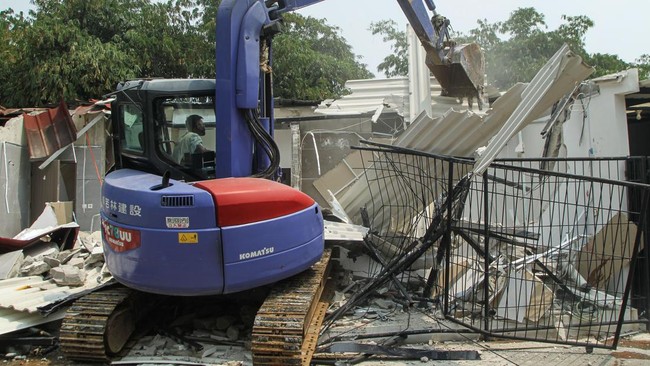
Reports regarding the alleged commercialisation of luxury housing for certain inmates at the Class IIA Cibinong Prison continue to unfold, garnering serious attention from Commission XIII of the Indonesian House of Representatives (DPR RI).
Previously, during a spot inspection on 23 September 2026, the Indonesian Ombudsman discovered a suspected ‘luxury cluster’ within the Cibinong Prison area. This consisted of several buildings equipped with amenities such as living rooms, televisions, refrigerators, and dining tables, resembling apartment-style living. The Ombudsman also identified more than ten buildings in the area and reported difficulties in accessing the specific locations for inspection.
These findings prompted Commission XIII of the DPR RI to intervene. During a hearing with the Directorate General of Corrections and the Head of the Class IIA Cibinong Prison, the Commission requested a thorough investigation into the discrepancies between the Ombudsman’s findings and the results of the inspection conducted by the Ministry of Immigration and Corrections. The Commission emphasised that all inmates must receive equal treatment and that no special facilities should be provided to specific individuals without a clear legal basis.
Recent developments indicate that the issue extends beyond the mere existence of facilities that differ from standard inmate housing. As reported by the BBC on 30 September 2026, the luxury facilities—a row of houses at the rear of the prison—were ultimately demolished following the visit by Commission XIII of the DPR RI on Wednesday, 30 September 2026.
Reports also indicate that the government, through the Ministry of Immigration and Corrections, had previously conducted investigations and suspended several officials following the Ombudsman’s findings. Similarly, Kompas.id reported on 30 September 2026 that the luxury buildings suspected of being used by certain inmates were demolished, even though the investigation into the Ombudsman’s findings remains ongoing.
This situation warrants a more critical perspective. While demolishing the buildings removes the physical problem, it does not inherently resolve the underlying cause that allowed such facilities to be created. If the investigation is not yet complete, the demolition should be viewed merely as an administrative action to halt the existence of the facilities, rather than the conclusion of the accountability process.
The fundamental questions remain: how were these buildings constructed and utilised by specific inmates within a correctional facility? Who granted permission? Who was aware of their existence? Who was responsible for oversight? Where did the funding originate? Under what authority were these facilities granted? Most importantly, were there transactions, levies, or any form of profit that allowed certain inmates to enjoy these special privileges?
These questions are vital because such luxury facilities could not have appeared spontaneously. Their existence indicates a process of decision-making, authorisation, negligence, or a failure of oversight within the correctional authority structure. Therefore, the investigation must look beyond the buildings as objects and examine the power structures that enabled them to exist.
In this context, the demand by Commission XIII of the DPR RI to investigate the discrepancies between the Ombudsman’s findings and the Ministry’s inspection is highly relevant. The Commission has insisted that the true facts be established and that those responsible be held accountable under applicable laws.
Consequently, oversight should not stop at the physical rectification of facilities but must move towards examining the chain of authority and the decision-making mechanisms that allowed such special facilities to emerge.
This issue becomes even more critical if the alleged commercialisation of these facilities is proven. Prisons are public institutions exercising state power. Facilities and services for inmates should be provided based on legal provisions and the principle of equality, not based on economic status or social standing.
If mechanisms exist that allow certain inmates to obtain special facilities through payments or rewards, the issue is no longer just about unauthorised buildings within a prison, but about the abuse of public power for private gain.
From this perspective, the term ‘commercialisation of power’ is an appropriate analytical tool. Power that should be used for rehabilitation, service, security, and rule enforcement within the correctional system loses its public orientation if authority is used to grant privileges to certain parties in exchange for profit. At that point, public facilities cease to be instruments of service and risk becoming commodities for exchange.