
The Classroom Reveals How to Transform Data and Programmes into Impactful News
Public relations (PR) officers within government agencies must currently understand the importance of a journalistic perspective. Information regarding the programmes and data held by agencies should not merely end as activity reports, but must be processed to ensure relevance for the public.
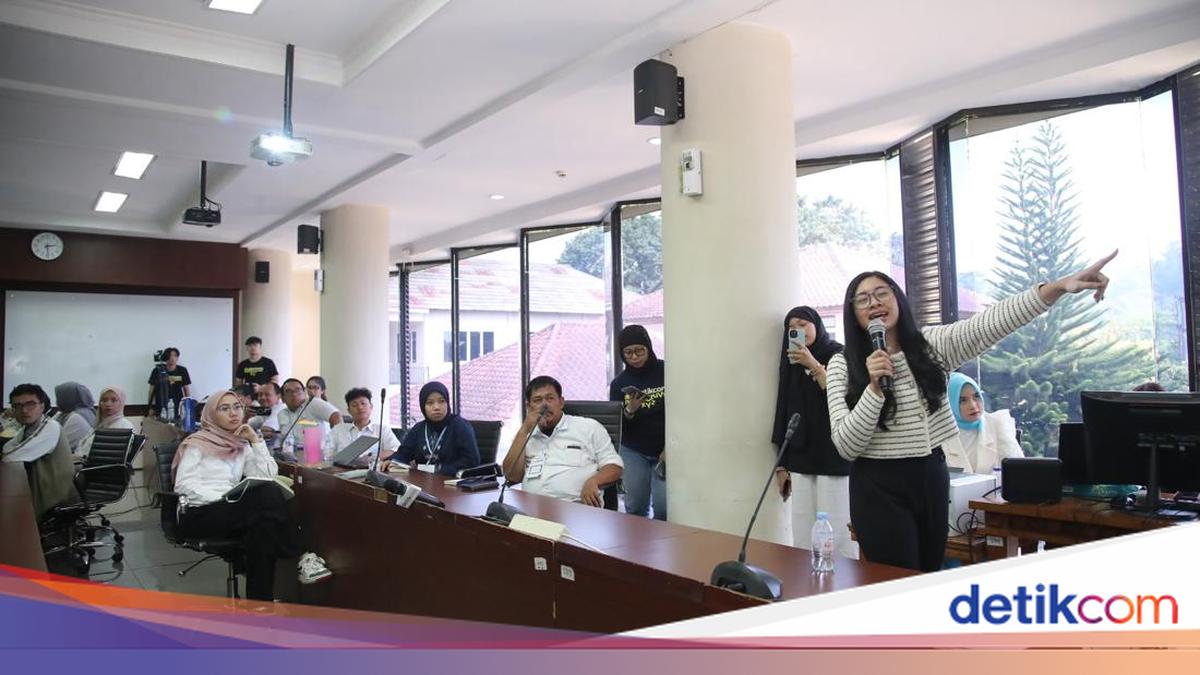
This was explained by Indah Muti0e1 Mutiara Kami, Managing Editor of detikNews, during the first day of ‘The Classroom by detikcom’. In the ‘Journalism & NewsCraft+’ session, Tiara, as she is affectionately known, presented methods for transforming agency data and programmes into news material that creates an impact on society.
“When the goal is for the public, there must be a distinction. There is a difference between an activity report and information intended to be communicated to the community,” Tiara stated at Wisma Pertanian Cipayung, Bogor, on Wednesday (23/9/2026).
PR’s Role in Crisis Management
One of the topics presented by Tiara concerned the importance of crisis management in PR work. She noted that crises can arise from various unexpected sources, particularly in an era where events can be rapidly recorded and disseminated via social media.
In a crisis situation, statements issued by an agency can influence public perception. Therefore, agency PR officers play a vital role in determining how an event is explained to the public.
Tiara cited several cases that gained public attention on social media, such as the incident at Senayan City (Sency) involving a man kicking a woman. In that case, Sency’s communication response, which failed to address the core issue, could trigger new criticism and even ‘cancel culture’.
Conversely, Tiara cited the TransJakarta (TJ) case involving a homeless person removed from a bus due to body odour. In this instance, TJ provided a response that included an apology, an explanation of the event, the actions taken, and the subsequent evaluation and follow-up.
According to Tiara, these elements are essential when an agency must provide clarification to the public.
“The role of PR is important because the statements made can either make the situation better or worse,” said Tiara.
Tiara added that the task of PR is not just to report what happened, but also to explain the steps taken by the agency following an event.
Ensuring Press Releases Do Not End Up in the Bin
Muck Rack’s ‘State of Journalism’ (2024-2025) data shows that 86% of journalists discard releases because they are irrelevant, 71% reject releases because the tone is too promotional, and 50% ignore releases that feel like mass templates.
Drawing from her experience as a journalist, Tiara noted that editorial offices receive many press releases daily. However, not all of these become news.
One reason a release fails to attract editorial attention is that the information lacks a clear impact on readers or uses excessive promotional language.
“I explain this at the beginning because this is the reality. Later, PR officers from other agencies might often ask, ‘How can we make our release picked up, seen, or viral?’” said Tiara.
Information regarding a government programme, for example, should not merely explain that an activity has been carried out. Furthermore, the information needs to explain the benefits of the programme, who is affected, and the changes or results felt by the community.
“It should not just be about ceremony or formality, but rather ensuring the good things within the agency reach the public,” Tiara explained.
Do Not Simply Fill News with Data
Tiara emphasised the importance of processing data so that it does not become a mere string of numbers in a news report. Data held by agencies can become valuable information if it is able to address public needs.
Conversely, too many numbers without context can prevent the main message from being conveyed. In her view, such data is more suitable for activity reports intended for superiors.
“The challenge is how to ensure the public knows that this data impacts them. It is not just about displaying the largest numbers or news filled entirely with data, where the core point fails to reach the public’s needs,” said Tiara.
In the context of government PR, processing information is also linked to efforts to build transparency and public trust. Programmes implemented by agencies will be more easily recognised by the public when information regarding their objectives, implementation, and benefits is communicated clearly.
Tiara asserted that the duty of PR is not merely to convey that an activity has taken place, but to explain why that activity is important and what its impact is on society.
This is particularly relevant for participants from the Directorate General of Horticulture, Ministry of Agriculture RI (Kementan), who are working to communicate information regarding the Horticulture Development in Dryland Areas Project (HDDAP) more effectively, including explaining the programme and its benefits to the public.
Tiara also assessed that HDDAP is one of the programmes that is interesting to communicate to the public. The challenge lies in how the programme can be properly socialised so that the community understands both the programme and its impact.
“The challenge is indeed to ensure this good programme is well-socialised to the public, so that the community can know what the impact is for them,” said Tiara.
For information, this event was organised by the Directorate General of Horticulture alongside detikcom at Wisma Pertanian Cipayung, Bogor. The event, held from 23-25 September 2026, serves as an effort to increase the capacity and public communication skills of internal staff, specifically in strengthening journalism, social media strategy, branding, and digital content production.