
The Cibinong Prison Case and the Momentum for Improving Correctional Integrity
True justice in the correctional system is not measured by how comfortable or poor the available facilities are, but by the certainty that every individual is treated equally before the law, regardless of status, wealth, or access to power.
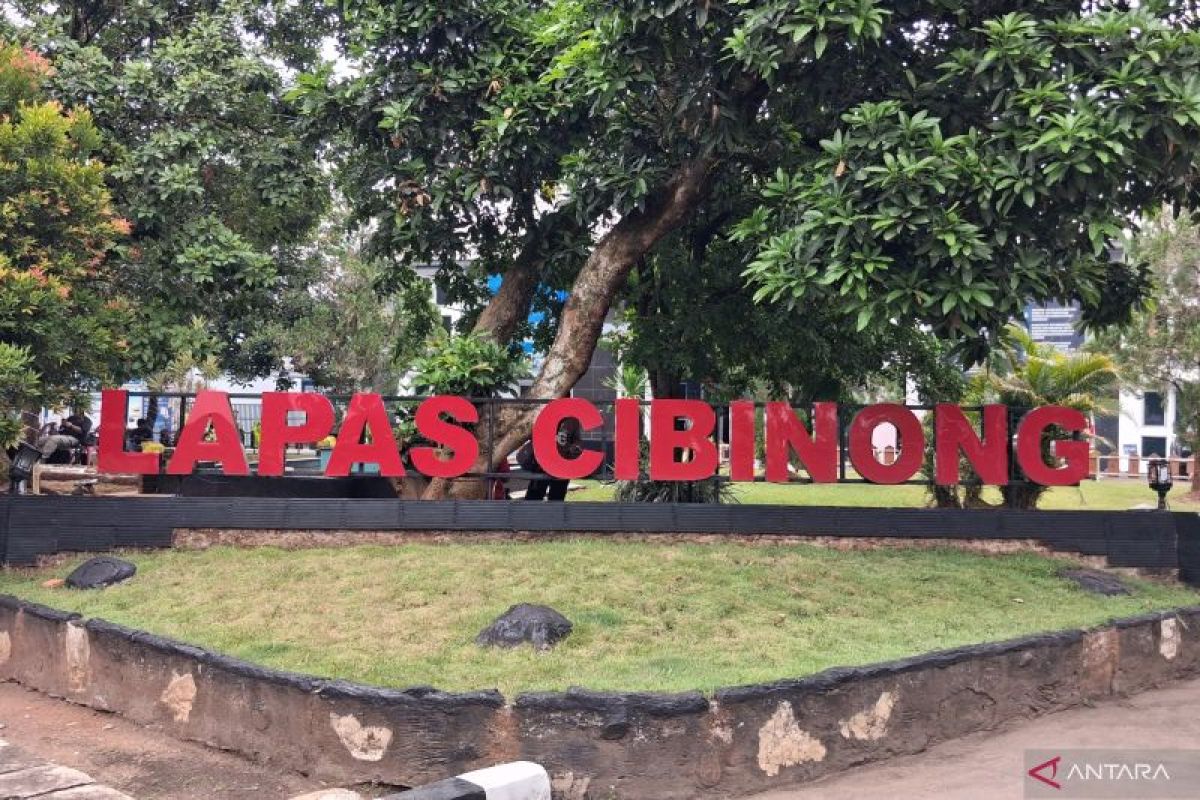
Jakarta (ANTARA) - Findings by the Ombudsman of the Republic of Indonesia regarding residential facilities at the Class IIA Cibinong Correctional Institution, Bogor Regency, West Java, have reopened a long-standing debate regarding the fundamental principles of Indonesia’s correctional system: Does the law truly provide equal treatment to every inmate?
This question urgently needs answering, not merely because of the existence of buildings that the Ombudsman described as resembling apartments, but because it touches the very essence of justice in criminal execution. When an individual loses their liberty based on a court decision, the state indeed revokes their right to freedom. However, at the same time, the state is obliged to ensure that the correctional process is law-based, humane, transparent, and free from discrimination.
During a spot inspection on 23 September 2026, the Ombudsman found several buildings equipped with facilities such as sofas, televisions, refrigerators, and dining tables. The supervisory team also found inmates present in these areas, noting potential security issues, and even encountered obstacles when attempting to enter the residential blocks.
These findings have triggered a widespread public response. The Deputy Speaker of the House of Representatives (DPR RI), Saan Mustable, emphasised that there must be no special treatment for prisoners, while Commission XIII of the DPR has urged the Ministry of Immigration and Correctional Services to conduct a thorough investigation.
However, in a constitutional state, the principle of caution must be maintained. The Ombudsman’s initial findings should be treated as material for investigation, rather than a final verdict on the existence of criminal violations or maladministration. Furthermore, the Directorate General of Corrections (Ditjenpas) has provided clarification regarding the status of these buildings. It is within this context that the dynamics of the Cibinong case become crucial for the efforts to reform our national legal system.
Law Number 22 of 2022 concerning Corrections asserts that the correctional system is an integral part of the criminal justice system, oriented not towards retribution, but towards rehabilitation and social reintegration.
This law explicitly upholds the principles of non-discrimination and humanity. The principle of non-discrimination prohibits differential treatment based on social status, economic standing, or political position.
Within this framework, the measure of justice within prisons is not to standardise all physical living conditions identically in every situation. Differences in facilities may be legally justifiable if they are based on rehabilitation needs, health conditions, security risk levels, or as part of an assimilation programme.
Source: jawawa.id (https://jawawa.id/newsitem/the-cibinong-prison-case-and-the-momentum-for-improving-correctional-integrity-1790748346)
Originally published by Antara (Indonesian) (https://www.antaranews.com/berita/5764376/kasus-lapas-cibinong-dan-momentum-pembenahan-integritas-pemasyarakatan), translated from Indonesian