
The Carcass-Eating Tradition Behind Anthrax Cases in Gunungkidul
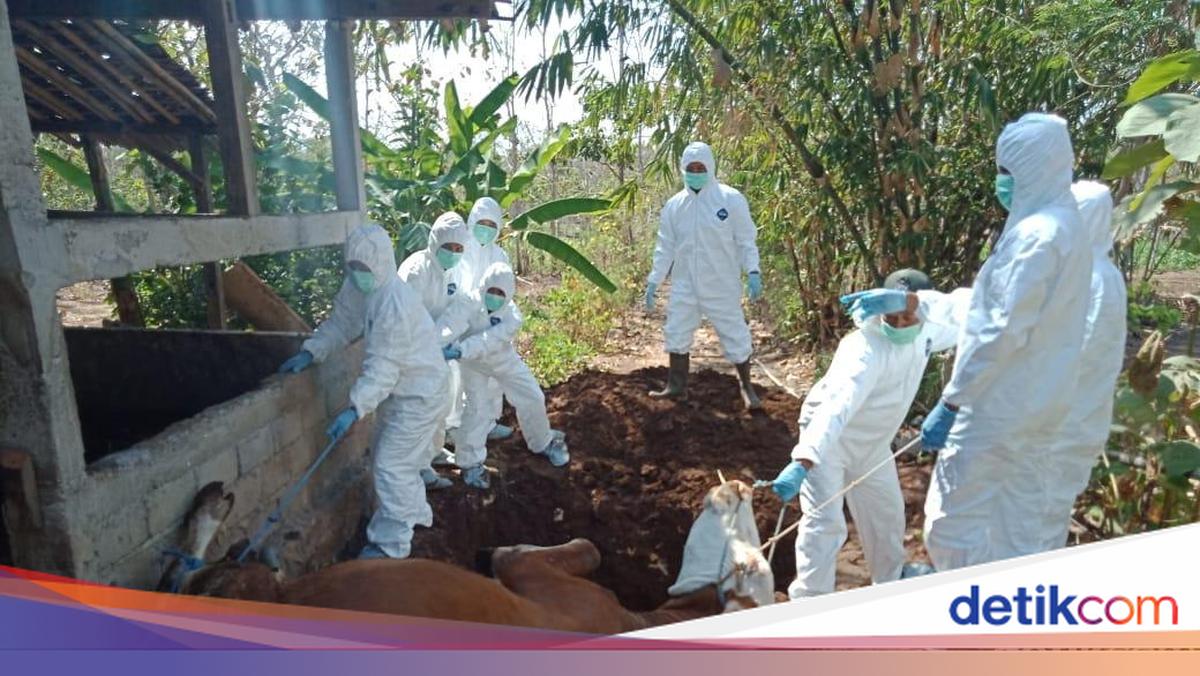
Some residents of Gunungkidul continue to practise brandu, the slaughtering and distribution of meat from livestock that have died suddenly. The practice has come under scrutiny after several people in the area were exposed to anthrax following the consumption of, or contact with, goats that had died suddenly.
The latest case was reported in Mulusan, Paliyan. The Gunungkidul Agriculture and Food Office (DPP) received a report of a resident with symptoms of cutaneous anthrax after taking part in brandu involving a goat that had died suddenly.
“We received a report from the community health centre that a resident had come in with a complaint that their hand had developed a lesion, a symptom of anthrax, in Paliyan,” Retno Widyastuti, head of the DPP’s Animal Health Division, told detikJogja on Thursday (8 October 2026.
The DPP received the report on Tuesday (29 September). Officials then carried out control measures, including vaccination and spraying formalin at the slaughter site.
“We have tested a soil sample and the result was positive for anthrax; the control measures have also been completed. The goat could not be found because it had already been slaughtered and eaten, in what is commonly called dibrandu,” she said.
A similar case had previously occurred in Dadapayu, Semanu. Four residents tested positive for anthrax after suspected exposure from a goat that had died suddenly.
Gunungkidul Health Office head Ismono said the case came to light after a resident visited a community health centre in early September. An epidemiological investigation subsequently identified seven people suspected of having been exposed to anthrax.
“At first, a resident went to the community health centre and was found to have clinical symptoms of anthrax. After the epidemiological investigation, there were seven suspected cases,” Ismono said on Thursday (1 October).
Following PCR tests, four of the seven people tested positive for anthrax. Further investigation identified 47 people at risk of exposure because they had been in contact with the goat or its products.
“Those 47 people had a history of exposure to the animal or animal products from a goat that had died suddenly,” he said.
Eko Mujiarto, the Health Office’s zoonotic infectious-disease programme officer in its Disease Prevention and Control Division, confirmed that all four patients had recovered.
“They have all recovered, and there have been no further cases so far,” Eko said on Saturday (3 October 2026).
Brandu tradition persists
Retno Widyastuti explained that brandu is essentially a tradition intended to help livestock owners who have suffered a loss. Meat from animals that have died suddenly is sold cheaply to residents, and the proceeds are given to the owner.
However, livestock owners can apply for compensation from the regency government if they report an animal that has died suddenly.
“If they report that their livestock has died suddenly, residents can receive compensation from the regency government. Livestock owners are therefore encouraged to report sudden deaths to the animal health centre,” she said.
The compensation is regulated under Regent Regulation No. 10 of 2025 on procedures for providing compensation and/or assistance in controlling contagious animal diseases, and compensation for healthy animals culled as a disease-control measure. The funds come from the regional budget’s unexpected expenditure allocation (BTT).
Gunungkidul Agriculture and Food Office head Rismiyadi regretted that brandu continued despite repeated public-awareness efforts.
“We have often gone into the area to provide education, including using traditional arts such as wayang. But, ultimately, raising public awareness is difficult,” he said.
According to Rismiyadi, residents who report livestock deaths can receive compensation. Some, however, still choose to slaughter and eat the animals.
“If an animal is sick or dies, it should be buried and reported; the owner can in fact receive compensation from the regency government. But people are reluctant to let it go, so when an animal falls ill, they slaughter it first, then eat it and practise brandu,” he said.