
The blood that binds a city
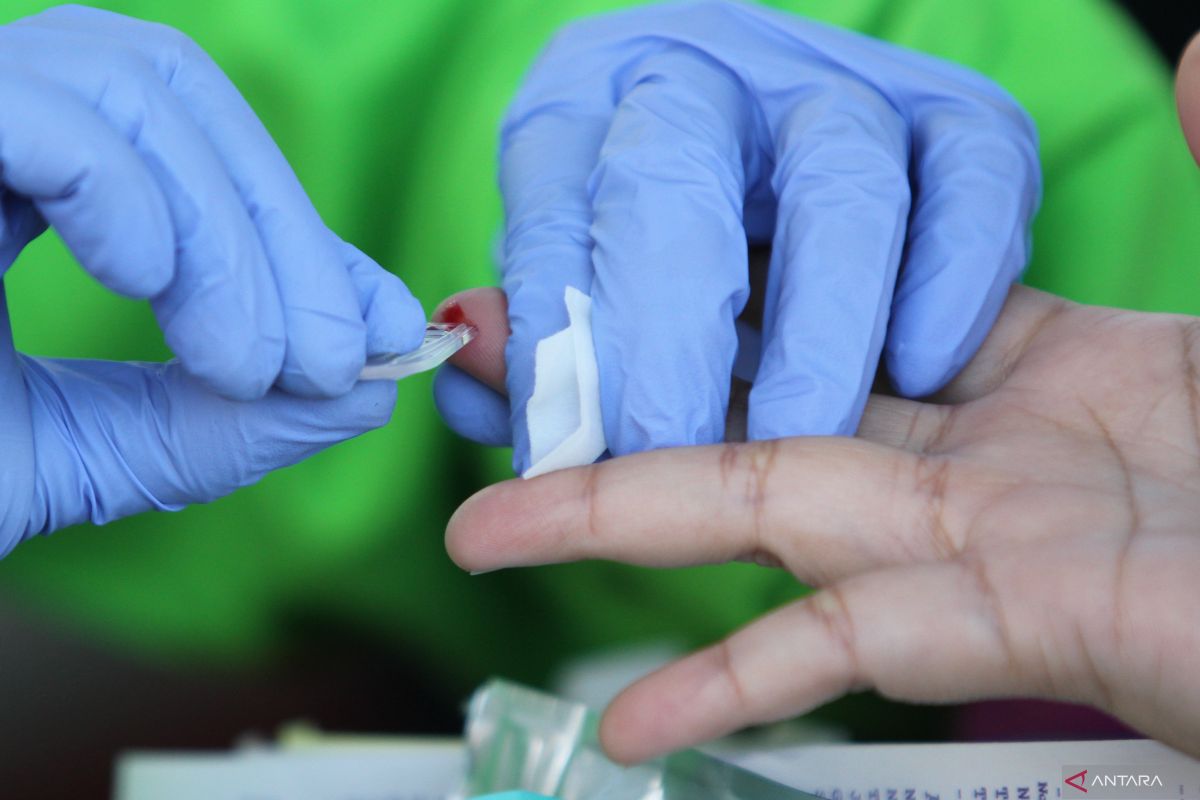
A single bag of blood may seem small, but the system that ensures its availability at the right moment is a massive undertaking.
Blood is rarely seen in hospital waiting rooms. However, when stocks run empty during a crisis, the impact is felt far more rapidly than with other healthcare services. Behind every bag of blood lies a long chain of service, ranging from donors dedicating their time and officers checking eligibility, to laboratory testing, processing, storage, and distribution systems that ensure blood reaches patients safely.
Therefore, the success of blood donation cannot be measured solely by the number of people arriving to donate. More important indicators include public awareness regarding regular and voluntary donation, the availability of stocks that meet specific needs, the ease of finding rare blood types, and the system’s ability to maintain supply continuity without wastage.
The city of Surabaya, East Java, provides an interesting illustration of this issue. In commemoration of the 81st Anniversary of the Indonesian Red Cross (PMI) on 17 September 2026, the Surabaya City Government, alongside the Surabaya PMI, presented awards to 425 voluntary blood donors who have reached the milestone of 50 donations.
Of these award recipients, 397 were men and 28 were women. The Gubeng district recorded the highest number of recipients with 29 individuals. Notably, two recipients were identified as having Rhesus-negative blood types.
The significance of the 50-donation figure lies beyond the award itself; it demonstrates that blood donation can evolve into a habit rather than a one-off action.
Maintaining Balance
PMI Surabaya serves an average of approximately 12,000 donors every month, a figure adjusted to meet the needs of hospitals in Surabaya. PMI does not merely pursue the highest number of donors, as an oversupply at certain times does not automatically indicate a better-functioning system. This is where blood donation becomes more complex. Blood has a limited shelf life. The World Health Organisation explains that different blood components have different storage durations. For instance, platelets expire much faster than red blood cells, while frozen plasma can be stored longer. This means blood is not a commodity that can be collected in unlimited quantities and stored indefinitely.
Consequently, the concept of blood sufficiency should not be understood as a warehouse that is always full. What is required is a balance between supply and demand, between blood types and patient needs, and between regular donors and emergency requirements.
Indonesia’s current condition highlights the importance of this balance. The Ministry of Health states that Indonesia’s ideal blood requirement is approximately 5.6 million bags per year, assuming a need of two per cent of the population. In 2025, availability was only around 4.4 million bags, leaving a deficit of approximately 1.2 million bags. Nationally, this shows that blood availability is not a problem solved simply because donor turnout is high in a particular city.
Surabaya possesses a vital asset in its relatively high level of donor participation. The next challenge is to transform this social capital into an increasingly precise system. The Government and PMI can strengthen the mapping of needs based on blood types and components, including separating routine needs from emergency requirements. The network of Rhesus-negative donors already held by PMI Surabaya serves as an example of how data can transform donation from a mass movement into a targeted response. Specific donors do not need to be called constantly but can be contacted when specific needs arise. Such an approach is vital because the success of blood services is not just about quantity, but about timeliness.
Nurturing Donors
The 425 citizens who have reached 50 donations convey another equally important message. A robust blood donation system requires not just people willing to come once, but people who return whenever they are eligible. Therefore, attention should shift from merely seeking new donors to nurturing the journey of an existing donor.
First-time donors need easily understandable information regarding the donation stages, health requirements, the next donation interval, and the social benefits of their consistency. After the first donation, communication is needed to maintain a connection without making the public feel they are only sought after when stocks are low.
This approach aligns with national blood service principles. Government Regulation Number 28 of 2024 classifies blood services as a health effort for humanitarian purposes and regulates its management through planning, mobilisation, preservation of donors, selection, collection, testing, processing, storage, and distribution.
Within this framework, blood donation should be viewed as a cycle, not an event. Surabaya has significant potential to develop this cycle through universities, schools, offices, communities, industrial areas, places of worship, and social groups. Reaching the younger generation is crucial, not just because of their large numbers, but because they represent the future foundation of long-term donors.
In several other regions, there is a growing push for the younger generation to make blood donation a habit. PMI Sumedang, for example, reported an increase in youth participation in early 2026. In Surabaya, this approach can be strengthened with simple technology. Donors could have digital donation histories, schedule reminders, information on the nearest service locations, and specific notifications for blood types currently in high demand. In this context, technology is not a replacement for the spirit of humanity, but a tool to maintain that spirit.