
The Black Market Trail of Sumatran Orangutans in Aceh
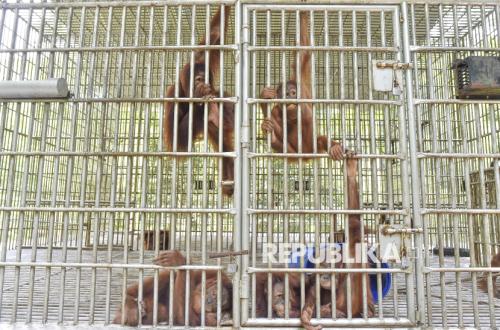
Deep within the tropical rainforest of the Leuser Ecosystem, a baby orangutan swings among tree crowns towering dozens of metres high. In the wild, a young Sumatran orangutan can spend the first six to eight years of its life with its mother. That period is not merely a growth phase, but a learning period that determines its survival. From its mother, it learns to recognise forest fruits, build nests in the canopy, avoid predators, and understand the forest that is its home. Yet for some baby orangutans in Aceh, that learning period ends tragically. They are torn from their mother’s embrace and enter the wildlife trade chain, which has now become one of the most lucrative forms of environmental crime in Southeast Asia.
Behind every baby orangutan found in illegal trade, there is almost always a story of a mother’s death. Female orangutans have an extremely strong bond with their young and will not release them until they are years old. Because of this, hunters generally must kill the mother first before taking her baby (IUCN SSC Primate Specialist Group, 2019). Thus, every baby orangutan successfully traded actually represents the loss of at least two generations at once: a productive adult female and a baby that should have become the successor of the wild population.
The Leuser Ecosystem is a landscape spanning more than 2.6 million hectares across Aceh and North Sumatra. This area is known as one of the most important conservation landscapes in the world because it is a habitat for four key mammals of Sumatra: the Sumatran orangutan (Pongo abelii), the Sumatran elephant, the Sumatran tiger, and the Sumatran rhinoceros (UNESCO, 2011). There is no other place on Earth where these four species still coexist within a single, relatively intact ecosystem.