
The Bitter History of Vanilla: How a 12-Year-Old Slave Revolutionised a Global Industry
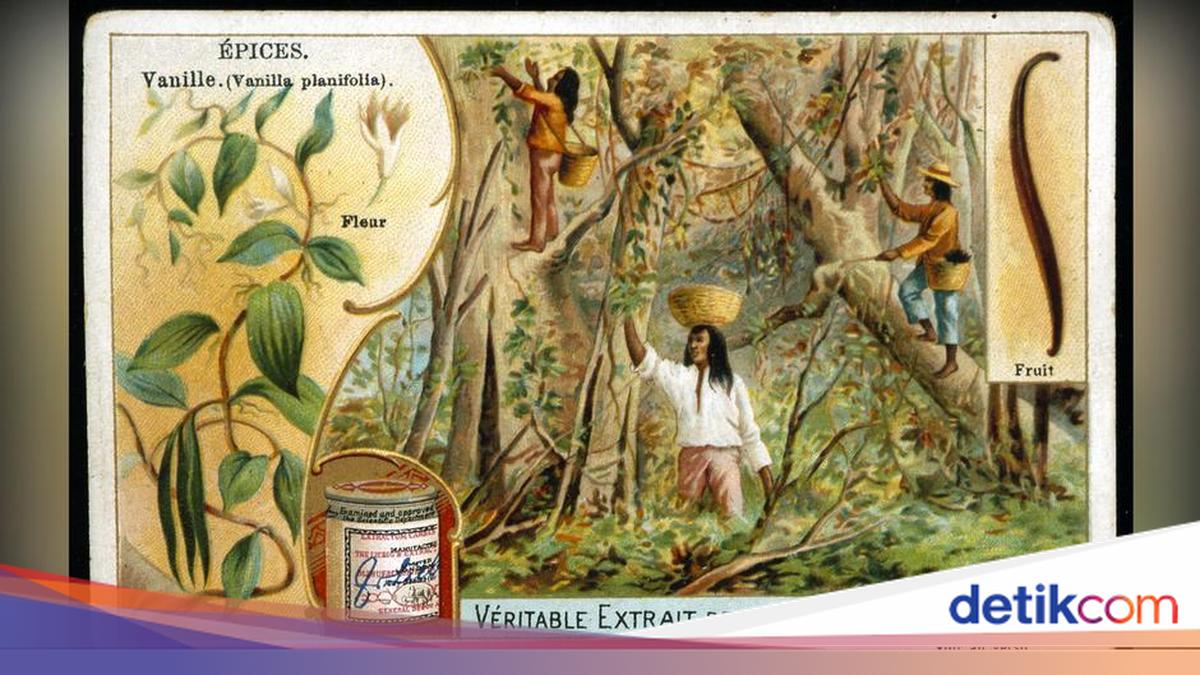
Today, vanilla can be found everywhere, from the ice cream we eat to cough syrups, soaps, household cleaning products, and perfumes. This is largely thanks to synthetic vanillin, which is cheaper and easier to obtain, but has also led to vanilla becoming synonymous with ‘ordinary’ or ‘plain’ in the English language. However, the natural vanilla vine is one of the most labour-intensive plants to cultivate and one of the most chemically complex, containing over 200 aromatic compounds.
As the world’s second most expensive spice after saffron, its history is anything but ordinary. The story involves a stingless bee, colonial intrigue, and the ingenuity of a 12-year-old enslaved boy named Edmond Albius, whose discovery reshaped global vanilla cultivation and swelled colonial treasuries.
The origins of vanilla are generally traced to Mesoamerica, where the vine, Vanilla planifolia, grew wild in tropical forests. Various indigenous communities used the plant; the Mexica called it ‘tlilxochitl’. It was a prized commodity used to flavour chocolate drinks for the elite, as a medicine, and in ritual ceremonies. The Totonac people of present-day Veracruz, Mexico, were the first to cultivate the vine for its aroma. When the Aztecs conquered them, they demanded vanilla as tribute to flavour ‘xocolatl’, a sacred cocoa-based drink reserved for nobles and warriors, which was the precursor to modern chocolate.
In 1519, Emperor Moctezuma Xocoyotzin served this drink to Hernán Cortés and his Spanish troops, shortly before the Spanish established colonial rule in central Mexico. The Spanish subsequently introduced vanilla to Europe, where it first circulated in the Spanish court through chocolate recipes adopted from Mexico. It soon spread to the kitchens of the French and English aristocracy, where it began to be used as a standalone flavouring for sweets and pastries.
Botanical gardens in France and England cultivated the vanilla orchid, but no matter how hard Europeans tried, they could not get the flowers to produce fruit. Colonial administrators sent the vines across their empires to India, Java, the Philippines, and the French colony of Réunion. The vines grew and flowered, but produced no pods. The puzzle persisted for nearly three centuries. It was not until 1836 that Belgian horticulturist Charles Morren identified the Melipona bee, a stingless bee geographically restricted to Mexico, as the plant’s natural pollinator. Morren managed to hand-pollinate vanilla in a laboratory, but his method was too time-consuming for mass application on colonial plantations.
The breakthrough came from a 12-year-old enslaved boy on Réunion Island, Edmond Albius. In 1841, Albius devised a method to hand-pollinate the vanilla flower using a thin stick or blade of grass and his thumb. He lifted the rostellum, a flap separating the male anther from the female stigma, and pressed them together. The technique was simple yet brilliant. Historian Eric T. Jennings, author of ‘Vanilla: The History of an Extraordinary Bean’ (2025), told DW, ‘Like many brilliant discoveries, it seems very simple once you know it. Bringing the male and female parts of the vanilla plant together is easier said than done.’
Following Albius’s discovery, Réunion Island, then known as Bourbon, briefly dominated the global vanilla market. By the late 19th and early 20th centuries, French colonial administrators had spread the manual pollination method to Madagascar, which remains the world’s largest vanilla producer today. The beans grown in these former French colonies became known as Bourbon vanilla, named after the colonial territory of Île Bourbon.
Albius’s technique is now the universal standard in the multi-billion-dollar global vanilla industry. The process remains slow, intricate, and highly labour-intensive, as each vanilla flower blooms for only one day and must be pollinated by hand immediately. Despite his ingenuity, Albius never profited from the industry his discovery enabled. He died in poverty in 1880 at the age of 51, while French colonial coffers swelled. Jennings noted that there are two monuments to Albius in his hometown of Sainte-Suzanne, Réunion, including a plaque and a statue, and several schools bear his name. Yet, his story remains relatively unknown, despite his discovery having transformed the agricultural future of the island, making it the world’s leading vanilla producer within 30 years.
Source: jawawa.id (https://jawawa.id/newsitem/the-bitter-history-of-vanilla-how-a-12-year-old-slave-revolutionised-a-global-industry-1785232606)
Originally published by detikcom (https://news.detik.com/dw/d-8594031/sejarah-vanila-yang-tak-seharum-namanya), translated from Indonesian