
The Benefits of Bank Statements for Evaluating Financial Health
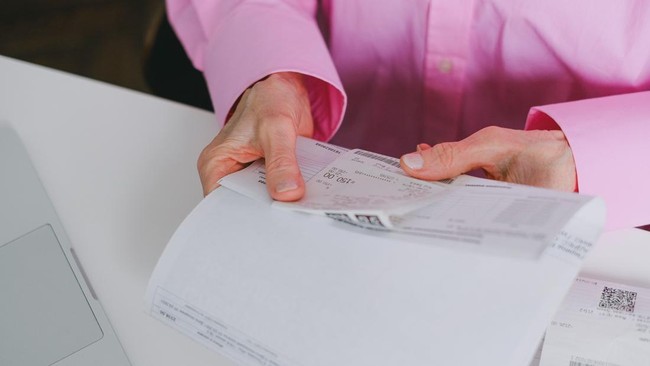
Jakarta, CNBC Indonesia – Using a bank statement regularly can be a simple way to evaluate your financial health. A statement does not merely contain a list of transactions; it can also help reveal income and spending patterns, curb wasteful spending and produce more accurate financial reports.
By checking your bank statement periodically, you can see where your money is going and whether your finances still align with the budget you have set.
What Is a Bank Statement?
A bank statement is a document recording the transaction activity of an account over a given period. The information it typically contains includes the transaction date, description, money in, money out and the account balance.
Nowadays, bank statements are generally available in physical or digital form through banking services. Digital documents, or e-statements, can be downloaded and stored for administrative purposes or personal financial record-keeping.
How to Use a Bank Statement to Manage Your Finances
A bank statement is most useful when it is not merely filed away but analysed regularly. Here are several ways to do so.
- Check Your Account Mutations Regularly
Set aside time to review your account mutations periodically, for example weekly or at least once a month.
Examine all recorded transactions and group them into income and expenditure. From this, you can determine whether your spending is genuinely necessary or stems from impulsive purchases.
- Evaluate Cash Flow
Look at the amount of money coming in and going out over a particular period. Income may come from salaries, business proceeds, investments or other sources, while expenditure covers daily needs, bills, instalments and entertainment.
Comparing income and expenditure gives a simple picture of your cash flow. If spending consistently exceeds income, the situation needs to be addressed promptly.
- Group Spending by Category
To make analysis easier, transactions on a bank statement can be grouped into several categories, such as:
Household needs
Food and drink
Transport
Bills and utilities
Instalments
Entertainment
Shopping
Investments
Savings
Other expenditure
This grouping helps identify which categories absorb the largest share of your budget.
- Identify Unnecessary Spending
A bank statement can reveal spending habits that sometimes go unnoticed when relying on memory alone.
For example, there may be small transactions made repeatedly over a month. Although each amount seems minor, the cumulative total can be substantial.
By viewing the entire transaction history, spending that is not truly essential becomes easier to identify and reduce.
- Watch Out for Recurring Transactions
Check whether there are automatic transactions or repeated monthly payments, such as digital subscriptions, bill payments, premiums, instalments or other services.
If a service is rarely used, consider cancelling the payment so the budget can be redirected to more important needs.
- Process Statement Data into Digital Format
If your bank provides statements in digital form, the data can be processed using a spreadsheet such as Excel or a financial record-keeping application.
The transaction data can then be used to create income and expenditure tables, cash flow charts and spending summaries by category.
For statements in PDF format, the data can also be transferred to a spreadsheet using a suitable conversion tool. However, converted results should still be checked to ensure no transactions or figures have changed.
- Carry Out Periodic Reconciliation
Reconciliation is done by matching the transactions on your bank statement with your personal or business financial records.
The aim is to ensure all transactions are recorded and that the balance in your bookkeeping matches the account balance.
For business owners, account reconciliation can also help uncover unrecorded transactions, bookkeeping errors and balance discrepancies.
- Compare Month-on-Month Spending
Do not look at a single period in isolation. Compare spending from month to month to identify changes in your financial patterns.
For instance, transport costs may have risen over the past three months, or spending on eating out may have grown. This information can form the basis for adjusting your budget.
- Calculate Your Ability to Save
A bank statement can also show how much money genuinely remains after all spending.
- Monitor Instalments and Regular Obligations
Check transactions related to instalments and regular obligations. Ensure payments are made on time and that their share remains within your financial means.
If debt and instalment payments are taking an increasingly large portion of your income, a bank statement can be one tool for re-evaluating the situation.
- Detect Unfamiliar Transactions
Every transaction should be checked to confirm it stems from activity you actually carried out.
If you find an unrecognised transaction, examine its details promptly and contact the bank through official channels if necessary. Regular checks can help detect irregular account activity earlier.
- Keep Bank Statements for Administrative Purposes
Bank statements should be stored systematically, especially for periods that may be needed again.
These documents can serve as proof of transaction history or supporting documents for various administrative needs, such as applications for banking products, financing, audits, business bookkeeping or tax purposes in accordance with prevailing regulations.
For security reasons, digital documents should be stored in a safe location and not shared carelessly, as they may contain sensitive financial information.
Using Bank Statements to Assess Financial Health
Bank statements are useful for more than just knowing your account balance. Transaction data accumulated over several months can give a clearer picture of your financial health.
Among the things to consider are:
Is income greater than expenditure?
How much money can be set aside each month?
How large is the share of instalments relative to income?
Which spending category is the largest?
Is spending increasing from month to month?
Are there recurring transactions that are no longer needed?
Is there sufficient money for unexpected needs?
By answering these questions, a bank statement can become the basis for more measured financial decisions.
Tips for More Effective Bank Statement Management
To ensure reviewing your statement is not merely a matter of glancing at your balance, cultivate consistent record-keeping habits.
One simple approach is to establish a three-stage review at the end of each month: check transactions, categorise spending, then evaluate the results.
Afterwards, use the evaluation to draw up the following month’s budget. If a spending category is too large, set a more realistic spending limit.
For business owners, separating personal and business accounts is also important. That way, business transactions can be analysed more clearly and financial record-keeping becomes easier.
Conclusion
A bank statement can be a valuable tool for managing finances when used regularly. By checking transactions, evaluating cash flow, grouping spending, carrying out reconciliation and comparing month-on-month finances, a person can gain a clearer picture of how their money is used.
Most importantly, a bank statement should not only be used when an administrative document is required. The transaction history can serve as a data source for drawing up budgets, controlling spending, improving one’s ability to save and making more planned financial decisions.
Source: jawawa.id (https://jawawa.id/newsitem/the-benefits-of-bank-statements-for-evaluating-financial-health-1788850309)
Originally published by CNBC Indonesia (https://www.cnbcindonesia.com/mymoney/20260908124001-72-766143/manfaat-rekening-koran-untuk-mengevaluasi-kesehatan-keuangan), translated from Indonesian