
The Beneficial Owner Node
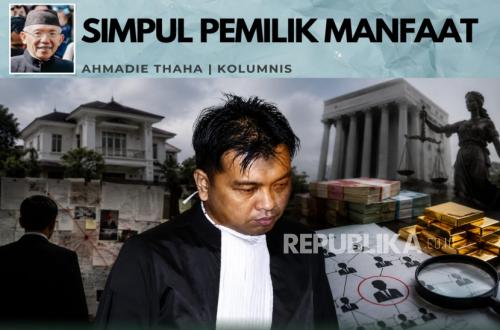
There is a simple question often asked by investigative teams when uncovering corruption cases. It is not, ‘In whose name is this house?’ But rather, ‘Who actually enjoys its benefits?’
The two questions appear similar, yet the answers can differ. A certificate may show the formal owner’s name. However, modern law does not always stop there. It also seeks to know who truly controls, possesses, or enjoys the economic benefits of the asset.
For this reason, a term has increasingly emerged in recent years in corruption and money laundering cases: beneficial owner. Alongside it comes another term, nominee, referring to a person whose name is borrowed to become the formal owner of an asset, while the economic benefits are suspected of being enjoyed by another party.
These two terms caught my attention when reading about the developments in the case ensnaring former Deputy Attorney General for Special Crimes, Febrie Adriansyah. The name Don Ritto suddenly appeared as a co-suspect alongside Febrie. From the investigation, the police suspect Don and Febrie of committing money laundering originating from a corruption offence.
Initially, I thought public attention would stop at their personal relationship. It did not. The more important question is: why did investigators focus on Don’s position in the overall construction of the case?
Perhaps it is because corruption has also evolved. Once, people simply hid money under the mattress. Then they moved it to safes. After that, into bank accounts under other people’s names. Now, in major cases, what is hidden is no longer the money itself, but who actually enjoys the benefits.
Modern corruption does not always wear a mask. It wears a suit, establishes companies, drafts contracts, borrows other people’s names, and follows administrative procedures that appear legitimate. Consequently, investigators no longer just hunt for money. They must dismantle the schemes that conceal it.
Beyond that, various investigative reports also indicate that investigators are building connections between a number of assets, companies, and parties suspected of being linked to one another. It is in this context that Don’s name becomes interesting to scrutinise.
In fact, Don’s name did not just appear after the suspect designation. In March 2025, a Civil Society Coalition that reported Febrie Adriansyah to the Corruption Eradication Commission had already included Don’s name in their complaint document. The document mentioned alleged roles as a gatekeeper and nominee related to a number of assets.
Of course, a public report is neither evidence nor a legal conclusion. However, its existence shows that the hypothesis regarding the use of gatekeepers and nominees had emerged long before this case developed into a criminal investigation.
In simple terms, a beneficial owner is the person who actually enjoys the economic benefits of an asset, even if their name does not appear on the certificate, deed of establishment, or bank account. Therefore, investigators no longer merely search for who is registered as the owner, but also who pays, controls, uses, receives profits from, or ultimately benefits from the asset.
This concept is not merely an academic theory. Indonesia itself has recognised it through Presidential Regulation Number 13 of 2018 concerning the Implementation of the Principle of Recognising Beneficial Owners of Corporations. This regulation was born as part of efforts to prevent money laundering, terrorism financing, and the concealment of assets through complex ownership structures.
However, the public often misunderstands this concept. Being a beneficial owner is not a criminal act. A wife living in the family home, a child using their parents’ vehicle, or a family member enjoying household facilities are not, by that fact alone, committing a crime.