
The Battle of Narratives in the 2026 US Midterm Campaign
“It is like a thumb on the scale that we haven’t really ever seen.”
Those words were spoken by Danielle Citron, a University of Virginia law professor. She likened the influence exerted over digital political conversations to a thumb pressing down on the scales.
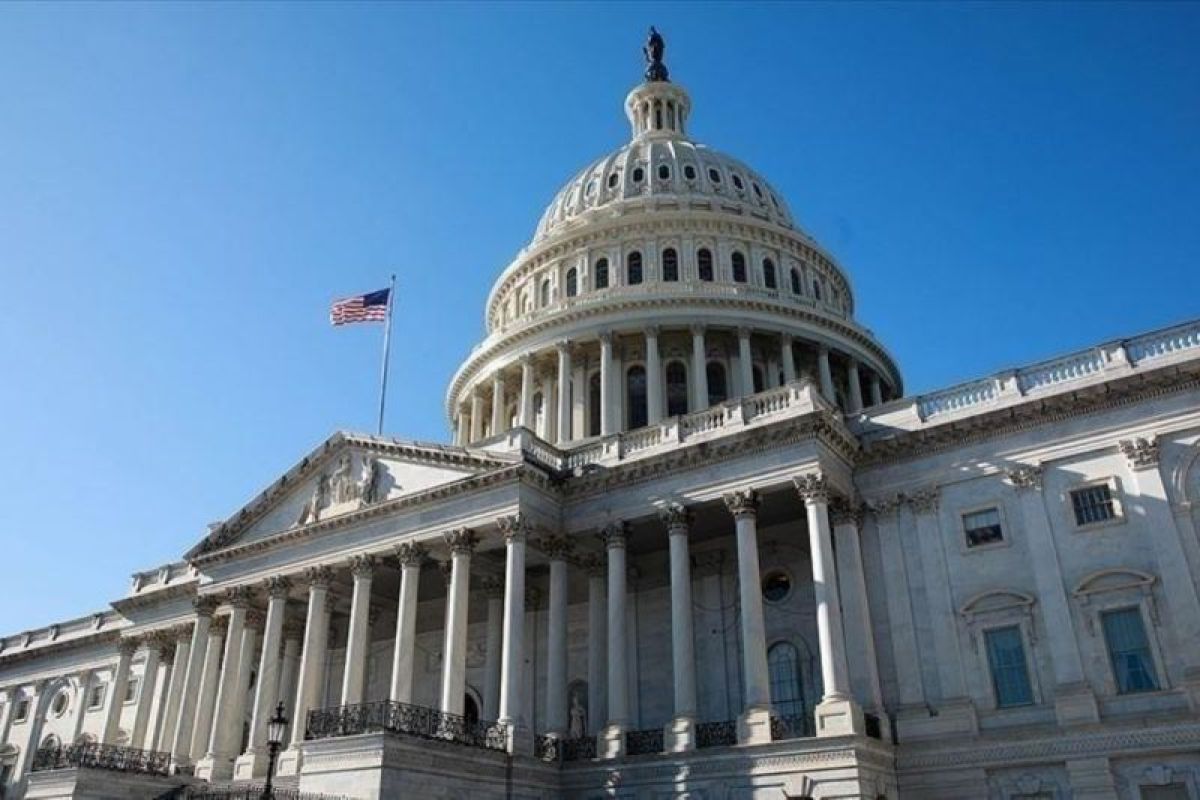
On 3 November 2026, the United States will hold its midterm elections, which take place halfway through a president’s term: two years after a presidential election and two years before the next one. Voters will choose all 435 members of the House of Representatives and roughly one-third of the Senate, alongside candidates for various state and local offices and ballot measures.
The results will determine which party controls the House and Senate for the next two years. As Congress has the power to make laws, approve budgets and oversee the government, the US midterms are an important political test for the incumbent president.
This year’s midterms are taking place amid global political competition. As with any election, campaigning involves advertising, social media and artificial intelligence. All are part of a contest to determine whom the American public trusts most. In this environment, the battle for votes goes hand in hand with a battle over meaning. How do voters understand a candidate? How does the public assess political opponents? And how do Americans decide which information is credible?
The Talarico controversy
Professor Citron, who has spent more than a decade researching and writing about online harassment, told The Washington Post (13 October 2026) that a serious issue in the November 2026 US midterm campaign was a conspiracy theory concerning Democratic Senate candidate James Talarico.
The claim that Talarico had been treated at the Lindner Center of Hope, a mental health facility outside Cincinnati, Ohio, gained wider reach after Elon Musk responded on X. “The Talarico campaign is hiding something big that voters should know,” Musk wrote on Sunday afternoon (11 October 2026). His post had been viewed more than 870,000 times.
We all know which side Musk campaigned for, don’t we?
The Talarico case shows how an unsubstantiated claim can become a major political issue. A social media rumour said the candidate had once received care at a mental health facility. The facility denied the claim and posted a statement saying Talarico had never been treated there.
However, before the clarification received comparable attention, Musk’s post had already attracted more than 870,000 views. This is how the logic of the battle of narratives works.
The US-Iran war
During the 2026 midterm campaign, narratives about the economy and the cost of living, the future of democracy, healthcare, Iran and Israel are intertwined in American public debate. What is at stake is not only control of Congress, but also what “a strong America” means to voters who are weary of conflict.
The US-Iran war has become one of the “weapons” used by both sides in the 2026 midterm contest. National security, relations with Israel, the cost of war and the use of taxpayers’ money have also become political ammunition for both parties.
The contest is not just about US policy on the war with Iran. It is also about which side can best convince voters that it understands America’s interests.
A Pew Research Center survey published on 8 October 2026 presented a challenge for President Donald Trump. Sixty-five per cent of US adults disapproved of his handling of military operations against Iran, while 33 per cent approved.
Support among the Republican base had also fallen: approval of his handling of the war declined from 69 per cent in March to 63 per cent in late September and early October 2026. Among Democrats, just 9 per cent approved of the handling of the war.
Petrol prices have surged, inflation is being felt again, and affordability—an issue Trump had pledged to address—has become a liability. A Chicago Council survey found that 86 per cent of US adults believed the war was bad for the cost of living, while 72 per cent said it was bad for America’s international reputation. A further 65 per cent considered the US-Iran war bad for national security.
Democrats are almost unanimous in their opposition to the war and are using public dissatisfaction to challenge the Trump administration’s decisions. Among independent voters, and even some Republicans, the conflict is seen as a betrayal of the promise to avoid “forever wars”. Some Republican candidates face a dilemma: maintain their support for Trump or distance themselves from an increasingly unpopular war.
Some Republicans who initially backed the war expected the conflict to end quickly, but that has not happened. As a result, the battle of narratives has shifted from “Should Iran be allowed to have nuclear weapons?” to “Who should bear the cost of the war, at the petrol station and at the dinner table?”
These polling figures suggest that war can become a domestic political issue, particularly when voters question the aims of military operations, the security risks and the effects on their daily lives.
The battle of narratives unfolds as each side tries to define the terms of debate. Is the conflict understood as an effort to protect security, or as a costly and risky military entanglement?
Israel, Gaza and AIPAC
Relations with Israel are a second, more complex battleground. The US-Israel relationship adds to the competition. For decades, support for Israel had a bipartisan base in Washington. But Israel’s attacks in Gaza and the war with Iran have widened disagreements, especially among Democrats.
Reuters reported in July 2026 that 48 per cent of US voters and 66 per cent of Democratic respondents believed America was too supportive of Israel, citing a Quinnipiac poll conducted in June. In July, nearly half of House Democrats also backed an amendment to halt military aid to Israel, although the proposal was not passed.
Amid this shift, the American Israel Public Affairs Committee (AIPAC) has become central to debate about money and political influence. The pro-Israel lobby, which for decades served as a bipartisan bridge—meaning it enjoyed support from both US parties—is now facing a crisis of legitimacy.
AIPAC continues to support candidates from both parties, but public support for Israel has fallen sharply. Eric Alterman, an English professor at Brooklyn College and an observer of Israel and the American Jewish community, wrote in The New York Times on 5 October 2026: “AIPAC Has Failed”.
Alterman wrote that a 2026 NBC News poll found that only 32 per cent of US voters viewed Israel favourably. Among Democrats, the figure had fallen to 13 per cent. Many young Democratic voters have made their views on Gaza a major reason for turning out to vote.
Data cited by OpenSecrets show that the United Democracy Project, a super PAC affiliated with AIPAC, had spent around US$53.6 million on independent expenditures by 21 August 2026. The spending covered primary contests in both parties, although some of its interventions in Democratic primaries sparked controversy.
AIPAC and its affiliates have raised US$233 million to support their allies. They back members of Congress from any party, provided they are pro-Israel and can help counter “existential threats to Israel”, such as Iran and other adversaries.
The money is also used to attack those considered opponents. AIPAC has faced a barrage of criticism as public sentiment has shifted sharply—at odds with its central aim of securing American support for Israel.
The results have often been the opposite. In Michigan, AIPAC spent around US$30–33 million supporting Haley Stevens against Abdul El-Sayed, a candidate who openly criticised Israeli policy. El-Sayed, a doctor, won.
But political influence and success in shaping public opinion are two different things. AIPAC may retain financial resources, access to members of Congress and the ability to support or oppose candidates. That does not automatically make the public more favourable towards Israel. Imagine an organisation with a large budget for political advertising. Its adverts can keep an issue in the public conversation, but they do not necessarily make people accept the message.
When people’s experiences and the information they see conflict with a campaign’s message, even large spending may not restore trust. This is where the battle of narratives meets financial power.
Money can extend a message’s reach, advertising can frame a conflict, and emotion can determine which issues stick in voters’ memories. But high campaign spending does not, by itself, prove that public opinion has been controlled. The key question for American democracy is whether voters have enough information to assess national interests, the cost of war and the influence of lobbying groups critically. It is a question politicians everywhere should answer before deciding who deserves to represent them in Congress.
The philosophy of the battle of narratives
Classical political philosophy teaches that democracy depends on a minimum level of agreement about facts. When facts themselves become a battlefield, questions arise: Who started it? Who is suffering? Who benefits?
The battle of narratives is not merely a contest for votes. It is a struggle over which information is considered most truthful and “real”. In today’s post-truth era, elections risk becoming rituals of polarisation.
In 2026, the battle of narratives over Iran and Israel is no longer on the margins. It reaches the heart of the question: can America still distinguish national interests from ideological loyalties or lobbying?
The battle of narratives is plain to see. Trump claims that America is winning and that Iran is “very bad” economically and militarily. His opponents point to contrary evidence: rising oil prices, waves of refugees and eroding public trust, including trust in democracy.
AIPAC is another clear example. It continues to speak as if Israel enjoyed 80 per cent support, as it did in 1991. But young Democratic voters see a “moral catastrophe”. Republican voters have their own views, too. Each side is constructing a parallel reality that is increasingly difficult to reconcile with the other.
Influence is not always determined by who has the strongest evidence. It can also go to whoever captures attention first. Repetition, anger, suspicion and group identity can make a claim stick in people’s memories, even when the evidence supporting it is weak. An allegation that has been disproved can still leave doubts about someone’s character.
AI technology is expanding this battleground. According to an Al Jazeera report on 9 October, US political candidates and their supporters have spent more than US$80 million producing over 164 AI-based adverts during the campaign season. Some adverts portray politicians as doing or saying things that never happened. Some are recognisable as satire, but they may still shape perceptions of candidates’ character and positions.
A more fundamental threat is declining trust in the democratic process. The Brennan Center for Justice has warned that the 2026 election could again be marred by misleading claims about fraud, voting procedures and the legitimacy of the results.
A Pew Research Center survey in July 2026 found that 55 per cent of US adults were confident that the November election would be conducted fairly and accurately. That was down from 64 per cent before the 2022 midterms. The figure does not prove that disinformation is the sole cause of declining trust, but it shows that public confidence in elections deserves attention.
Ultimately, the battle of narratives tests society’s ability to distinguish popularity from truth. A message may go viral because it provokes emotion, not because it is supported by strong evidence. Democracy requires freedom of speech, but that freedom loses meaning when citizens can no longer distinguish facts, satire, propaganda and fabrication.
Votes are cast in the polling booth, but the decisions that bring people there are often formed much earlier—through the information they read, the emotions stirred in them and the beliefs that take root in the digital public sphere. That is why defending democracy cannot stop at securing ballot boxes. It also depends on the resilience of citizens’ judgement as they make their choices.
The results of the US midterms on 3 November 2026 will determine not only which party controls Congress, but also how deeply these divisions shape American politics through to 2028. Once begun, the battle of narratives may not end with a ceasefire. It may only change form, with the same cruelty.
Source: jawawa.id (https://jawawa.id/newsitem/the-battle-of-narratives-in-the-2026-us-midterm-campaign-1792569184)
Originally published by Antara (Indonesian) (https://www.antaranews.com/berita/5801509/perang-opini-dalam-kampanye-pemilu-sela-2026-di-as), translated from Indonesian