
The barzakh in Islam: What happens after death?
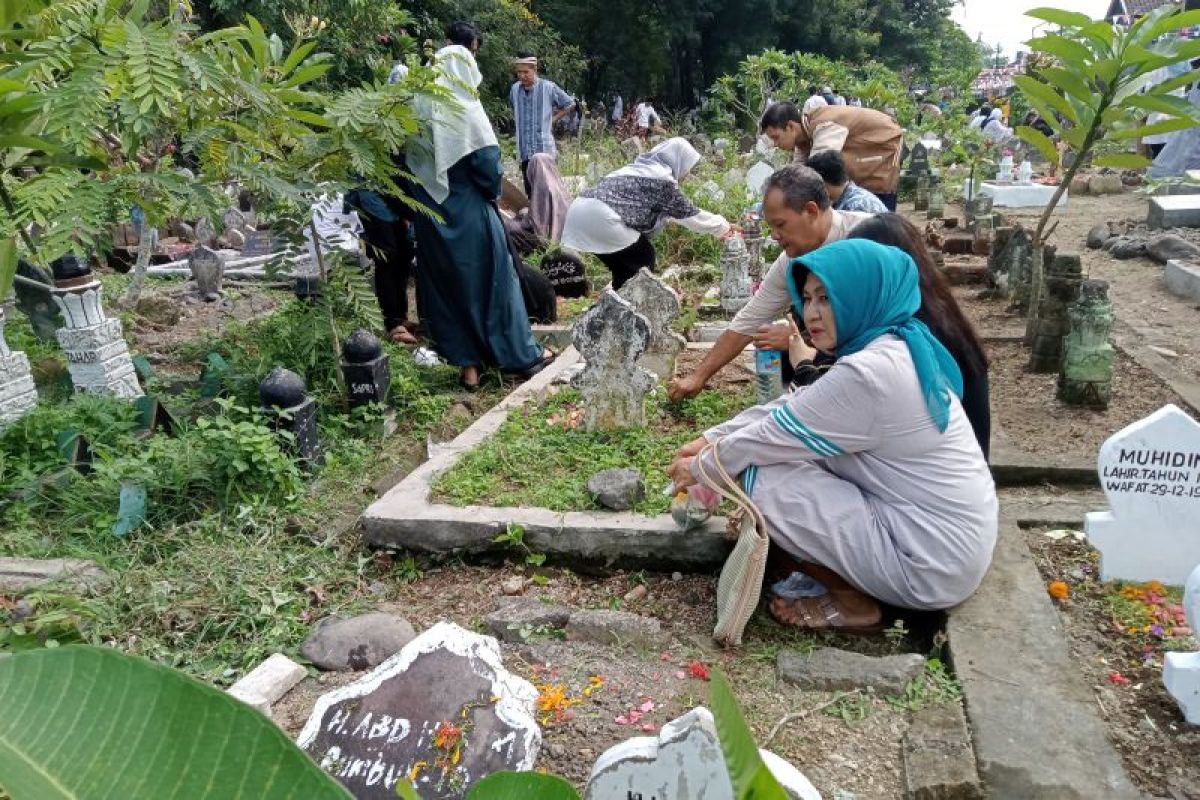
In Islamic teaching, human life does not end when a person dies. Death marks the beginning of the journey towards the afterlife. After leaving the world, a person enters the barzakh, the intermediate realm between worldly life and the hereafter until the Day of Resurrection arrives.
Linguistically, barzakh means a barrier or partition separating two things. In the context of life after death, the barzakh is understood as an existence between this world and the hereafter. Those who have died can no longer return to the world to improve their deeds.
One depiction of the barzakh is found in the Quran, Surah Al-Mu’minun verses 99-100. Allah says: “Until, when death comes to one of them, he says, ‘My Lord, send me back, so that I may do righteousness in that which I left behind.’ No! It is only a word he is saying; and behind them is a barrier until the Day they are resurrected.”
The verse portrays a person’s regret when death arrives. He hopes to return to the world to improve his deeds, but that opportunity is gone. After death, a person remains in the barzakh until the time of resurrection.
In Islam, human life can be understood through three stages: life in this world, the barzakh or the grave, and the afterlife. The world is where people live and accumulate deeds as provision for the next life. After death, a person enters the barzakh. Subsequently, all people will be resurrected to face the afterlife and receive recompense for their deeds.
Therefore, the barzakh can be seen as a link between worldly life and the hereafter. In that realm, people begin to receive glimpses of the life they will face. Several interpretations of barzakh also explain that it is an existence between the material and non-material realms, where the soul remains until the Day of Resurrection.
A number of hadith, including one narrated from Al-Barra’ bin ’Azib, describe the journey of the soul after death. For a believer who lived righteously, the soul is treated well. After the journey described in the hadith, the soul is returned to the body. Two angels then come and ask about his Lord, his religion, and the prophet he followed. The believer can answer these questions. His grave is then widened and a path to the pleasures of paradise is opened. He is also shown the place that will be his destination in the hereafter.
Conversely, a disbeliever or someone with evil deeds is described as experiencing a different state. He cannot answer the questions and suffers distress in the grave. This depiction shows that the barzakh is not merely a waiting period without any condition. In Islamic understanding, people already begin to feel the consequences of their deeds, although the afterlife in its fullness only begins after the Day of Resurrection.
When a person dies, wealth, position, titles, and status are no longer the main provisions. What is carried forward are the deeds performed during life. This is in line with Allah’s words in Surah Al-Zalzalah verses 7-8: “So whoever does an atom’s weight of good will see it, and whoever does an atom’s weight of evil will see it.”
The verse affirms that every human deed has consequences. No deed is considered too small to be reckoned by Allah. In the context of the barzakh, good deeds become a source of comfort, while evil deeds can bring distress.
The barzakh lasts from death until the Day of Judgement. Those within it will be resurrected when the Hour arrives to face the afterlife. A depiction of this state is also found in Surah Ghafir verse 46: “The Fire; they are exposed to it morning and evening. And the Day the Hour appears, it will be said, ‘Make the people of Pharaoh enter the severest punishment.’”
This verse is often used as a basis for discussing the existence of a state before the Day of Judgement. According to scholars, it also depicts a punishment experienced before the full punishment of the hereafter. Thus, the barzakh is a phase that people will undergo after death and before resurrection.
One important point in the Quranic depiction of the barzakh is the absence of any opportunity to return to the world. Surah Al-Mu’minun verses 99-100 describe a person facing death asking to be sent back to the world to perform righteous deeds. However, the request is rejected because a barrier lies before him until the Day of Resurrection. The lesson is that the opportunity to do good is only given while a person is still alive. Once death comes, that opportunity ends.