
The Ballad of Trump and Xi Jinping and the Fate of the Global Economy
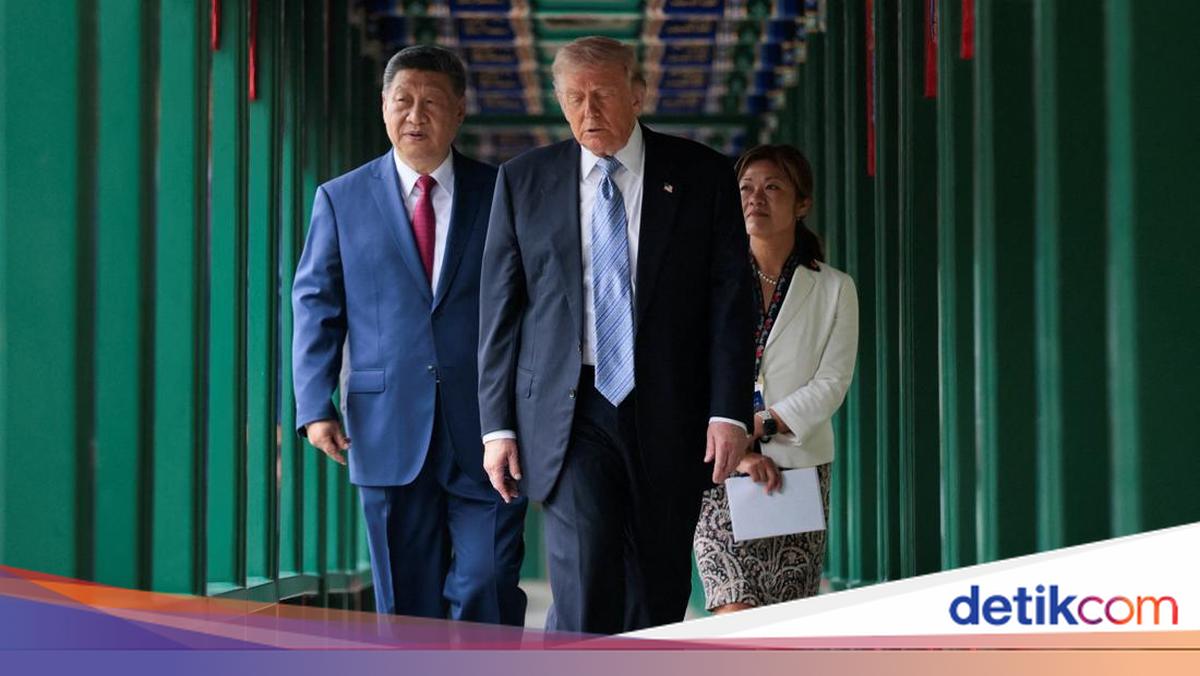
Some encounters merely bring two people together. Others make the world wait. The meeting between US President Donald Trump and Chinese President Xi Jinping in Washington on 24 September 2026 is the latter. This is not solely because both lead the world’s two greatest economic powers, but because the agenda is far broader than tariffs and trade.
Technology, artificial intelligence (AI), critical minerals, and the future of global supply chains are all on the negotiating table. For the global economy, this meeting takes place while uncertainty has not yet fully subsided. The International Monetary Fund (IMF), in its July 2026 World Economic Outlook, projects global economic growth at 3 per cent in 2026 and 3.4 per cent in 2027. While growth continues, the risks of conflict, energy pressures, financial conditions, and geopolitical uncertainty continue to loom.
On the other hand, investment and demand related to AI have become a source of growth for countries integrated into global technological value chains. Therefore, the encounter between Trump and Xi Jinping should not be read merely as a continuation of the trade war. The world is witnessing a shift in how nations perceive economics. If in the past, cost efficiency was a primary principle in building global supply chains, now supply security, industrial resilience, technological mastery, and access to strategic raw materials are becoming more decisive. Globalisation is not stopping, but its logic is changing.
This shift is evident in the discussion agendas in Washington and Beijing. In negotiations at the official level prior to the Trump-Xi Jinping meeting, issues of trade, AI, and critical minerals were primary concerns. The United States and China also discussed the possibility of a dialogue mechanism regarding AI safety. Thus, AI is no longer viewed merely as an engine of economic growth, but also as a component of security governance and international relations.
Critical minerals reveal another facet of this change. Rare earths, for instance, are not merely mining commodities. These materials are required in various strategic technological and industrial products. China holds a dominant position in the rare earth supply chain, particularly in the refining and processing stages. Consequently, the availability of these minerals has become a crucial issue in Washington-Beijing discussions leading up to the Trump-Xi Jinping meeting.
This is where tariffs lose their status as the sole instrument of economic competition. Tariffs can indeed alter goods prices and trade flows, but the mastery of technology, critical minerals, semiconductors, energy, data, and production capacity can determine a nation’s manoeuvrability during global disruptions. Economic competition in this century increasingly resembles a competition over the ability to control production ecosystems.
For Indonesia, these developments are not a distant issue across the ocean. Indonesia’s trade structure demonstrates how vital the relationship with both nations is. According to data from the Central Bureau of Statistics, from January to November 2025, China was Indonesia’s largest non-oil and gas export destination, valued at US$58.24 billion or 23.80 per cent. The United States ranked second with US$28.14 billion or 11.50 per cent. Together with India, these three countries absorbed 42.02 per cent of Indonesia’s non-oil and gas exports.
This dependency is even more apparent on the import side. Throughout 2025, China was Indonesia’s largest source of imports, valued at US$87.41 billion or 36.22 per cent of total imports. Furthermore, approximately 70 per cent of Indonesia’s imports consist of raw materials and auxiliary materials. This means that changes in trade relations and global supply chain disruptions do not only affect Indonesian exporters but can also impact domestic industrial production costs through the prices of raw materials, components, and intermediate goods.
These figures represent two sides of Indonesia’s economic relationship with China and the United States. On one hand, both are vital markets for Indonesian products. On the other hand, changes in trade policy, technology, or investment from both countries can influence domestic business decisions. When the relationship between Washington and Beijing shifts, the impact can ripple through export demand, commodity prices, investment, logistics costs, exchange rates, and corporate decisions regarding the restructuring of supply chains.
However, Indonesia does not necessarily have to remain in a position of merely waiting for the impact. Changes in global supply chains can actually create opportunities. As international companies begin to consider diversifying production locations to reduce dependency risks on a single country, Indonesia has the opportunity to attract investment that brings technology, creates jobs, and strengthens domestic industry.
Such opportunities do not arrive automatically. Indonesia must possess an ecosystem that encourages companies to invest for the long term. Infrastructure, regulatory certainty, human resource quality, logistical efficiency, competitive energy, and the capability of local industries are critical factors. Without these improvements, Indonesia risks becoming merely a relatively low-cost production site without achieving significant value-added increases.
This is where downstreaming (hilirisasi) becomes relevant. Value addition must not stop at exporting raw materials. The more production processes, technology, skills, research, and innovation that are built domestically, the greater Indonesia’s ability to face global economic changes. Downstreaming should not only produce higher-value products but also build national industrial capabilities so as not to remain perpetually dependent on foreign technology and components.
Source: jawawa.id (https://jawawa.id/newsitem/the-ballad-of-trump-and-xi-jinping-and-the-fate-of-the-global-economy-1790071205)
Originally published by detikcom (https://news.detik.com/kolom/d-8674173/balada-trump-xi-jinping-dan-nasib-ekonomi-dunia), translated from Indonesian