
The Asset Forfeiture Bill and a New Momentum for Corruption Eradication
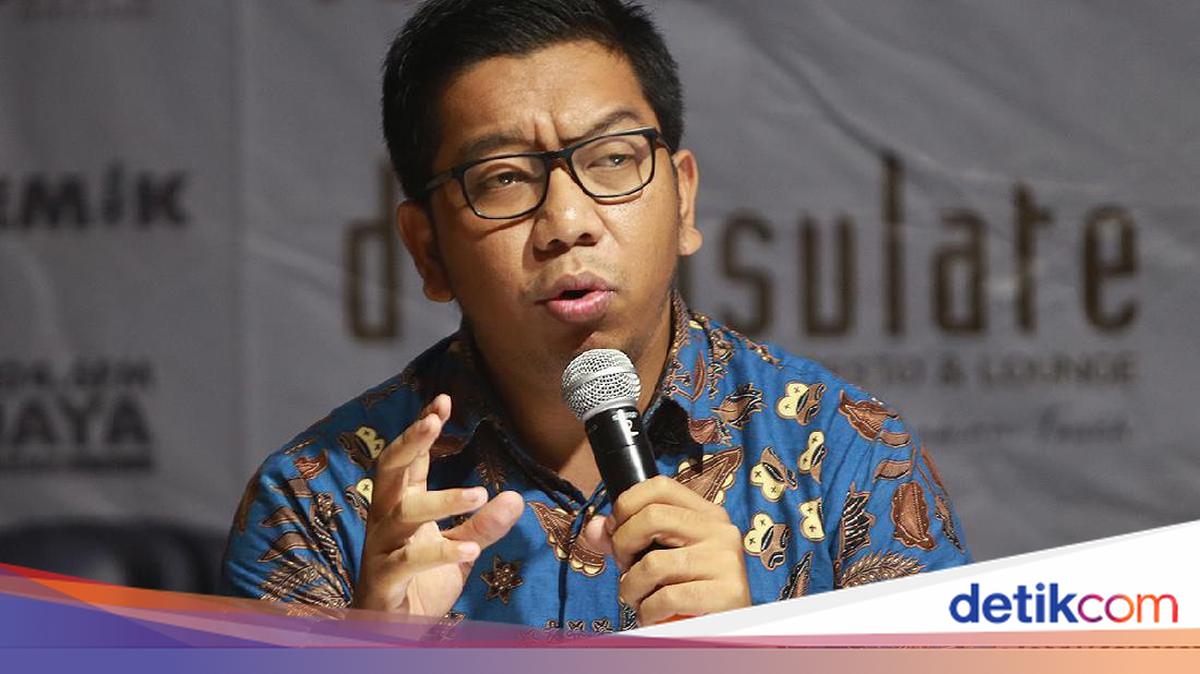
In the final week of August, national media and public discourse were heavily focused on the issue of law enforcement, specifically the Asset Forfeiture Bill (RUU Perampasan Aset). From residents in Pati to protest groups and netizens, there has been a simultaneous push for the enactment of this regulation. This demand is justified, as the Asset Forfeiture Bill is essential to ensure that law enforcement does not stop at punishing perpetrators, but is also capable of pursuing and recovering criminal assets.
The urgency of discussing the Asset Forfeiture Bill in policy-making circles is quite high. Drawing from Attorney General’s Office data, state losses due to corruption practices throughout 2025 reached Rp 300 trillion, yet only Rp 24 trillion was recovered through additional criminal schemes of replacement money. Furthermore, the prevalence of corruptors fleeing abroad while their assets remain scattered across Indonesia cannot be maximally supported by the current Anti-Corruption Law (Tipikor). Even though in absentia judicial mechanisms exist, their application in corruption cases has not become common practice. This is compounded by the slow criminal legal process, which must wait for a court verdict to become legally binding (incracht) before criminal proceeds can be seized.
Indonesia’s commitment to the United Nations Convention Against Corruption (UNCAC) also provides important context. The convention, ratified through Law Number 7 of 2006, establishes asset recovery as a key principle in combating corruption. Through an asset recovery approach, the orientation of law enforcement will not merely end with identifying the perpetrator, but also focus on how assets derived from criminal acts are traced, seized, confiscated, and ultimately returned to the state. In other words, there is a reorientation of law enforcement: from a purely perpetrator-based approach (in personam) towards an approach more focused on the assets (in rem).
On another dimension, several aspects of the Asset Forfeiture Bill must be addressed. First, the definition of ‘assets’ within the future forfeiture regime is crucial, ensuring that all assets, whether conventional or digital, linked to criminal acts can be seized. Second, the identity of the asset management agency to be appointed under the Bill must be determined. In this context, a decision is needed to design the most effective institutional framework, whether by optimising existing institutions or forming a specialised agency.
Third, the time limit for law enforcement to seize assets related to criminal acts must be established. This is vital because a primary criticism of criminal prosecution is the lengthy process involving investigations, first-instance trials, appeals, and cassation. Fourth, the Bill must uphold the values of justice, certainty, and utility when implemented by law enforcement. Regarding this, implementation must not be based on mere suspicion or assumption, but must possess objective, testable benchmarks that ensure protection for parties who have acquired assets legally.
Consequently, the debate regarding the Asset Forfeiture Bill should no longer revolve around whether it is necessary or not. The more fundamental question is how to ensure the regulation is presented with an effective, fair, and accountable design. In this context, the government’s stance is clear: the Asset Forfeiture Bill must be supported and finalised through a legislative process that is open, meticulous, and based on the factual problems faced by law enforcement. This stance aligns with President Prabowo, who has repeatedly expressed his open support for the Asset Forferess Bill.
The logic that the President supports various corruption eradication efforts, through both enforcement and prevention, is easy to explain. Since the beginning of his administration, the President has consistently emphasised the importance of preventing budget leakages and ensuring every rupiah of state funds is used effectively. This commitment is reflected in Presidential Instruction Number 1 of 2025 concerning Government Spending Efficiency. This step subsequently resulted in budget savings of more than Rp 300 trillion in the first year of the administration.
A similar stance is visible in efforts to improve natural resource governance. Through the formation of PT Danantara Sumberdaya Indonesia, the President emphasised that the supervision of strategic natural resource commodity exports must be strengthened to eliminate under-invoicing and transfer pricing practices that potentially erode state revenue significantly. Meanwhile, in the SOE sector, the government is also conducting a massive restructuring of unproductive companies. In the MPR RI annual session last August, the President stated that the government has closed 290 SOEs, saving approximately Rp 50 trillion in overhead costs. Additionally, the formation of the Forest Area Order Task Force, established in early January 2025, has successfully imposed administrative fines amounting to Rp 41 trillion. These policies demonstrate that governance improvement involves not only enforcement after losses occur but also ensuring that state assets and resources are managed responsibly.
Further improvements also involve strengthening integrity within the judicial sector. Through Government Regulation Number 42 of 2025, the President increased judicial position allowances by up to 280 percent. While this policy is certainly not a sole solution to prevent corruption in the judicial sector, it is one instrument to improve institutional conditions and reduce the disparity between responsibilities, job risks, and judicial welfare.
Through these various policies, the government essentially intends to emphasise one important point.
Source: jawawa.id (https://jawawa.id/newsitem/the-asset-forfeiture-bill-and-a-new-momentum-for-corruption-eradication-1789221439)
Originally published by detikcom (https://news.detik.com/kolom/d-8660132/ruu-perampasan-aset-dan-momentum-baru-pemberantasan-korupsi), translated from Indonesian