
The Anxiety of Begal in Bandung Raya Has a Long History
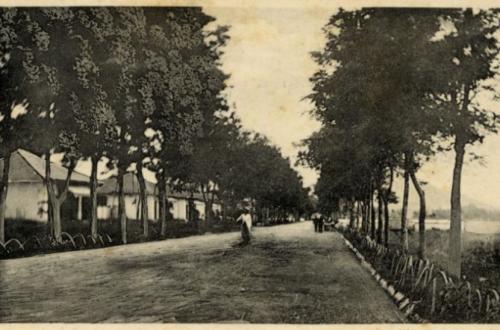
The recent wave of street robberies (begal) across Bandung Raya, including in Cimahi and West Bandung Regency (KBB), has unsettled residents’ sense of security. Many people are now anxious whenever they have to drive at night, especially when passing through deserted stretches of road.
The most recent incident occurred in Gunungmasigit village, Cipatat district, West Bandung Regency, where an online goods delivery driver with the initials IS (48) was robbed by a perpetrator posing as a passenger, Abdul Fakih alias Pacul (27). Although the victim’s car was saved, the driver suffered slash wounds to several parts of his body. The perpetrator has been arrested by the Cimahi Police.
Looking back further, the phenomenon of begal — street crime — is not a modern crime but a dark legacy whose roots stretch back a long way. Etymologically, the word ‘begal’ comes from classical Javanese, meaning a bandit or robber who ambushes victims in the middle of the road.
In Cimahi and West Bandung, street crime was rife during the 1942–1945 period, after Japan surrendered its occupation of Indonesia, which then declared independence on 17 August 1945. During the revolutionary era, criminal gangs emerged in numbers. Among the criminal groups at the time were those of Soma and Suta, which frequently carried out crimes.
‘In Cimahi at the start of the revolution there were two groups, the Soma group and the Suta group. Their operational areas were different,’ said historian Iwan Hermawan when contacted on Friday (24/7/2026).
They were former forced labourers from the Japanese occupation known as Romusha, who came from various regions and were sent to places across Indonesia and Southeast Asia to work as forced labour.
But with the Japanese era ending in 1945, the fate of these forced labourers became increasingly uncertain. They were left in limbo — in the plantations of West Bandung and at the railway stations of the time. From this, groups known as Garong, an abbreviation of Gabungan Romusha Ngamuk (Union of Rampaging Romusha), were born.
‘When Japan surrendered, many Romusha were stranded. They wanted to go home but had no money and no one to take them. So they hung around the stations. Some were left scattered in plantations around the Cikampek route all the way to Bandung,’ Iwan explained.
In Cimahi, the Soma and Suta groups emerged among others. They arose from the power vacuum after Japan surrendered to the Allies, while the security apparatus was not yet functioning optimally to deal with criminal activity.
‘So when Japan surrendered there was a power vacuum; the police existed but did not function at full capacity. That is where it began — the garong groups formed,’ Iwan explained. The garong groups grew increasingly violent.
They stole rice, plantation produce and other goods to survive. Chinese traders were also not spared from the targeting of criminal groups at the time. In those days the Tagogapu–Padalarang–Cimahi road was so terrifying that no one dared travel along it after 16:00 Western Indonesian Time.