
The Ankara-Riyadh-Islamabad Golden Triangle: Reading the Deterrent Effect of the 2026 Makkah Pact
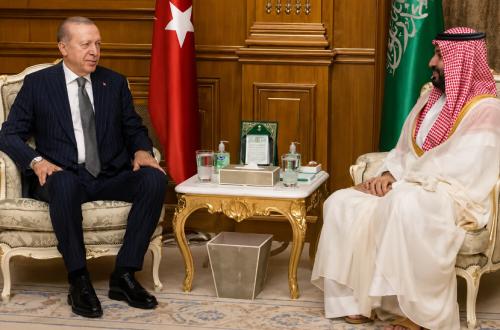
When dawn crept over the Kaaba on 7 August 2026, a historic turning point in 21st-century geopolitics was recorded. Under the auspices of the Holy City of Makkah, President Recep Tayyip Erdoğan, Crown Prince Mohammed bin Salman, and Prime Minister Shehbaz Sharif sealed the Mecca Joint Defence Agreement (MJDA). Declared through a firm collective defence doctrine, stipulating that an attack on one member state is considered an open attack on all three, this event was not merely a ceremonial diplomatic process. It is the manifesto of the birth of the largest independent security architecture in the Islamic world, a direct strategic response to the severe shocks following the military escalation by the United States and Israel against Iran, which sacrificed Gulf stability, threatened shipping in the Strait of Hormuz, and damaged regional security order since the beginning of the year.
Technologically and in terms of military might, the Islamabad–Ankara–Riyadh axis presents a golden triangle synergy that is extremely formidable for any adversary. Turkey brings the superiority of an independent defence industry at the peak of its prowess. As the second-largest military force in NATO, with more than 480,000 active personnel and 350,000 reservists, Ankara contributes a level of defence self-sufficiency reaching 80 percent. Its naval power is reinforced by the helicopter carrier TCG Anadolu and advanced corvettes from the MILGEM project. In the air, Turkey leads the era of autonomous warfare through a super-ecosystem of Bayraktar TB3 and Akinci drones, the stealth unmanned fighter jet KIZILELMA, and the fifth-generation KAAN fighter jet programme. Moreover, Turkey possesses an independent air defence ecosystem, such as the Hisar and Siper missile systems, which frees the region from the dictates of Western embargoes.
On the other side, Pakistan contributes a massive weight of experience, expertise, and quantitative deterrence. Commanding over 650,000 active personnel and 550,000 reserve troops—making it the sixth-largest standing armed forces in the world—Islamabad’s position is highly crucial. Beyond being reinforced by hundreds of JF-17 Thunder Block III fighter jets integrated with modern avionics and VT-4 main battle tanks, Pakistan’s most critical strength lies in its battle-tested combat doctrine and its status as the only Muslim-majority nation possessing a nuclear triad. With a strategic deterrence doctrine supported by Shaheen-III ballistic missiles with a range of 2,750 kilometres and Babur cruise missiles, Pakistan’s presence overshadows the pact with a high-level psychological deterrence aspect that immediately fortifies the Gulf region.
So where does Saudi Arabia stand in this equation? The Kingdom no longer acts merely as a passive donor, but as the prime mover and financial epicentre. With a colossal defence budget consistently ranging between 70 and 85 billion US dollars per year—one of the largest in the world—Riyadh brings unlimited financial advantage and a world-class air fleet.