
The Anatomy of Nepal's Devastating Flash Floods
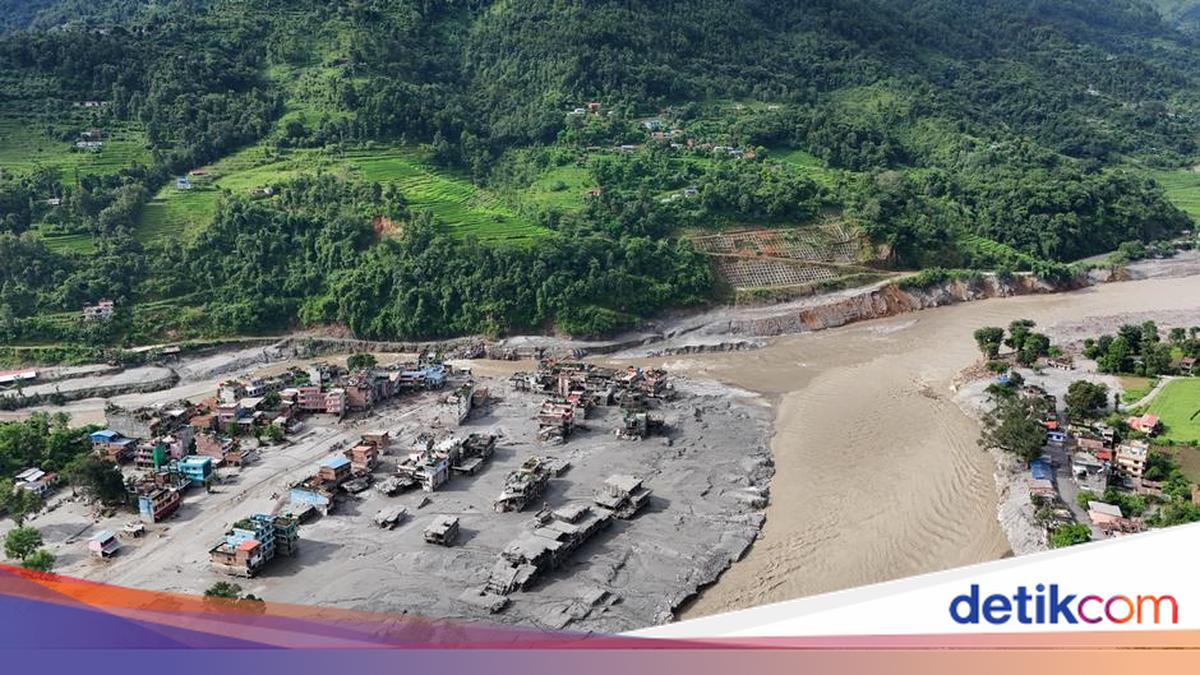
A flash flood struck northern Nepal on Wednesday (26/08), killing hundreds of people, while thousands more remain missing. With the death toll still rising, the true scale of the destruction remains unknown.
However, it was not merely the volume of water that made this disaster so deadly. Within about 10 minutes, water mixed with ice, mud, and rocky debris travelled up to 20 kilometres downstream. For residents in its path, there was almost no time to save themselves. The flood also damaged roads, bridges, and a number of power generation facilities.
In several affected villages, the disaster not only separated residents from their families but also from the outside world. Bidhya Rajput, a journalist in Kathmandu, said her family home in Sole Village, Nuwakot District, was swept away by the Trishuli River. According to her, only four or five residents managed to save themselves by fleeing to the hills. “The others did not have time, because the flood came suddenly,” she told DW.
Rajput’s in-laws are also still missing. Her father-in-law, a teacher, is believed to have been swept away by the flood while returning from work, according to the headteacher of the school where he taught. Rajput’s husband has travelled to the village to seek news of his family, despite many roads being damaged and washed away. Meanwhile, there has been no news from the village since Thursday (27/08) morning because electricity and telephone networks are down.
“Government aid has not yet reached Sole; the majority of government rescue and relief efforts are concentrated in major towns,” Rajput said. Residents say the area was also affected by flooding last year. However, at that time, many residents still had time to save themselves by moving to higher ground, and the water did not reach the height it did this time. She acknowledged that no early warning was received this time, so residents could not evacuate to safety as they did last year.
However, Usha Kiran Timsena, an opposition politician from Nuwakot, said police and local officials had actually warned that a major flood was coming. Even so, residents did not anticipate the scale and speed of the water that arrived. “Many residents who lived somewhat far from the riverbank took it lightly. They ultimately did not have time to save themselves when the flood reached their settlements,” she told DW.
Meanwhile, Sujan Lohani, a resident of Dhading, said he never imagined the flooding and damage caused by the Trishuli River would be so great and widespread. The main bridge over the Trishuli River, which connects his district’s administrative centre with Kathmandu, was also swept away by the flood. “I am worried my cousin is now in the village,” he told DW. “We are cut off from Kathmandu.”
Authorities said more than 30 bridges, including vehicle and suspension bridges, as well as around 12 hydroelectric power dams, were destroyed by the flood. The government has designated Nuwakot, along with Rasuwa and Dhading districts, as the areas most affected by the deadly flood.
Nepalese authorities are racing against time to reach survivors in the affected areas. As of Thursday (27/08), more than 1,300 people were still reported missing, including hundreds of foreign nationals. Neighbouring countries India and China are coordinating with Kathmandu in disaster response. Rescue teams evacuated trapped and injured residents by helicopter to Kathmandu. Police, military, and residents have also set up temporary shelters for those who lost their homes.
“We are deploying every effort to rescue residents who are still alive,” Nepal’s Minister of Information and Communication, Bikram Timilsina, told DW. He was in the affected area and described the damage as enormous. “Entire villages were swept away. Many lost their lives tragically. Many others cannot be reached,” he explained. Timilsina said the Nepalese government never imagined a flood and disaster of this scale.
Scientists are still debating the exact cause of the disaster. Scientific data indicates the disaster began with the collapse of a glacier in the northern part of the Langtang range, near the Nepal-China border. In just 10 minutes, a massive amount of water and material swept up to 20 kilometres downstream.
“Flash floods are a fairly frequent occurrence in the Himalayas,” said Niels Hovius, a geomorphologist from the GFZ Helmholtz Centre for Geosciences in Potsdam. He explained that the glacier collapse sent a large amount of ice rapidly down the slope. “Friction then melted some of the ice into water, which carried mud and other material. The flow moved at the speed of a car on a German motorway.”
Flash floods in the Himalayas can be triggered by glacier collapses, glacial lake outburst floods (GLOFs), or landslides. However, Hovius stressed that this disaster was not a GLOF. Compared to the Alps, the geography of the Himalayas also worsens the impact. Its valleys are relatively narrow, so water and mud do not have much room to spread. As a result, the flow becomes deeper and faster.
Beyond the speed of the water and material carried, the level of destruction from a flash flood also depends on how far residential areas are from the flood source. Nepal’s challenge is that many residents live along rivers in flood-prone valleys, while early warning systems remain very limited. Even with timely warning, this flood might only have given residents a few minutes to save themselves. Last year, flooding in the same area took about an hour to reach settlements. Nepal has begun developing early warning systems.