
The Ambition of Sugar Self-Sufficiency: From Colonial Legacy to National Sovereignty
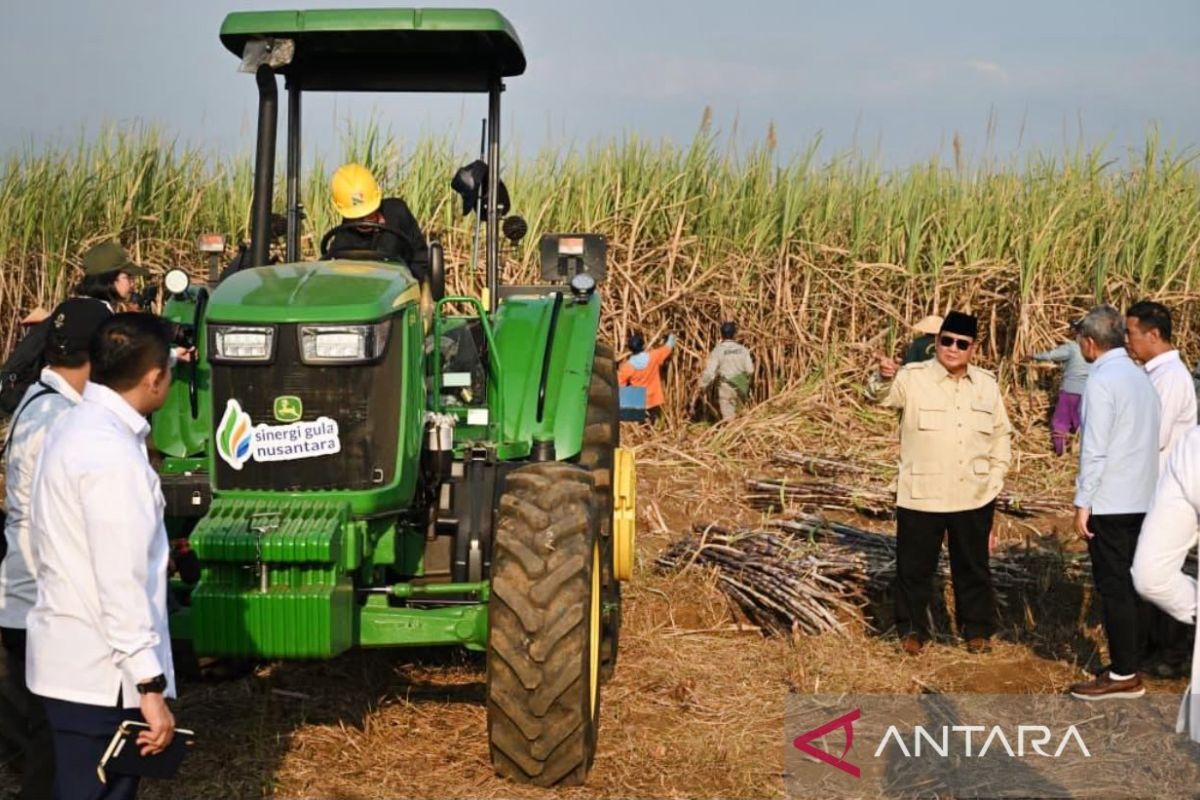
Jakarta (ANTARA) - Every time a plane lands at Abdulrachman Saleh Air Base in Malang Regency, which also serves as a commercial airport, the eye is inevitably drawn to vast green fields that look like reeds from the aircraft window. That is sugarcane.
It turns out the sugarcane plantation is not merely scenery around the air base. The cane is genuinely cultivated for production. And the yield is not only destined to sweeten a cup of coffee or tea. Not just food, but a source of energy: bioethanol.
President Prabowo Subianto himself visited the sugarcane plantation near where the plane landed on Friday (17/7/2026). The President sounded a siren to mark the start of a simultaneous harvest at 43 locations across Indonesia for three commodities, one of which is sugarcane. The three commodities are sugarcane, soybeans and rice.
Of the three, sugarcane carries the largest figures. Land cultivated under the Indonesian Air Force programme covers 236,048 hectares, with a production potential of 18.386 million tonnes of sugarcane, equivalent to 1.36 million tonnes of sugar, or 45.05 per cent of this year’s national sugar production target. In the Abdulrachman Saleh Air Base area alone, 800.5 hectares are ready for harvest, estimated to yield 72,045 tonnes of sugarcane.
The figure of 236 thousand hectares, when compared with the history of the archipelago, carries an irony worth reflecting on. At the height of the colonial Dutch East Indies sugar industry in the 1930s, the sugarcane area in Java ranged only from 196 thousand to 200 thousand hectares, yet it was able to produce around 2.9 to 3 million tonnes of sugar per year, with productivity reaching 14.7 tonnes of sugar per hectare.
Exports reached 2.4 million tonnes, placing the Dutch East Indies as the world’s second-largest sugar exporter, after Cuba. In other words, the area now cultivated by the Air Force for the food security programme already exceeds the total sugarcane area of Java during the most productive era of the colonial government, even though the projected sugar yield has yet to match the old record.
The difference between then and now is not only about yield and the milling technology that processes cane into sugar, but also the direction of the commodity. Colonial-era sugar flowed outward, filling the coffers of the Dutch East Indies government and the European market, while the cane-growing populace sat at the end of the chain, enjoying the least added value. After independence, the archipelago’s sugar industry gradually faded, worsened by the global crisis known as the Great Depression and wartime destruction. As a result, Indonesia, once one of the largest exporters, turned into one of the world’s biggest sugar importers for decades.
For that reason, the simultaneous harvest in Malang, East Java, is one node in the effort to reverse that direction, with sugar now directed first towards meeting domestic needs.
Source: jawawa.id (https://jawawa.id/newsitem/the-ambition-of-sugar-self-sufficiency-from-colonial-legacy-to-national-sovereignty-1784707077)
Originally published by Antara (Indonesian) (https://www.antaranews.com/berita/5660335/cita-swasembada-gula-plus-bioetanol), translated from Indonesian