
The Allure of Wuzhen Scenic Area, an Ancient Water Town in Zhejiang, China
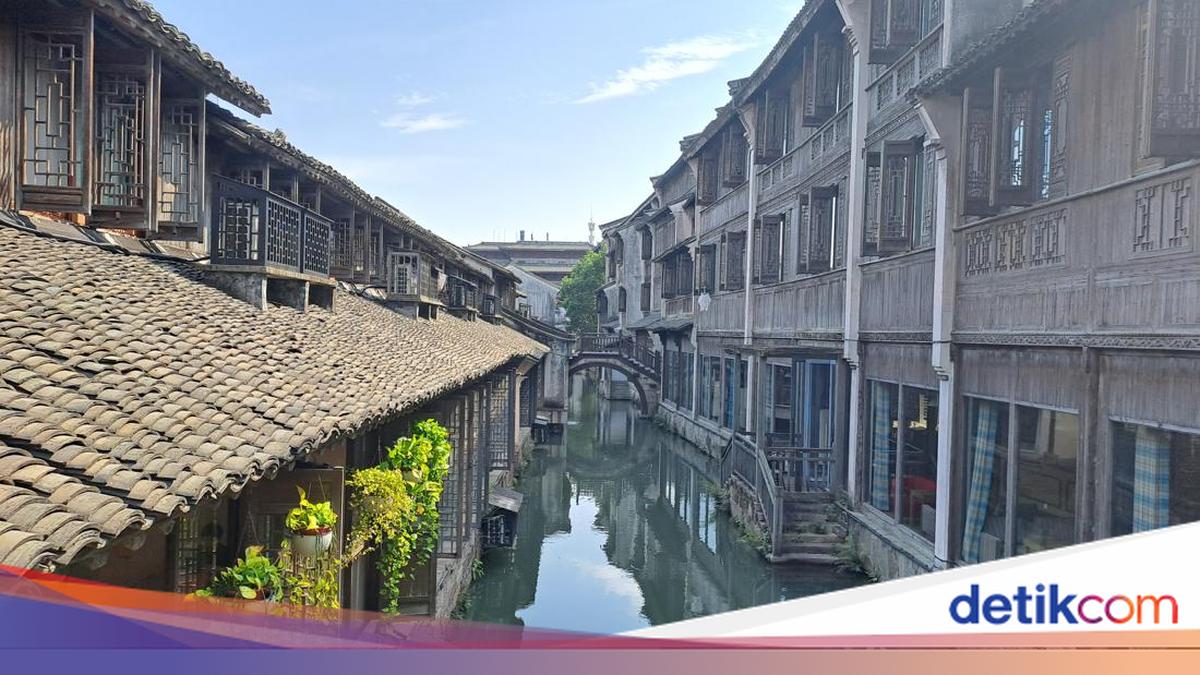
Wuzhen Scenic Area attracts many foreign tourists visiting China. Historic buildings in the area are surrounded by small rivers.
Detikcom had the opportunity to visit this historic site in China on Saturday (17 October 2026). Wuzhen is located at the northern end of Tongxiang City in Zhejiang Province. The ancient water town lies on the western bank of the Grand Canal, also known as the Beijing–Hangzhou Grand Canal.
According to the Zhejiang government website, Wuzhen is 1,300 years old and has been designated a national 5A tourist attraction, the highest category. It is also listed among China’s 10 most famous towns.
Wuzhen is known as one of the six ancient towns south of the Yangtze River. Most local residents live beside the waterways.
The site contains many historic landmarks, including a stone memorial gate dating from the Six Dynasties period, a stage at Xiuzhen Taoist Temple and the former residence of Mao Dun, a renowned 20th-century Chinese writer. Mao Dun’s former residence is the most visited destination in the area.
Exploring Wuzhen
On entering Wuzhen, visitors are greeted by rows of traditional Chinese buildings. Some are homes, while others have been turned into shops selling food and souvenirs.
Local people still live in the houses in the area. Laundry can be seen hanging beside the windows.
The ancient town is filled with narrow lanes and small canals. Bridges spanning the canals add to the appeal of its waterside scenery.
Many visitors take photographs on the bridges, while others simply enjoy the view. Visitors can also explore the water town by sampan.
There is also a workshop producing traditional blue calico fabric. According to the Wuzhen Scenic Area’s official website, blue calico is a traditional Chinese craft dating back to the Han and Jin dynasties. It is still produced in Wuzhen and Tongxiang, as well as in Nantong, Jiangsu Province.
The fabric is made from cotton and dyed with natural indigo extracted from plants. In the past, blue calico was widely used to make curtains, shawls, bags and tablecloths. Today, the craft has expanded into a range of modern products, including clothing, hats and sandals.
Blue-dyed fabric hangs in the courtyard of the workshop. Many visitors use the site as a backdrop for photographs.
Wuzhen is busy with visitors today. Alongside international tourists, many Chinese locals have also come to the town. One of them is Liu Xin, from Qingdao in Shandong Province.
“My Chinese name is Liu Xin, while my English name is Eva. I’m 32, and this is my husband. This is our first time in Wuzhen,” Liu Xin said.
Liu and her husband arrived in Wuzhen three days ago. Today is the final day of their visit.
“We’re very excited to enjoy the theatre festival taking place here. We came here and have both made up our minds to return every year for the festival,” Liu said.
For Liu, Wuzhen is a very special ancient water town. She also said she had been curious about the place because of its popularity on social media.
“The atmosphere here is very special. Even though we are Chinese ourselves, the event is very well managed and organised. We are very impressed. We can watch opera, theatre and street parades,” she said.
Source: jawawa.id (https://jawawa.id/newsitem/the-allure-of-wuzhen-scenic-area-an-ancient-water-town-in-zhejiang-china-1792230645)
Originally published by detikcom (https://news.detik.com/berita/d-8711525/pesona-wuzhen-scenic-area-kota-wisata-air-kuno-di-zhejiang-china), translated from Indonesian