
The 51 Nations Destroying Gaza
When a building collapses from a bomb, our eyes are usually drawn to the explosion. We see fire, smoke, and debris. We see victims fleeing. We see ambulances coming and going. But the explosion is merely the final chapter of a far longer story. Before a bomb detonates in Gaza, someone designed it. A factory made its components. A company shipped it. A country permitted its export. A vessel transported it. A port received it. In other words, every explosion has a life history. That is what a lengthy Al-Jazeera investigation attempted to trace.
After sifting through millions of Israeli military import records, they did not stop at the question of how many weapons entered. They went further. They tried to see where the weapons came from, who supplied them, and how the supply chain continued to function while the world watched the destruction of Gaza. The results are staggering. It turns out the war is not only being fought in Gaza. The war is also being fought in corporate boardrooms, industrial zones, customs offices, and international trade routes.
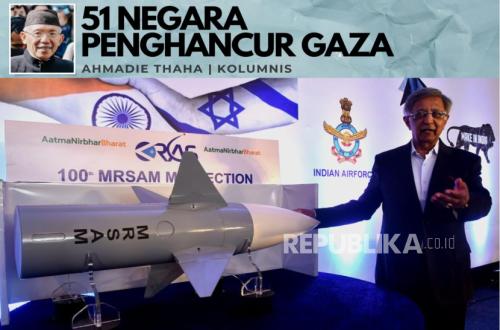
Data analysed by Al-Jazeera shows that the United States was the largest supplier of military-related goods to Israel during the Gaza war. Its value accounted for more than 42 per cent of all recorded military imports. In second place was India, with around 26 per cent. Next came Romania with approximately 8 per cent, Taiwan with around 4 per cent, and the Czech Republic with about 3 per cent. These five countries alone accounted for over two-thirds of the total value of military imports entering Israel.
However, the story does not end with these five nations. The Al-Jazeera investigation found at least 51 countries and autonomous territories connected to the military supply chain to Israel while the war was ongoing. The magnitudes vary. Some contributed in very large quantities. Others had relatively small values. Yet all are recorded as part of the same network. The United States, India, Romania, Taiwan, and the Czech Republic are merely the top names on that list. Beneath them appear other names that may surprise many.
There is China, which during the war had military-related imports to Israel recorded at around 71.1 million shekels, or more than IDR 320 billion. Interestingly, about 83 per cent of that value occurred after the International Court of Justice (ICJ) warned on 26 January 2024 of the risk of genocide in Gaza. There is Singapore, with a value of about 20.2 million shekels, or roughly IDR 91 billion. Around 88 per cent of that amount was also recorded after the ICJ ruling. There is Switzerland, with a value of about 9 million shekels, or around IDR 40 billion. Almost all of it, roughly 98 per cent, occurred after the ICJ decision.
There is Turkey, whose citizens are known for frequently staging anti-Israel protests. Yet Israeli import data shows that military-related goods originating from Turkey were still recorded at a value of about 7.5 million shekels, or approximately IDR 34 billion. Around 79 per cent of the imports occurred after the ICJ ruling. However, President Recep Tayyip Erdogan, known as one of the most outspoken leaders criticising Israel, has acknowledged that all weapon exports to Israel were completely halted after 2023. There is also Brazil, with a value of about 8.7 million shekels, or nearly IDR 40 billion. Around 80 per cent also occurred after the warning from the International Court of Justice.
In addition, there are the Netherlands, Bulgaria, South Korea, Vietnam, Canada, France, Italy, Germany, the United Kingdom, Spain, Azerbaijan, and dozens of other countries whose names appear in the Israeli import data analysed by Al-Jazeera. This list does not automatically mean that all these countries share the same level of involvement. Some supply in very large quantities. Others supply very little. Some claim they did not grant new permits. Some explain that certain shipments stemmed from old contracts. Others state that specific goods do not fall into categories they prohibit. Yet one thing is hard to dispute. Their names are in the data.
These figures matter because they show that modern warfare is not a standalone event. It more closely resembles a large tree with roots spreading to many places. When a branch breaks in Gaza, its roots can be thousands of kilometres away. One of the most compelling findings comes from India. Al-Jazeera obtained customs documents showing trade links between several Indian companies and an Israeli defence firm. The documents reveal something rarely seen by the public: the journey of various military components before they transform into parts of a weapons system.