
The 40-Metre Tsunami Mistaken for 3 Metres: 18,500 Perished Instantly
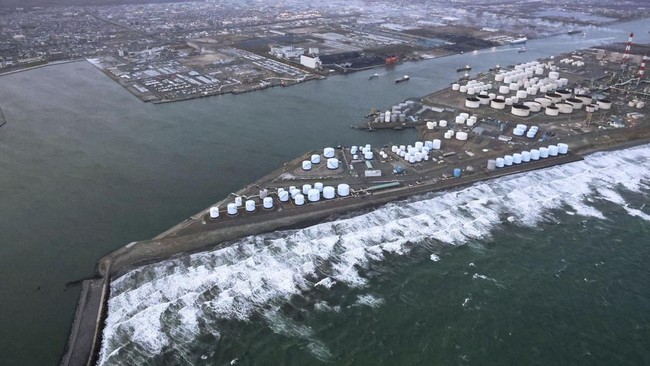
Japan reached its nadir when a magnitude 9 megathrust earthquake struck on 11 March 2011. The massive tremor triggered a colossal tsunami that obliterated coastal areas within minutes, claiming tens of thousands of lives. The wall of seawater, recorded at heights of up to 40 metres, surged onto land at a terrifying speed of around 700 kilometres per hour. According to Encyclopaedia Britannica, the twin disaster resulted in approximately 18,500 deaths, 10,800 people missing, and more than 4,000 injured. The devastation was compounded the following day when authorities announced a radiation leak at the Fukushima nuclear plant, rendering parts of the region uninhabitable and forcing thousands to flee permanently.
As one of the world’s most earthquake-prone nations, a characteristic shared with Indonesia, Japan had invested heavily in sophisticated disaster mitigation technology. Early warning systems were designed to broadcast alarms moments before catastrophe struck. However, in the 2011 incident, a fatal miscalculation occurred. Following the main quake, authorities swiftly issued a tsunami warning, but the initial wave height projection broadcast to the public was drastically wrong. Instead of 40 metres, the government estimated the tsunami would reach only 3 metres.
This was the warning witnessed by Ryo Kanouya, a Fukushima resident born in 1990. On the morning of the disaster, activities were normal with no premonition of doom. Ryo went to his office and worked as usual with his colleagues. The atmosphere changed drastically when the clock struck 3:30 p.m. local time. Ryo’s mobile phone and those of all his colleagues rang simultaneously, followed by the massive tectonic tremor striking the Fukushima region. Buildings shook violently. People scrambled outside seeking shelter, though the extreme intensity made it difficult even to stand or walk. Around them, structures began to collapse as trees and utility poles toppled in an instant. The violent shaking lasted for six harrowing minutes. Just as Ryo and his colleagues tried to catch their breath, a follow-up warning was broadcast. ‘As we were trying to calm ourselves from the massive earthquake, a tsunami warning was issued,’ Ryo told National Geographic. Loudspeakers announced a potential wave height of 3 metres. Ryo’s company then instructed all employees to return home immediately to assist with civilian evacuations. Without hesitation, Ryo rushed back to his residence, which happened to be just one kilometre from the shoreline.
Upon arriving home, Ryo was briefly reassured by his family, who assumed the tsunami threat had passed because the water had not yet risen in the first few minutes. That assumption was tragically wrong. Ryo’s worst fear became reality. When he glanced out the window, he was stunned. The seawater moved like lightning, suddenly right before his eyes. There was no room to escape. The massive wave smashed through the window and collapsed the walls of his house. He had clung to the belief that the structure would hold, but the sheer volume and ferocity of the water quickly razed the dwelling to nothing. Ryo was swept away, tossed about in the swirling seawater, swallowing water. At his lowest point, despair crept in. ‘I thought it would be better to exhale the remaining air in my lungs and die,’ Ryo recalled, describing the moment he almost gave up. He became separated from his family. Fortunately, his survival instinct led him to grab onto a floating wooden cabinet. Amidst his struggle, a tragic scene unfolded before him. As far as he could see, a sea of people were struggling and drowning. Some tried to survive atop piles of debris, while others already floated lifelessly. ‘I waited until the water level receded, slowly going down as the water retreated until I could stand on the ground again,’ he explained.
Once his feet touched solid ground, Ryo’s energy was completely drained. The landscape of Fukushima had been transformed; it was flattened, filled with corpses and the injured. Miraculously, Ryo survived without serious physical injury, though he faced the threat of hypothermia in the cold post-disaster air. Amidst the profound grief and total destruction, there was a glimmer of relief. Ryo, along with his father, mother, and sister, were confirmed to have survived. Nevertheless, the tragedy left a permanent scar. His grandmother vanished without a trace, presumed to have been swept away by the megathrust waves, and her body was never found.
Source: jawawa.id (https://jawawa.id/newsitem/the-40-metre-tsunami-mistaken-for-3-metres-18-500-perished-instantly-1785995662)
Originally published by CNBC Indonesia (https://www.cnbcindonesia.com/tech/20260806112412-37-757044/tsunami-dahsyat-40-meter-dikira-cuma-3-meter-18500-tewas-seketika), translated from Indonesian