
The 17 Minutes Before the High-Speed Train Collision at the Centre of Spain’s Inquiry
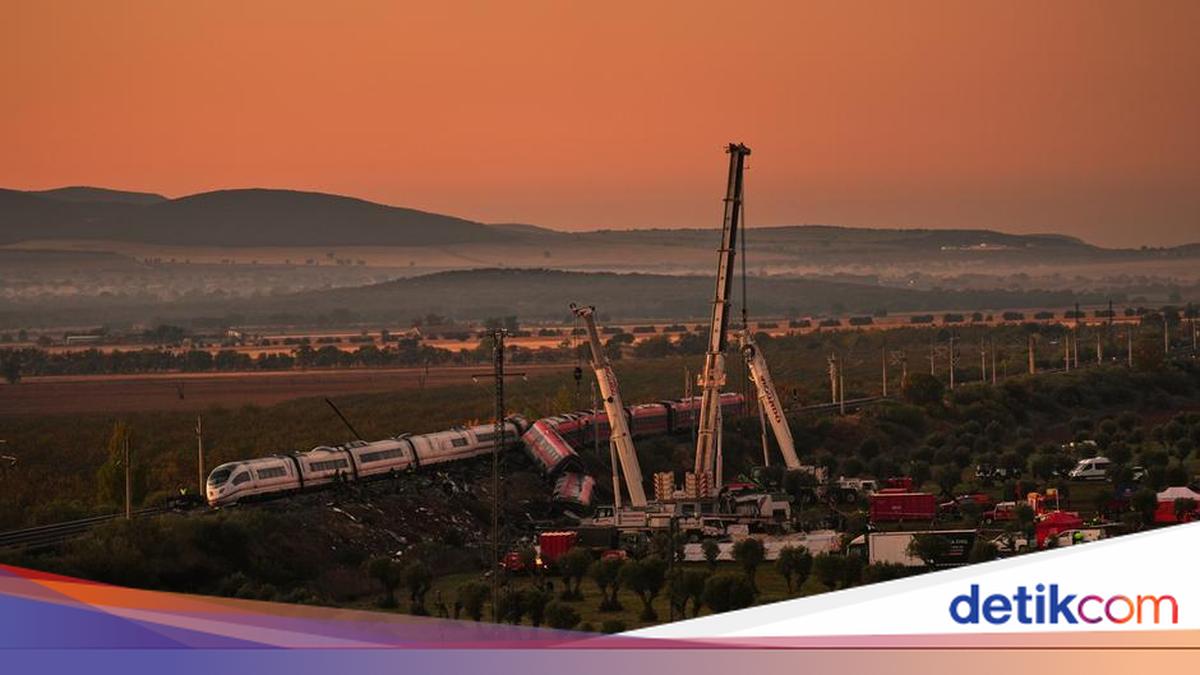
Search efforts continued after Wednesday’s high-speed train crash in Spain’s Toledo province. Using three cranes, rescue teams searched into the early hours of Thursday for people who might still be trapped in the wreckage of the carriages. One body was recovered, Castilla-La Mancha regional president Emiliano García-Page said.
Rescue workers said there could still be other victims trapped in the wreckage. The reported death toll has risen to 69, with a further 100 people injured.
A school in the village of Urda, near the crash site, has become an information centre for people seeking news of relatives and family members. Red Cross staff are also providing assistance. Police have set up support centres in Madrid, Toledo, Córdoba and Seville, where relatives can provide DNA samples to help identify those killed.
Three days of national mourning
Prime Minister Pedro Sánchez announced three days of national mourning through Saturday (31 October) and promised a thorough investigation.
“We will investigate this case to the end. If there was negligence, it will come to light,” he said at the crash site in Toledo province, about 130 kilometres south of Madrid.
“It is unacceptable that a country like Spain should suffer two serious high-speed rail accidents within a year,” the head of government said, referring to the serious railway accident in Adamuz, Andalusia, which killed 46 people in January. If faults are found in the safety system, the authorities will take decisive action, he added.
Sánchez is also under pressure as conservative and right-wing populist opposition parties have called on him to take responsibility for the crash, a month ahead of the general election. “Corruption kills. The left-wing government is criminal,” said Santiago Abascal, one of the leaders of the rising right-wing populist party Vox.
According to Transport Minister Óscar Puente, the catastrophic collision resulted from an “inexplicable” and “wrong” decision by the rail control centre.
Initial findings indicate that the automatic safety system was not operating in the Castilla-La Mancha area. Several high-speed trains on the same 63-kilometre section of track, where the system was also unavailable, were stopped until manual control was activated.
Puente said an employee of rail network operator Adif at the Madrid control centre allowed a state-owned Renfe train to continue, although a train operated by private company Iryo was still waiting on the track. The moving train was carrying 397 passengers, while the waiting train had 147 passengers on board.
The 17 minutes before the fatal crash
Why did rail traffic controllers fail to recognise the danger in time? This remains a key unanswered question. At the time, the two high-speed trains were about 25 kilometres apart, a distance the Renfe train could cover in 17 minutes. Police and the independent Accident Investigation Board (AITAT) have interviewed the staff member.
AITAT says it is too early to speculate about the cause of the collision. Puente has also said that experts must establish whether human error played a part. According to Spanish media reports, recordings of radio communications between the Madrid control centre and the two drivers suggest that the operations centre made an erroneous decision.
The safety system used on the Madrid–Seville route is German-made. Known as LZB, or the Linear Train Control system, it continuously monitors train speed and sends operating instructions directly to drivers.
If a train exceeds the permitted speed or breaches other rules, the system can apply the brakes automatically. In the event of a major disruption, however, the control centre takes over.
Spain’s rail union Sindicato Ferroviario has long criticised the condition of the rail network. Train drivers’ union SEMAF is still due to hold a strike today. It is also calling for improved high-speed rail safety. The strike was announced in mid-October, before the crash.
Protests marred by clashes
As people across Spain observed a minute’s silence in mourning for the victims, clashes broke out in Madrid during a demonstration organised by far-right groups. Broadcaster TVE reported that demonstrators and police clashed.
In the January accident near Adamuz, Andalusia, trains operated by Renfe and Iryo were also involved on the same route. An Iryo train derailed and collided with a Renfe train travelling in the opposite direction. Sánchez had then promised the unions an additional €1.8 billion (Rp36.4 trillion) for rail network improvements, including maintenance funding for the 2026–2030 period.
Although Spain has invested heavily in developing its high-speed rail network in recent years, European Commission data show that spending on maintenance still lags behind that of other major European countries.
Of an average €1.5 billion invested each year between 2018 and 2022, only about 16% went towards maintenance, renewal and modernisation. With around 4,000 kilometres of track, Spain has the world’s second-largest high-speed rail network after China.
Source: jawawa.id (https://jawawa.id/newsitem/the-17-minutes-before-the-high-speed-train-collision-at-the-centre-of-spains-inquiry-1793339542)
Originally published by detikcom (https://news.detik.com/dw/d-8730615/17-menit-sebelum-tabrakan-kereta-cepat-jadi-fokus-penyelidikan-spanyol), translated from Indonesian