
The 10 Most Religious Countries in the World: Where Does Indonesia Rank?
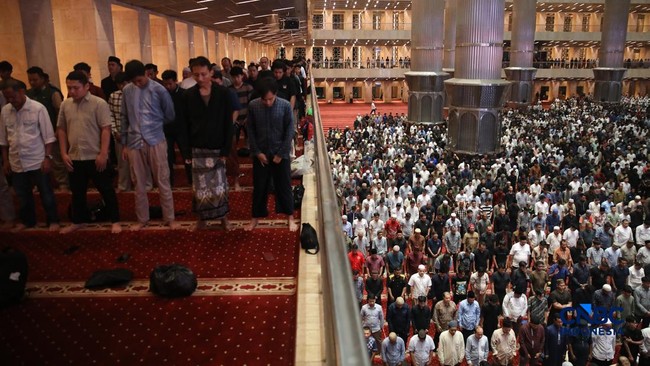
A study conducted by the Pew Research Center has found that the most religious countries tend to be located in Sub-Saharan Africa, Latin America, and the Middle East-North Africa region. Conversely, the least religious nations tend to be found in Europe and East Asia.
This phenomenon suggests that levels of spirituality tend to be higher in developing nations. In contrast, more secular Western nations show significantly lower figures in daily religious practices.
Meanwhile, a survey conducted by CEOWORLD magazine and the Global Business Policy Institute measured religiosity levels across 148 countries. Involving 370,000 people worldwide as participants, the research explored perspectives on how religion influences cultural, social, and political systems globally.
Here is the list of the ten most religious countries in the world based on the survey:
- Somalia (Religiosity Score 99.8)
Somalia possesses an interesting spiritual history. Traditional African religions, Islam, and Christianity (both Protestant and Catholic) have left their mark on this East African nation. Islam has played a vital role in Somalia since the seventh century. In fact, Somalia was one of the first places to embrace Islam. Islam spread rapidly across the Arabian Peninsula, and Somalia became an important centre of learning for the Muslim world. Traditional African religions also have deep roots in Somalia; currently, many Somali people continue to practice African traditions alongside Islam. Although it arrived in Somalia in the 12th century, Christianity remains a minority religion in the country.
- Nigeria (Religiosity Score 99.7)
In terms of culture and society, Nigeria is a country where the majority of the population practices Islam, with a Sunni majority. The origins of Islam in Nigeria date back to the 15th century, when it was introduced through the expansion of the Songhai Empire. Islam spread quickly throughout Nigeria, becoming the majority religion.
- Bangladesh (Religiosity Score 99.5)
Bangladesh has a long and diverse spiritual history. Hinduism, Buddhism, Islam, and Christianity have all left their mark on the country. Buddhism and Hinduism arrived in Bangladesh in the third century, brought by traders from India and China. These religions spread quickly among the ruling classes and throughout the nation with the construction of temples and monasteries. These religious traditions have played a crucial role in shaping the cultural and spiritual identity of Bangladesh and continue to influence the country today. Meanwhile, Islam arrived in Bangladesh in the sixth century via Muslim traders from the Middle East. Islam gradually spread throughout the region to become the dominant religion. Furthermore, Europeans left their influence on the religious landscape of Bangladesh by introducing Christianity in the 16th century. Currently, the majority of the Bangladeshi population is Muslim, with small minorities practicing Hinduism, Buddhism, and Christianity.
- Ethiopia (Religiosity Score 99.3)
Ethiopia is an African nation where the majority of the population is Christian. According to Ethiopian tradition, the introduction of Christianity to the Aksumite Empire occurred in the fourth century AD, when a Greek missionary, Frumentius, replaced King Ezana. This marked the beginning of a long history of Christianity in Ethiopia. Today, Frumentius is honoured as a saint in the Ethiopian Orthodox Church. He is regarded as a pivotal figure in preserving and promoting the Christian faith in the country over the centuries. In addition to Christianity, Islam also has a long history in Ethiopia. Historically, the first Muslim communities are believed to have arrived in Ethiopia as early as the 7th century. Although it remains a minority religion, Islam has had a significant impact on the culture and history of Ethiopia.
- Yemen (Religiosity Score 99.1)
Yemen possesses an interesting spiritual history. Judaism, Christianity, and Islam have all left important imprints on the country. Islam has played a vital role in Yemen since the seventh century AD, when the Prophet Muhammad sent his son-in-law as the Governor of Yemen. From there, Islam spread rapidly across the Arabian Peninsula, and Yemen became a centre of learning and science for the Muslim community. Additionally, Judaism has deep roots in Yemen, with the first Jewish communities arriving in the third century. Meanwhile, Christianity arrived in Yemen in the sixth century. Today, Yemen is a country with a Muslim majority.
- Malawi (Religiosity Score 99)
Malawi possesses a complex spiritual heritage through traditional African religions, Christianity, and Islam. These religions are said to play a role in shaping the culture and history of Malawi. For centuries, Malawi has been home to a diverse mix of traditional African religions. To this day, many people still follow these practices alongside other beliefs. Christianity was first introduced to Malawi by European missionaries in the 19th century. Since then, Christianity has become the majority religion in Malawi. In addition to Christianity, Islam also has a long history in Malawi, dating back to when the first Muslim traders arrived on the East African coast in the 15th century. Although it remains a minority religion, Islam has…
Source: jawawa.id (https://jawawa.id/newsitem/the-10-most-religious-countries-in-the-world-where-does-indonesia-rank-1789955551)
Originally published by CNBC Indonesia (https://www.cnbcindonesia.com/lifestyle/20260921045811-33-769372/10-negara-paling-religius-di-dunia-indonesia-nomor-berapa), translated from Indonesian