
Thanks to Japan and Taiwan, Coal Prices Reignite
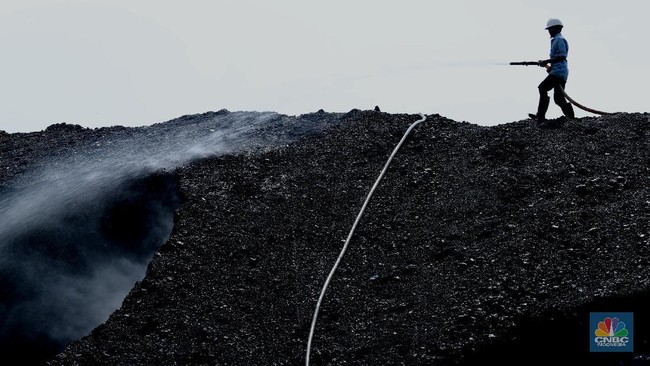
Coal prices have finally strengthened after three days of stagnation. According to Refinitiv, coal prices closed at US$141 per tonne on Tuesday (7 April 2026), marking a 1.2% jump. This increase breaks the stagnant coal prices that had persisted for three days. Coal prices surged after many countries reported ramping up demand and electricity production from fossil fuels. Tokyo plans to limit liquefied natural gas (LNG) consumption to ensure reliable energy supplies and boost operations at coal-fired power plants. “To ensure stable energy supplies, we are reducing LNG usage and implementing measures to maximise electricity production at coal-fired power plants,” said Japan’s Minister of Economy, Trade and Industry, Ryosei Akazawa, quoted from Bernama. As an emergency measure, Japan has decided not to impose restrictions on inefficient coal-fired power plants in 2026, which will increase their usage, he added. Coal-fired power plants, which produce higher carbon dioxide emissions compared to other fuels, remain vital for energy resilience as they do not depend on supplies from West Asia. On 28 February, the United States (US) and Israel launched attacks on targets in Iran, including in Tehran, causing damage and civilian casualties. Iran retaliated by striking Israeli territory and US military facilities in West Asia. This escalation has effectively halted shipments through the Strait of Hormuz, a critical route for global oil and LNG supplies. As a result, fuel prices have risen in most countries. Taiwan will also increase coal-fired power generation to strengthen energy resilience, as the war in the Middle East disrupts gas supplies. The state-owned Taiwan Power Company, the main electricity supplier, will purchase power from the Mailiao coal-fired plant starting in May after upgrading the capacity of Units 1 and 3, according to the Ministry of Economic Affairs. South Korea and Bangladesh are also increasing their reliance on coal. Germany is even considering reactivating previously shut down coal plants. Meanwhile, Kazakhstan plans to build eight new coal-fired power plants and modernise eleven existing facilities over the next five years, adding around 8 GW of capacity. This expansion aims to support the launch of modern energy-intensive industries and serve as a power source for digital platforms. Coal production is also expected to rise, with output this year reaching around 130 million tonnes. The country has vast coal reserves, estimated at more than 33 billion tonnes. The development of coal-fired power plants and the implementation of national coal energy projects were discussed in today’s government meeting.