
Thailand's Turn to Reach Deal with Iran to Bypass Strait of Hormuz
Thailand has reached an agreement with Iran to allow its oil tankers to cross the Strait of Hormuz safely. Previously, ships from China, Russia, Pakistan, Iraq, India, and even Malaysia have been permitted to pass through.
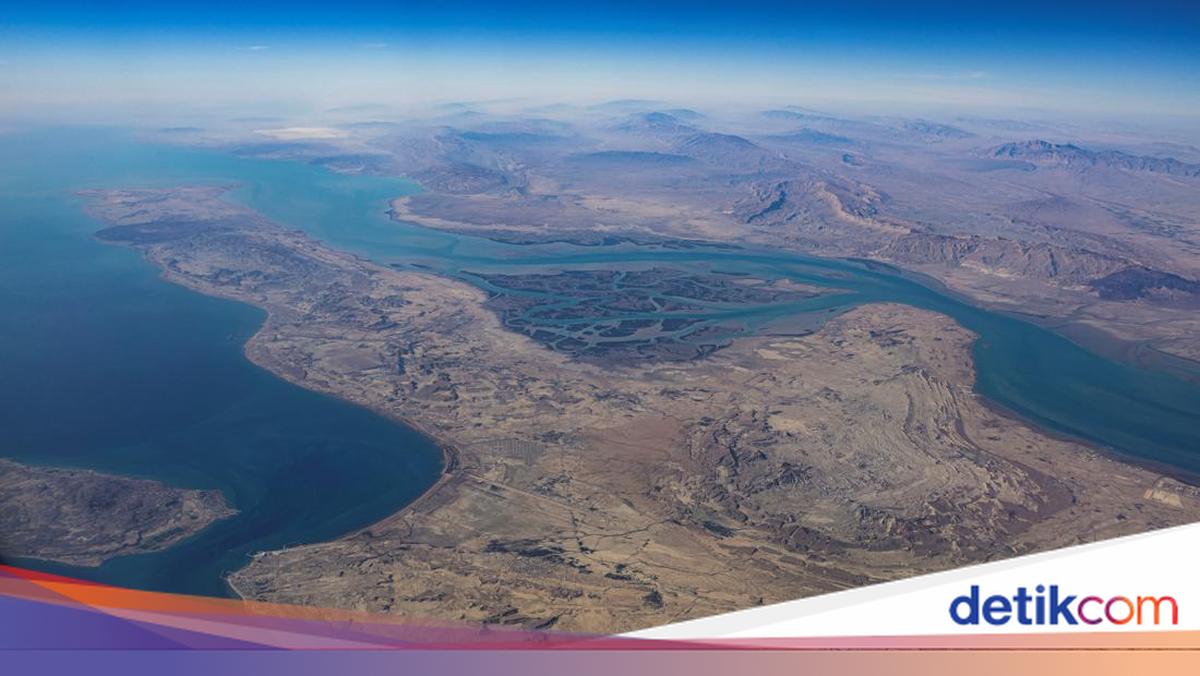
As summarised by detikcom on Sunday (29/3/2026), the Strait of Hormuz, a strategic waterway for global energy supplies, has been affected by the ongoing war between Iran and the United States (US) and Israel, which began at the end of February.
Crossing activities in the Strait of Hormuz have been effectively restricted since early March. This has triggered global disruptions, increasing shipping costs and driving up global oil prices.
The agreement between Bangkok and Tehran, as reported by AFP on Saturday (28/3), was announced by Thai Prime Minister Anutin Charnvirakul during a press conference on Saturday (28/3) local time.
“An agreement has been reached to allow Thai oil tankers to cross safely through the Strait of Hormuz,” said Anutin, adding that this development would reduce concerns about fuel imports.
“With this agreement, there is greater confidence that disruptions like those in early March will not recur,” he stated.
According to the US Energy Information Administration, more than 80 percent of the crude oil and liquefied natural gas (LNG) passing through the Strait of Hormuz is destined for Asia. Many Southeast Asian countries are bearing the brunt of fuel supply difficulties, with long queues at petrol stations in Thailand becoming increasingly common.
“The government will continue to adapt to the evolving situation and adjust measures to minimise impacts on the public,” Anutin said during the press conference.
Earlier this month, a Thai-owned bulk carrier sailing through the strategic waterway was attacked, with three crew members reported missing.
Commodity shipments through the Strait of Hormuz, according to tracking platform Kpler, reportedly plunged 95 percent between 1 March and 26 March following the start of the war.
Iran’s Revolutionary Guard stated on Friday (27/3) that its forces had forced three ships attempting to cross the Strait of Hormuz to retreat. Tehran has emphasised that the Strait of Hormuz is closed to ships sailing to and from ports owned by Iran’s “enemies.”
Reports from the UK’s Maritime Trade Operations security agency, UKMTO, indicate that at least 24 commercial vessels, including 11 tankers, have been attacked or reported incidents in the waters of the Gulf, Strait of Hormuz, or Gulf of Oman this month.
List of Countries Whose Ships Are Allowed to Cross the Strait of Hormuz
Malaysian Prime Minister Anwar Ibrahim said a Malaysian oil tanker has been granted permission by the Iranian government to cross the Strait of Hormuz. India, Iraq, China, and Pakistan have also been allowed to pass by Iran.
“Now we are in the process of releasing the Malaysian oil tanker and its crew so they can continue their journey home,” Anwar said in a special speech broadcast live on national television stations on Thursday (26/03), as reported by Bernama news agency.
In the speech, Anwar expressed thanks to Iranian President Masoud Pezeshkian for granting permission for the Malaysian oil tanker to cross the Strait of Hormuz.
Foreign Minister Abbas Araghchi previously emphasised that the Strait of Hormuz is not completely closed. He made the statement on Iran’s state television.
“Many ship owners, or countries owning those ships, have contacted us and asked us to ensure the safety of their navigation through the strait,” said Araghchi, as quoted by Reuters.
“For a number of countries we consider friendly, or in certain cases that we deem necessary, our armed forces have provided safe escort,” he added.
“As you can see in the reports: China, Russia, Pakistan, Iraq, and India. Two Indian ships passed through a few nights ago, as well as from other countries, even Bangladesh, I think. These countries have talked and coordinated with us, and this will continue in the future, even after the war ends,” he continued.
Araghchi also stated that ships associated with countries considered enemies or parties involved in the current conflict will not be allowed to pass.
He said that ships from the United States, Israel, and a number of Gulf countries playing a role in the ongoing crisis will not be granted transit permission.
“We are in a state of war. This region is a war zone, and there is no reason to allow ships belonging to enemies and their allies to pass. However, the strait remains open to others,” he said on Wednesday (25/03).
Source: jawawa.id (https://jawawa.id/newsitem/thailands-turn-to-reach-deal-with-iran-to-bypass-strait-of-hormuz-1774745449)
Originally published by detikcom (https://news.detik.com/internasional/d-8419874/giliran-thailand-capai-deal-dengan-iran-bisa-lewati-selat-hormuz), translated from Indonesian