
Thailand Welcomes Myanmar Junta Chief, Rights Activists Protest
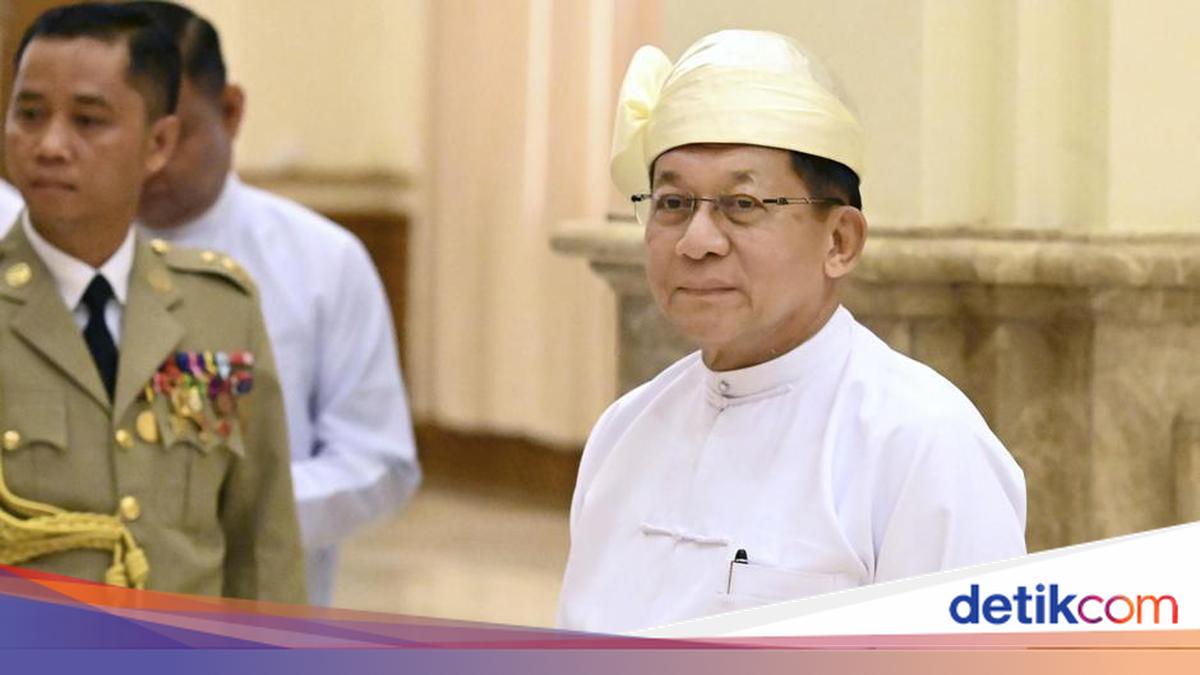
Myanmar President Min Aung Hlaing received an official welcome in Bangkok, Thailand, on Thursday (6 August), during a two-day state visit seen as a significant step to strengthen his diplomatic standing in the region. At Government House, Min Aung Hlaing was scheduled to meet Thai Prime Minister Anutin Charnvirakul, sign several memoranda of understanding, and attend the Thailand-Myanmar Business Forum. During the bilateral meeting, Min Aung Hlaing asserted that his administration is steering Myanmar towards stability and democracy. However, the visit immediately drew criticism from human rights groups who argue that the official reception risks granting political legitimacy to Myanmar’s military government.
After arriving in Bangkok, Min Aung Hlaing was greeted with a state ceremony and a red carpet. A military band played the national anthems of both countries before he and Anutin Charnvirakul inspected a guard of honour. In a meeting with Thai officials, Min Aung Hlaing said his government is working to restore national stability while improving relations with Southeast Asian nations. “Myanmar has now returned to the path of democracy and is moving towards a better future,” Min Aung Hlaing said. He added, “As a new government, we have begun working to achieve national stability, peace, and national reconciliation.” Regarding foreign relations, he also stated, “Just as we have worked to strengthen friendly relations for the benefit of the people, we will also work to build better relations with ASEAN.” The Thai government, in an official statement, said Anutin told Min Aung Hlaing that Thailand is a “friend and partner” of Myanmar. According to the statement, Anutin expressed confidence that bilateral cooperation would “bring tangible benefits to the people of both countries.”
This trip marks Min Aung Hlaing’s fourth overseas visit since his inauguration as president in April, following trips to China, India, and Laos. According to Reuters, Thailand is promoting an approach described as calibrated re-engagement with Myanmar, hoping the country can resume the stalled ASEAN peace initiative. However, Myanmar’s leaders remain barred from high-level ASEAN meetings for failing to meet commitments under the peace plan agreed upon in April 2021. During a visit to Indonesia on Tuesday (4 August), Anutin said a peaceful and stable Myanmar is a prerequisite for ASEAN unity and regional stability. He stated that Thailand supports an approach that maintains dialogue while adapting to “realities on the ground,” citing a recent visit by the International Committee of the Red Cross (ICRC) to Aung San Suu Kyi as supporting this approach. However, ASEAN Special Envoy for Myanmar Maria Theresa Lazaro said last month that normalising Myanmar’s relations with ASEAN remains “far off” as Naypyitaw’s compliance with the peace plan continues to be evaluated.
The visit sparked criticism from civil society groups and human rights organisations. Justice For Myanmar stated the visit grants “false legitimacy” to Min Aung Hlaing and the generals ruling Myanmar. Meanwhile, Chit Seng of Fortify Rights said that changing from a military uniform into a “presidential robe” after what he called a sham election does not alter the fundamental character of Myanmar’s government. He described the government as a “brutal regime” that kills its own people and should not receive legitimacy. Another human rights expert from Fortify Rights, Thanida Piyachot, also criticised Thailand’s move. She said recognising Min Aung Hlaing as a legitimate leader and “shaking the hand of a war criminal stained with blood” sends the wrong message to civilians living under an “illegitimate military dictatorship.” She urged Thailand and ASEAN to stop hiding behind the principle of non-intervention and take a more active role in promoting respect for human rights in Myanmar. Southeast Asia watcher from Thammasat University, Dulyapak Preecharush, also warned Bangkok to maintain balance in its policy. “There is a very fine line between re-engagement and supporting Min Aung Hlaing’s legitimacy,” he said. He added, “When relations become close and friendly, the perception that Thailand is validating or granting legitimacy to Min Aung Hlaing can emerge very quickly.”