
Thailand Revives Rp 495 Trillion Land Bridge Project to Rival Malacca Strait
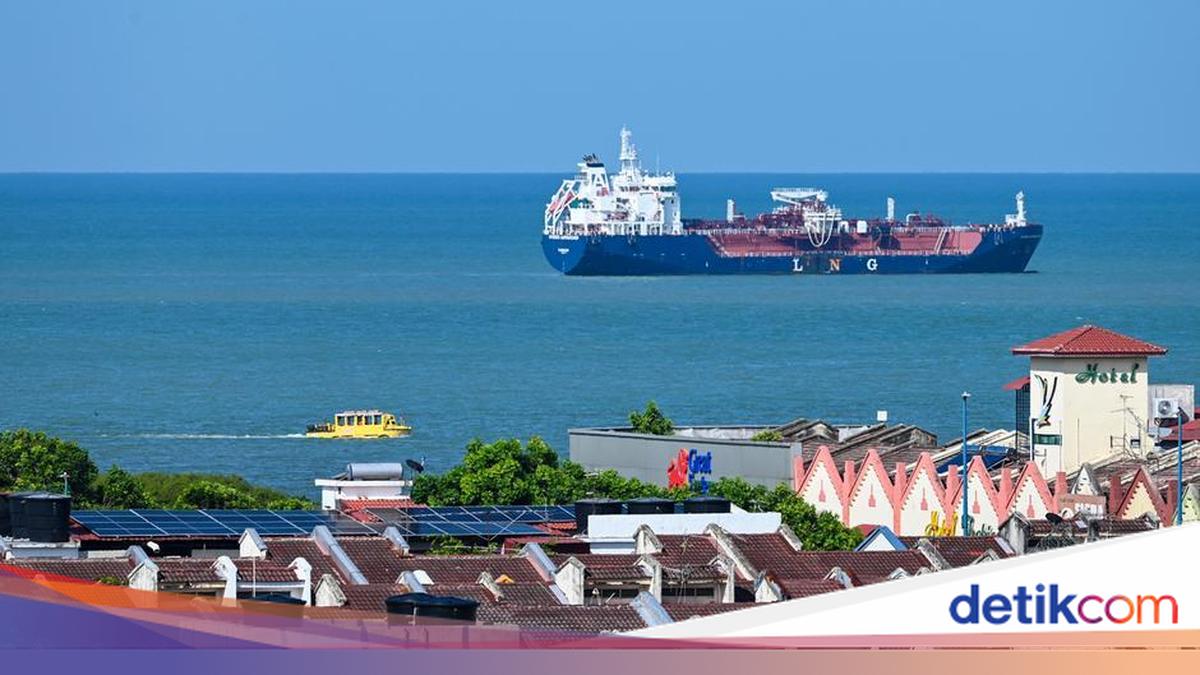
On the shores of the Andaman Sea, Chaiyaporn Arunrasamee is mending his fishing nets. The waters where he earns his livelihood are now part of the Thai government’s ambitious plan to build a ‘Land Bridge’ project connecting ports on two sides of the peninsula. ‘Personally, I don’t want the project to happen at all,’ said Chaiyaporn about the scheme revived by Prime Minister Anutin Charnvirakul following the Iran conflict and the closure of the Strait of Hormuz, which sparked discussions about many countries’ dependence on strategic global shipping lanes. The Thai government is designing a logistics corridor worth 1 trillion baht (approximately Rp 495 trillion). The project is being offered as an alternative route to the congested Malacca Strait by linking two new deep-sea ports: Chumphon on the Gulf of Thailand and Ranong on the Andaman Sea coast. Ranong is where Chaiyaporn, now 50, has spent his entire life as a fisherman. ‘The project will be built in the area where we make our living,’ he said last month in Baan Hat Sai Dam, a small fishing village on an island surrounded by mangrove forests. ‘If that happens, where must we go?’ Reuters traced the area and communities along the Kra Canal project route and interviewed more than 15 residents, local officials, experts, project planners, and other involved or affected parties. The interviews, along with several government documents reviewed by Reuters, reveal previously unpublished details about a project that promises logistics cost savings and faster cargo delivery. At the same time, the project faces complicated logistical issues, community opposition, and enormous construction costs that have so far failed to attract major investors. Experts assess the project as still highly ambitious economically and unlikely to compete with the Malacca Strait as a global transit route. However, it is still seen as having the potential to become a smaller-scale strategic corridor for Thailand. The Malacca Strait, approximately 900 kilometres long and flanked by Indonesia, Thailand, Malaysia, and Singapore, is the shortest sea route connecting East Asia with the Middle East and Europe. ‘The Land Bridge could eventually develop into a national security asset built in phases to secure domestic energy route security while enhancing Thailand’s export capacity through its western region,’ said Eugene Mark from the ISEAS-Yusof Ishak Institute in Singapore. According to an internal Thai government presentation obtained by Reuters, the corridor could cut logistics costs by nearly 30% and reduce shipping time by up to 14 days for cargo moving between southern China and ports in the Indian Ocean serving South Asia and the Middle East. The core of the project is a standard-gauge railway line stretching about 90 kilometres between the two deep-sea ports. According to the presentation, the two ports will eventually be able to handle up to 20 million TEUs per year. TEU, or Twenty-foot Equivalent Unit, is a standard unit of measurement used in the logistics and shipping industry to express cargo capacity or container loads. The route will be equipped with metre-gauge rail tracks connected to Thailand’s national railway network. The corridor will also be supported by multi-lane highways and local road networks integrated with Thailand’s national transport system. According to Thai government estimates, about 80% of container traffic at major ports in the Malacca Strait region, including Singapore, is transshipment cargo waiting to be moved from one ship to another, rather than goods destined for local markets. ‘We want to capture a portion of that 80% market, specifically the feeder segment,’ said Jiraroth Sukolrat, Director-General of Thailand’s Office of Transport and Traffic Policy and Planning. He was referring to cargo ships with a capacity of up to 12,000 TEUs. According to the government presentation, shipping goods between feeder vessels from the Gulf of Thailand to the Andaman Sea or vice versa could potentially be about 10% cheaper and six days faster than a similar route via Singapore, mainly due to lower congestion levels. ‘We are not targeting the giant mother vessels,’ Jiraroth clarified. A government-appointed panel currently reviewing the project and its previously prepared impact reports is scheduled to submit its findings before the end of July 2026. The Kra Canal plan, which first emerged around 2020, is a continuation of various similar infrastructure projects proposed by Thai governments over the past two decades but never realised due to policy changes and a lack of sustained investment support. Unlike previous designs, the latest version of the project no longer includes a petrochemical complex and oil refinery. The project’s focus is now directed towards building ports, a railway network, and light industry. ‘The basic concept hasn’t really changed much. What has changed is the way this project is packaged,’ said Wipawadee Panyangnoi, an independent researcher who wrote her doctoral dissertation on the Land Bridge proposal. ‘Previously, the government openly discussed industrial and petrochemical zones, which were then rejected by the community. Now the project is framed as transport and logistics infrastructure because that language is more easily accepted by the public.’ According to Eugene Mark from the ISEAS-Yusof Ishak Institute, the Thai government faces a major challenge in convincing shipping companies to bear the additional cost and time required to unload cargo, move it overland, and then reload it onto another vessel.