
Thailand Burns More Palm Oil: Could Indonesia Benefit?
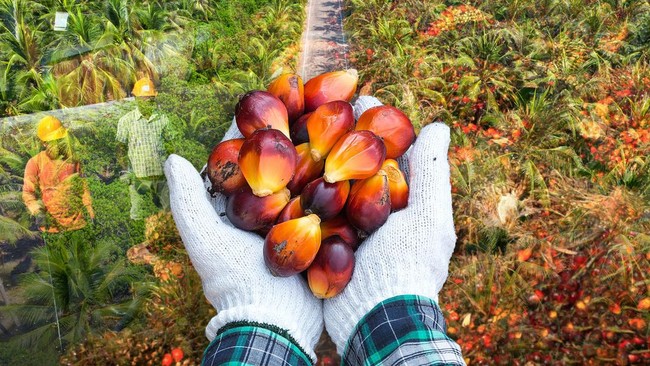
Jakarta, CNBC Indonesia — Thailand is stepping up efforts to promote biofuels by cutting fuel taxes. The policy is beginning to affect energy consumption patterns while also creating the prospect of stronger demand for agricultural commodities, particularly palm oil.
The Thai government under Prime Minister Anutin Charnvirakul has cut excise duty on two blended fuels: B20 biodiesel and E20 gasohol. The measure is in force for three months, from 28 October 2026 to 27 January 2027.
The move is intended to reduce energy costs for households and the transport sector while encouraging greater use of fuels made from domestic agricultural commodities.
B20 is diesel blended with around 20% biodiesel, most of which is derived from palm oil. E20 is petrol blended with 20% ethanol, which can be produced from sugar cane, molasses and cassava.
According to an announcement by the Thai government on 27 October 2026, the excise duty on E20 was reduced from 6 baht to 0.358 baht per litre. The duty on B20 was cut from 5.953 baht to 0.431 baht per litre.
The cuts amount to around 5.64 baht per litre for E20 and 5.52 baht per litre for B20.
Tax adjustments and subsidies also brought the retail price of both fuels down to 33.50 baht per litre on 28 October 2026. Before the change, B20 cost 37.19 baht per litre and E20 35.69 baht per litre.
The widening price gap with conventional fuels is encouraging consumers and transport operators to consider blends with a higher biofuel content.
B20 consumption surges after tax cut
The excise-duty cut is beginning to affect biofuel consumption in Thailand, particularly B20 biodiesel.
Thai Prime Minister Anutin Charnvirakul said on 7 November 2026 that B20 consumption had risen from around 5–6 million litres to 9 million litres a day after the tax cut took effect on 28 October.
B20’s price, nearly 10 baht—or around Rp4,800–5,000 per litre—below that of standard diesel, is one factor prompting consumers and transport operators to switch.
However, the figure of 9 million litres refers to the blended B20 fuel, which contains around 20% biodiesel and 80% diesel, not to pure biodiesel.
USDA data show that Thailand’s biodiesel consumption had already begun to recover in the first half of 2026, before the latest excise-duty cut.
According to the USDA’s Biofuels Annual report, published on 26 October 2026, average biodiesel consumption in Thailand reached 4.23 million litres a day in January–June 2026, up around 21.2% from 3.49 million litres a day in the same period a year earlier.
The increase followed a decline in consumption throughout 2025. Average daily consumption fell from 4.39 million litres in 2024 to 3.33 million litres in 2025.
The recovery in the first half of 2026 was driven mainly by an increase in the biodiesel blending standard from B5 to B7 from 14 March 2026, alongside government subsidies.
The USDA estimates that Thailand’s biodiesel consumption will rise by around 22% in 2026, as blending rates increase and government incentives continue.
Beyond transport, biodiesel is also used in agricultural equipment and industrial machinery. However, Thailand’s Ministry of Energy does not report biodiesel consumption specifically in off-road sectors, which are beginning to adopt electrification and renewable energy.
Thailand’s biodiesel production forecast to rise 22% in 2026
Stronger biodiesel demand is also expected to support a recovery in domestic production after a decline the previous year.
In its Biofuels Annual report, the USDA forecasts that Thailand will produce 1.77 billion litres of biodiesel in 2026, around 22% more than the 1.46 billion litres recorded in 2025.
The forecast marks a reversal after Thai biodiesel production fell by around 12.7% in 2025 compared with the previous year.
Thailand produced 1.67 billion litres in 2024, broadly unchanged from 2023. The highest output between 2017 and 2026 was 1.85 billion litres in 2019, while the 2026 forecast would be the highest since 2020.
The recovery is supported by the Thai government’s decision to raise the biodiesel blending standard from B5 to B7 in March 2026.
The policy was introduced to reduce the need for imported petroleum and ease pressure on energy prices amid geopolitical tensions in the Middle East.
Data from the Department of Alternative Energy Development and Efficiency (DEDE) show that Thai biodiesel production rose 19% in the first half of 2026 compared with the same period a year earlier.
The USDA also expects the utilisation rate of Thailand’s biodiesel production capacity to increase from 34.7% in 2025 to 42.3% in 2026. Despite the improvement, the figures indicate that much of the country’s production capacity remains underused.
The excise-duty cut at the end of October therefore provides an additional incentive to an industry that was already recovering after the change to the blending requirement.
Palm oil underpins Thailand’s biodiesel industry
The rise in Thai biodiesel consumption and production is closely linked to the country’s palm oil sector. Its biodiesel industry relies largely on palm oil and its derivatives.
These feedstocks include crude palm oil (CPO), refined, bleached and deodorised palm oil (RBDPO), stearin and free fatty acids derived from palm oil.
The USDA estimates that Thailand’s biodiesel industry will use 1.07 million tonnes of CPO and RBDPO in 2026, up around 23.8% from 860,000 tonnes in 2025.
Stearin use is also projected to rise from 411,000 tonnes to 480,000 tonnes. Meanwhile, the use of used cooking oil (UCO) is expected to increase from 6,000 tonnes to 8,000 tonnes, although its contribution remains relatively small.
The increased need for feedstock could strengthen domestic demand for palm oil in Thailand, but it also creates challenges in maintaining adequate supplies.
Since April 2026, the Thai government has tightened CPO exports, requiring approval and a permit from the Department of Internal Trade (DIT). The policy is intended to safeguard palm oil supplies for domestic industries, particularly to support higher biodiesel blending.
Thailand is also considering increasing its national CPO reserves by 20% to prepare for the risk of production disruption caused by El Niño.
The biofuel tax cuts therefore affect not only energy and transport, but could also increase demand for agricultural feedstocks, especially palm oil.
Indonesia is the world’s palm oil leader: an export opportunity?
Thailand’s growing need for palm oil is attracting attention in Indonesia, the world’s largest palm oil producer.
According to global palm oil production data for the 2025/2026 season in the accompanying table, Indonesia is forecast to produce 47 million tonnes, equivalent to 57.2% of global output.
Malaysia ranks second, with 20.56 million tonnes, or 25% of the global total. Thailand is third, producing 3.9 million tonnes, around 4.8% of worldwide output.
Together, the three South-east Asian countries account for around 87% of global palm oil production.
Indonesia’s large output puts it in a position to benefit from Thailand’s increased demand. Indonesian production is around 12 times Thailand’s, highlighting the substantial difference in capacity between the two countries.
Rising Thai biodiesel consumption could create additional opportunities for Indonesian exports of CPO and its derivatives, particularly if demand exceeds Thailand’s domestic supply capacity.
However, the opportunity may not translate directly into higher Indonesian exports. Thailand is itself a palm oil producer and prioritises domestic supply for its biodiesel industry. At the same time, Indonesian demand for palm oil is rising as the country expands its mandatory biodiesel programme.
Thailand’s increased use of biofuels could therefore provide a positive signal for regional palm oil demand. Its impact on Indonesian exports will nevertheless depend on supply availability, price competitiveness and the biodiesel policies of both countries.
Source: jawawa.id (https://jawawa.id/newsitem/thailand-burns-more-palm-oil-could-indonesia-benefit-1794390751)
Originally published by CNBC Indonesia (https://www.cnbcindonesia.com/research/20261111094307-128-784159/thailand-bakar-lebih-banyak-sawit-indonesia-kebagian-berkah), translated from Indonesian